The Question Owners of Listed Homes Actually Ask
Owners of listed buildings tend to arrive at steel doors from one of two directions. Either the existing front door has reached the end of its life and the replacement needs to satisfy both the planning system and modern expectations of security, or a break-in, an insurance review or a security assessment has made the current door untenable. Both routes end at the same question: can a listed building have a steel front door at all.
The honest answer is sometimes, and the difference between approval and refusal is almost never the material itself. It is whether the proposed door respects the character of the building and whether the application is made properly. This guide explains how the consent process works and how a bespoke steel door is designed to pass it.
Listed Building Consent Is Not the Same as Planning Permission
The first distinction to understand is that listed buildings sit under their own consent regime. Replacing the front door of a listed building will normally require listed building consent, because the entrance door is almost always part of the special architectural or historic character the listing protects. This applies whatever the new door is made of, timber included.
Listed building consent is separate from planning permission and separate again from the conservation-area rules we cover in our conservation areas planning guide. A house can be in a conservation area, listed, or both, and each status carries its own requirements. Two points matter in practice:
- Consent is about character, not material. The local planning authority assesses whether the proposed door preserves the building's special interest: proportions, panelling, glazing pattern, colour, furniture and how the door sits in its opening.
- Carrying out works without consent is a criminal offence. Unlike ordinary planning breaches, unauthorised works to a listed building can lead to prosecution, not just enforcement. This is not a rule to test.
Listing comes in three grades in England: Grade I and Grade II* for buildings of exceptional and more than special interest, and Grade II, which covers the large majority of listed homes. The grade affects how much scrutiny an application receives, but the process is the same.
When a Steel Front Door Is Approvable
Conservation officers refuse doors that erase character. They approve doors that hold it. A steel front door stands a realistic chance of consent when the design does the following:
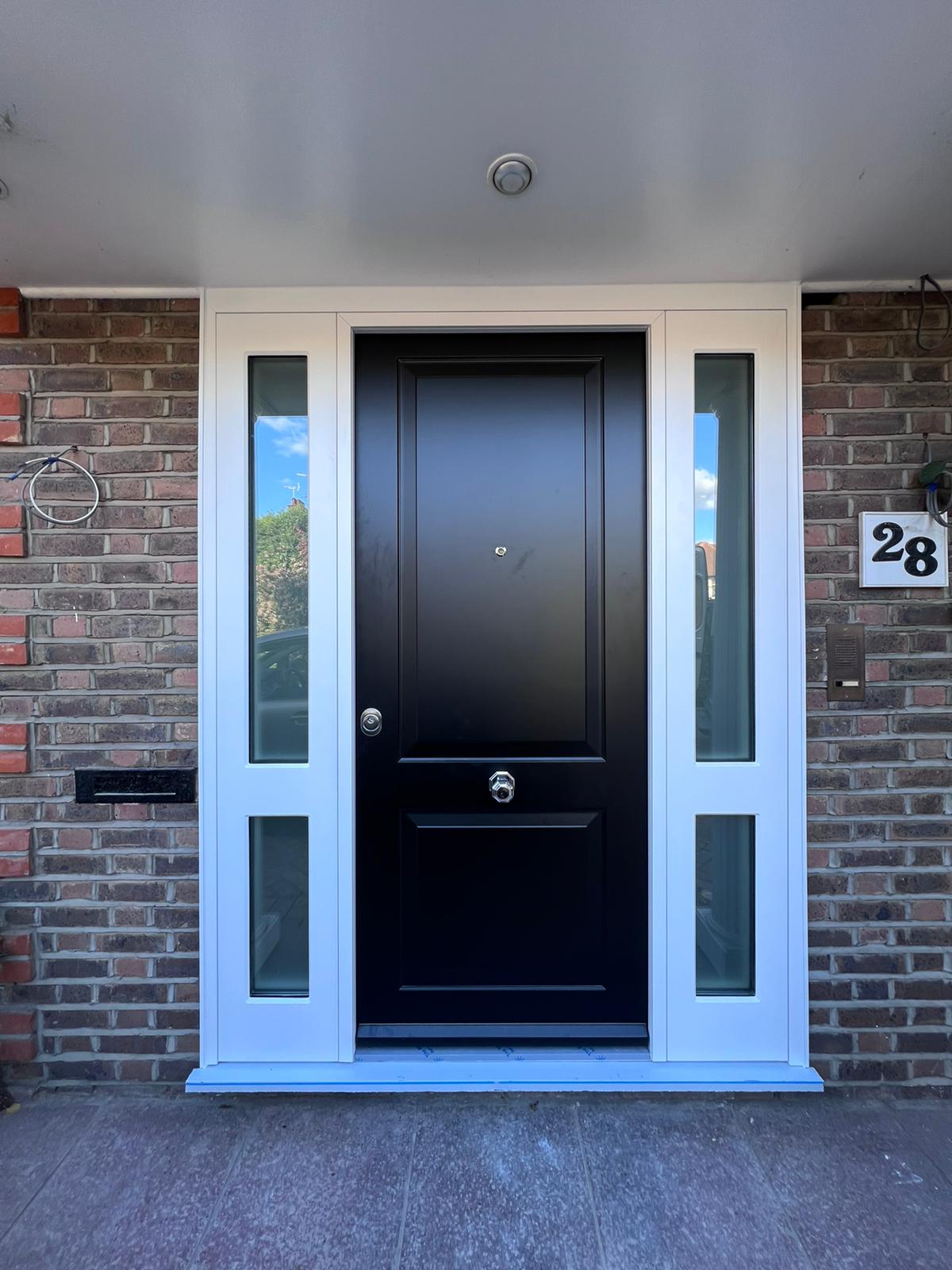
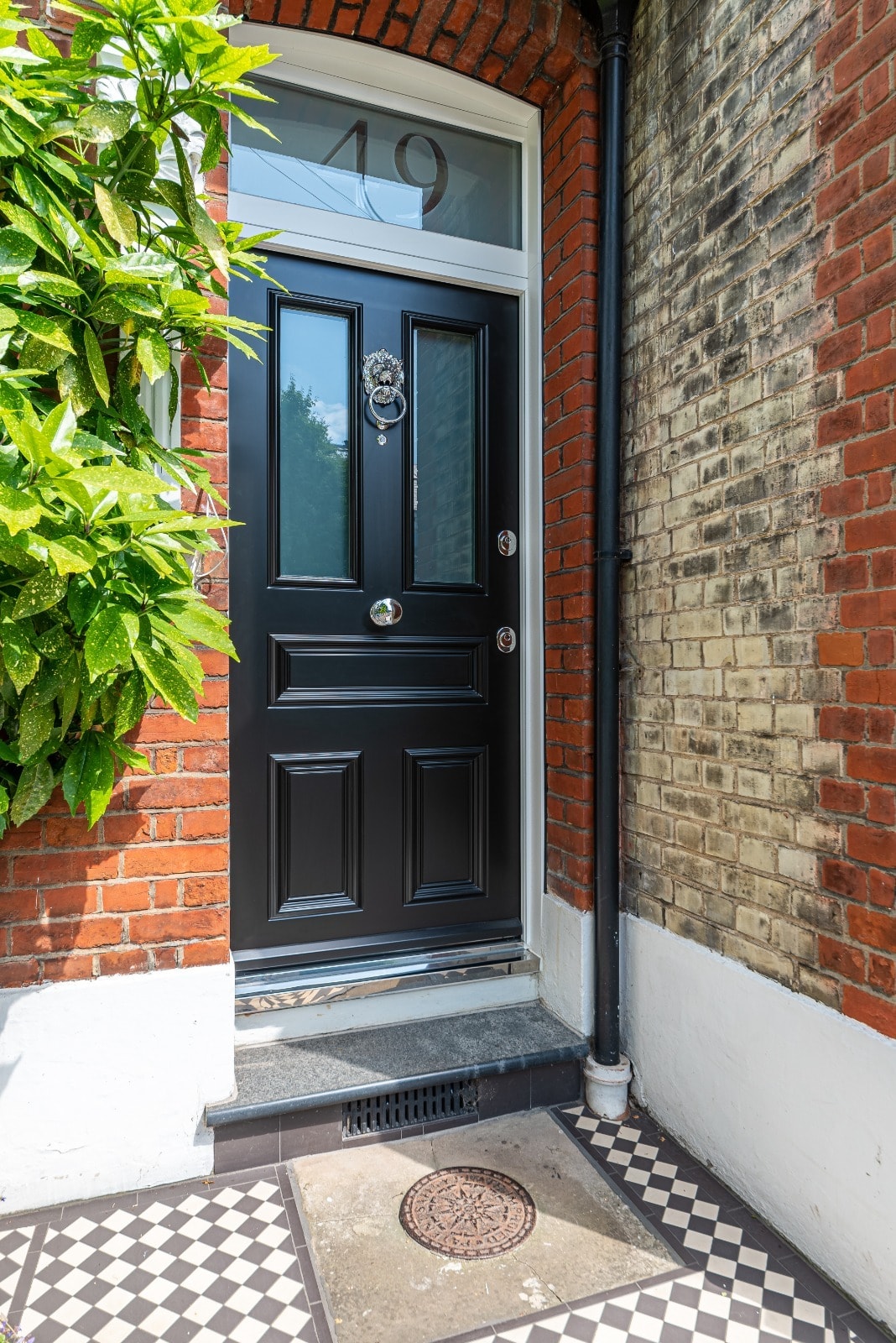
- Matches the period language of the building. Panel proportions, mouldings, glazing bars and fanlights reproduced faithfully rather than approximated. A bespoke steel door is drawn from the existing door or from period-correct references, not picked from a catalogue.
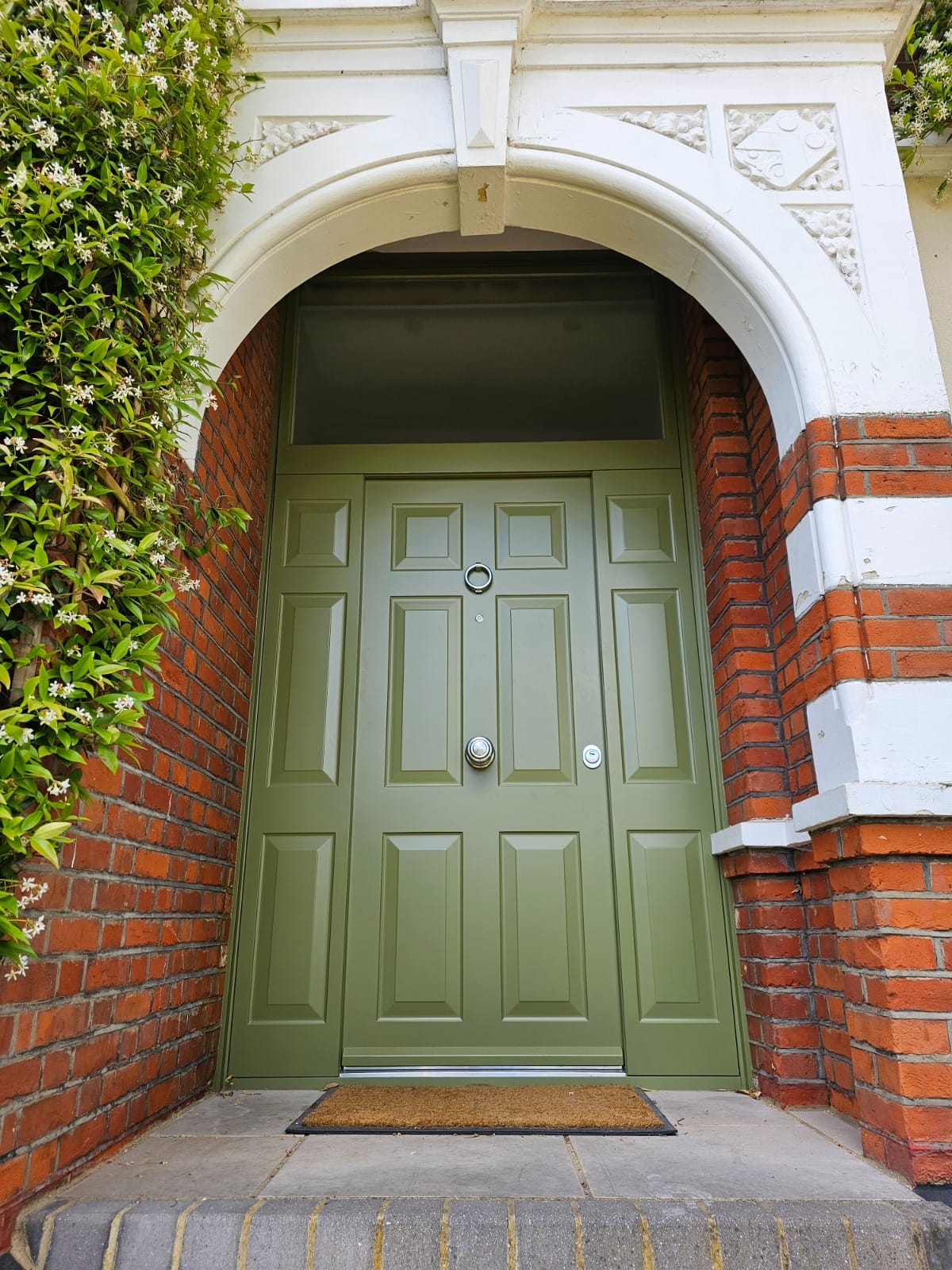
- Respects the opening. Made to measure for the existing structural opening, retaining arched heads, original surrounds and stone detailing untouched.
- Uses appropriate colour and finish. A matt or satin heritage colour appropriate to the building, not a bright contemporary statement. Any RAL colour is available, which includes the full range of traditional dark greens, deep blues, blacks and off-whites, and our colour guide covers the options.
- Carries period-correct furniture. Traditional knockers, escutcheons and letter plates in brass or aged finishes rather than contemporary bar handles.
- Is argued properly. The application should present the security case alongside the heritage case: drawings, a specification, and the reason the existing door cannot reasonably be upgraded.
Where the front elevation is too sensitive for any change, officers will sometimes support a steel door on a rear or secondary entrance instead, keeping the principal elevation untouched while still securing the practical point of entry.
Why Steel Can Be the Sympathetic Option
It sounds counterintuitive, but a bespoke steel door can be more faithful to a period building than a modern timber or composite replacement. Because every SteelR door is made to the exact opening with panelling, mouldings and glazing drawn to order, the visible result reproduces the original design language while the engineering underneath changes entirely. Neighbours see a period door in a period colour. The owner has a doorset certified to BS EN 1627:2011 RC4 as Standard, with LPS 1175 SR3 and SR4 upgrades available, PAS 24:2022 compliance and FD30S fire rating.
For owners of period homes weighing up the broader choices, our heritage steel front doors page covers the category in depth, our guides to front doors for London townhouses and steel doors for country homes cover the design side in more detail, and our luxury steel entrance doors in London page covers the boroughs where listed and conservation stock is concentrated.
How the Process Runs in Practice
A realistic sequence for a listed property looks like this:
1. Pre-application advice. Most local planning authorities offer a pre-application service. Approaching the conservation officer early, with photographs of the existing door and an outline of the proposal, surfaces objections while they are still simple to resolve. 2. Survey and drawings. The door is surveyed and drawn to match or sympathetically reinterpret the existing design. Because the door is bespoke, the drawings can respond directly to officer feedback. 3. The application. Listed building consent is applied for with drawings, specification and a heritage justification. Decisions typically take around eight weeks from validation, though complex cases can run longer. 4. Manufacture and installation. Once consent is granted, manufacture proceeds on the standard lead time of around 8 weeks, and installation is carried out by our own team, normally within a single day, with the existing opening and surround preserved.
The two eight-week periods usually overlap planning-side work such as discharge of conditions, so the practical timeline from first enquiry to installed door on a listed property is commonly four to six months. Starting the conversation early is the single best way to shorten it.
Insurance and the Security Case
Part of the heritage argument is explaining why the change is needed at all. For many listed homes the honest answer is that the original door, however charming, offers no meaningful resistance to a modern attack and cannot be economically upgraded to a certified standard. Insurers of high-value period homes increasingly ask about door security ratings, a subject covered in our home insurance and door security guide. A consent application that pairs a faithful visual design with a documented security need is a far stronger application than either argument alone.
Talk to Us Before You Talk to the Council
If you own a listed building and are considering a steel front door, the most useful first step is a design conversation before anything is submitted. Contact the team with photographs of the existing door and we will advise honestly on whether a sympathetic steel design is realistic for your building and what the consent route looks like in your authority.
Frequently Asked Questions
Can I put a steel front door on a listed building?
Sometimes, with listed building consent. The material is not automatically ruled out; what matters is whether the proposed door preserves the character the listing protects. A bespoke steel door drawn to match the period design, colour and furniture of the building stands a realistic chance, particularly where a documented security need supports the application. Unauthorised replacement is a criminal offence, so consent must come first.
Do I need listed building consent to replace a front door like for like?
Usually yes. Even a like-for-like replacement of a front door on a listed building will normally need consent, because the door forms part of the protected character and a replacement is an alteration. The application is straightforward when the new door faithfully reproduces the old, but it should still be made. Your local planning authority's conservation officer can confirm the position for your building.
What is the difference between a listed building and a conservation area?
A listing protects a specific building and its character, inside and out, through listed building consent. A conservation area protects the character of an area, typically affecting external changes visible from the street, sometimes tightened by an Article 4 direction. A home can be covered by both at once, and each carries its own consent requirements. Our conservation areas planning guide covers the area-level rules in detail.
How long does listed building consent take for a new front door?
Straightforward applications are typically decided in around eight weeks from validation, with pre-application advice adding time up front but reducing the risk of refusal. Combined with a made-to-measure manufacturing lead time of around 8 weeks, a realistic overall timeline from enquiry to installed door on a listed property is four to six months.
Will a steel door look out of place on a period property?
Not when it is designed for the building. Panel proportions, mouldings, glazing patterns, heritage colours and traditional brass or aged furniture are all specified to order, so the finished door reads as a period entrance. The difference is underneath: a certified doorset with BS EN 1627:2011 RC4 as Standard and LPS 1175 SR3 or SR4 available, rather than the original softwood leaf.