Why Country Homes Are Choosing Steel
The British countryside is home to some of the most beautiful residential properties in the world, from Chiltern manor houses and Cotswold farmsteads to Yorkshire stone cottages and Surrey estates. Increasingly, homeowners in these affluent rural and semi-rural areas are turning to bespoke steel entrance doors as the definitive upgrade for their country properties.
This guide explains why steel doors are the ideal choice for country homes and covers the key considerations for homeowners in rural locations across the UK.
Security for Rural and Detached Properties
Security is often the primary driver for country homeowners considering a steel entrance door. Rural properties face distinct security challenges that urban homes do not:
- Isolation, detached country homes are often set back from roads and neighbours, giving intruders more time and privacy to attempt entry
- Response times, police response times in rural areas are typically longer than in urban centres
- Outbuilding access, tools stored in garages, barns and sheds can be used to attack entry points
- Perception of wealth, large country properties are often perceived as high-value targets
Homeowners in Beaconsfield and Gerrards Cross in the Chilterns know this reality well, these areas combine significant property values with a semi-rural setting. Similarly, properties in Virginia Water and Cobham in Surrey sit on large plots surrounded by woodland and open land.
An SR3-rated steel entrance door addresses these concerns directly. Tested to BS EN 1627:2011, an SR3 door withstands sustained attack with crowbars, drills and angle grinders, providing a level of resistance that no timber or composite door can match. For isolated country properties, this standard of protection is not a luxury; it is a sensible precaution.
Weather Resistance and Durability
Country homes are typically more exposed to the elements than urban properties. Entrance doors on rural properties face:
- Driving rain, particularly on west-facing elevations in areas like Marlow and Henley-on-Thames, where proximity to the Thames valley brings higher rainfall
- Wind exposure, hilltop and ridge-line properties in areas such as Sevenoaks and the North Downs are subject to stronger winds than sheltered urban streets
- Temperature extremes, rural locations experience wider temperature swings between summer and winter than the urban heat island effect provides in cities
- UV exposure, country properties often have south-facing elevations with no neighbouring buildings to provide shade
Timber doors suffer significantly under these conditions. Warping, swelling, cracking and rot are accelerated by exposure, and the maintenance cycle shortens accordingly. A timber front door on an exposed country property may need repainting every two to three years.
Steel entrance doors are engineered to withstand these conditions without compromise. The multi-layer paint system resists UV fading, the steel construction is dimensionally stable regardless of temperature and humidity, and the thermal break technology maintains consistent insulation performance. A steel door on a country home looks and performs the same after fifteen years as it did on installation day.
Kerb Appeal and First Impressions
The entrance to a country home sets the tone for the entire property. Whether your driveway approach reveals a Georgian rectory, a Victorian farmhouse or a contemporary country estate, the front door is the focal point.
In areas like Alderley Edge in Cheshire, where substantial country houses sit behind mature hedgerows and gated drives, the entrance door must make a statement commensurate with the property. The same is true in Winchester, where period houses along the Hampshire Downs demand doors that balance heritage sensitivity with understated quality.
Bespoke steel doors offer complete design freedom for country properties:
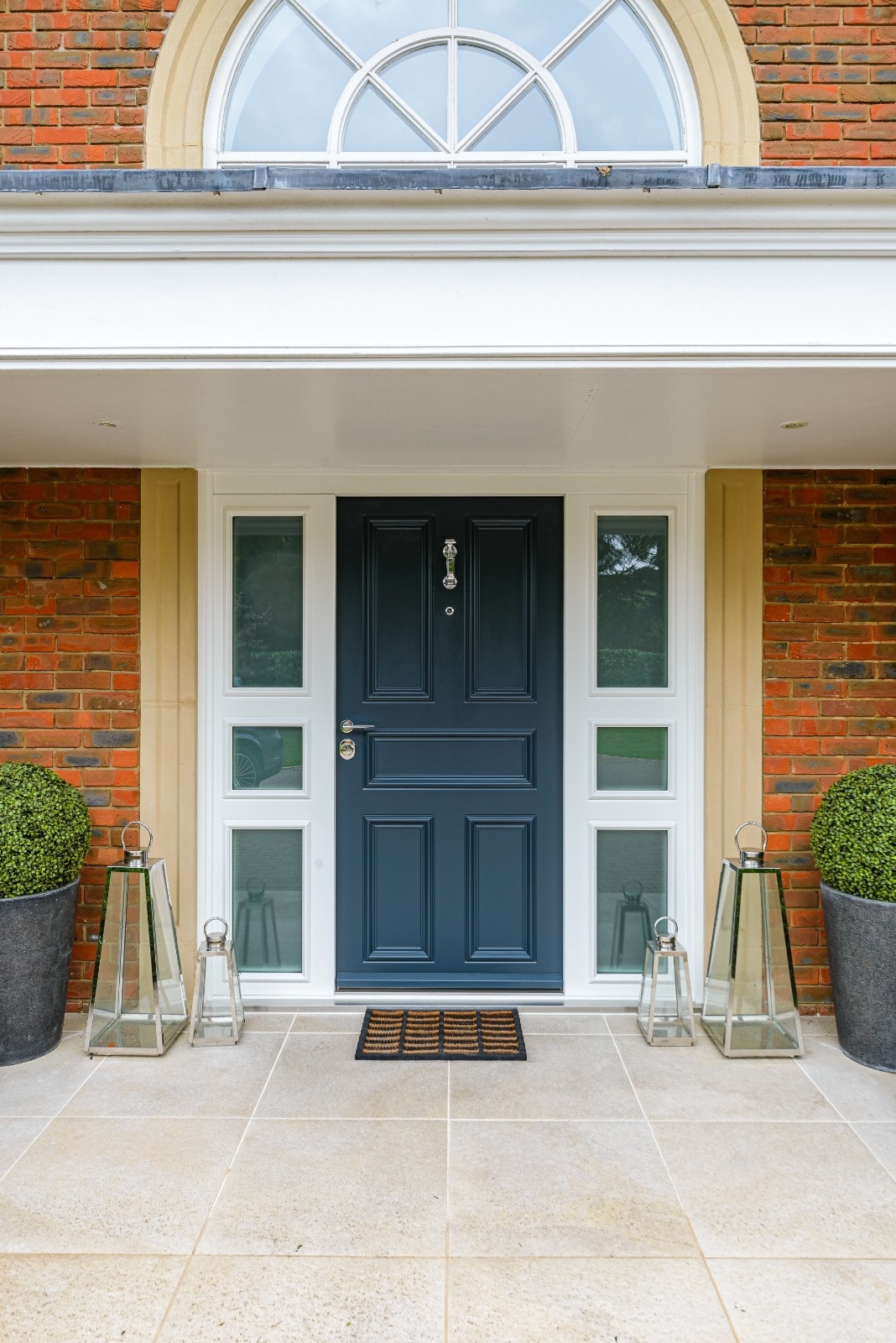
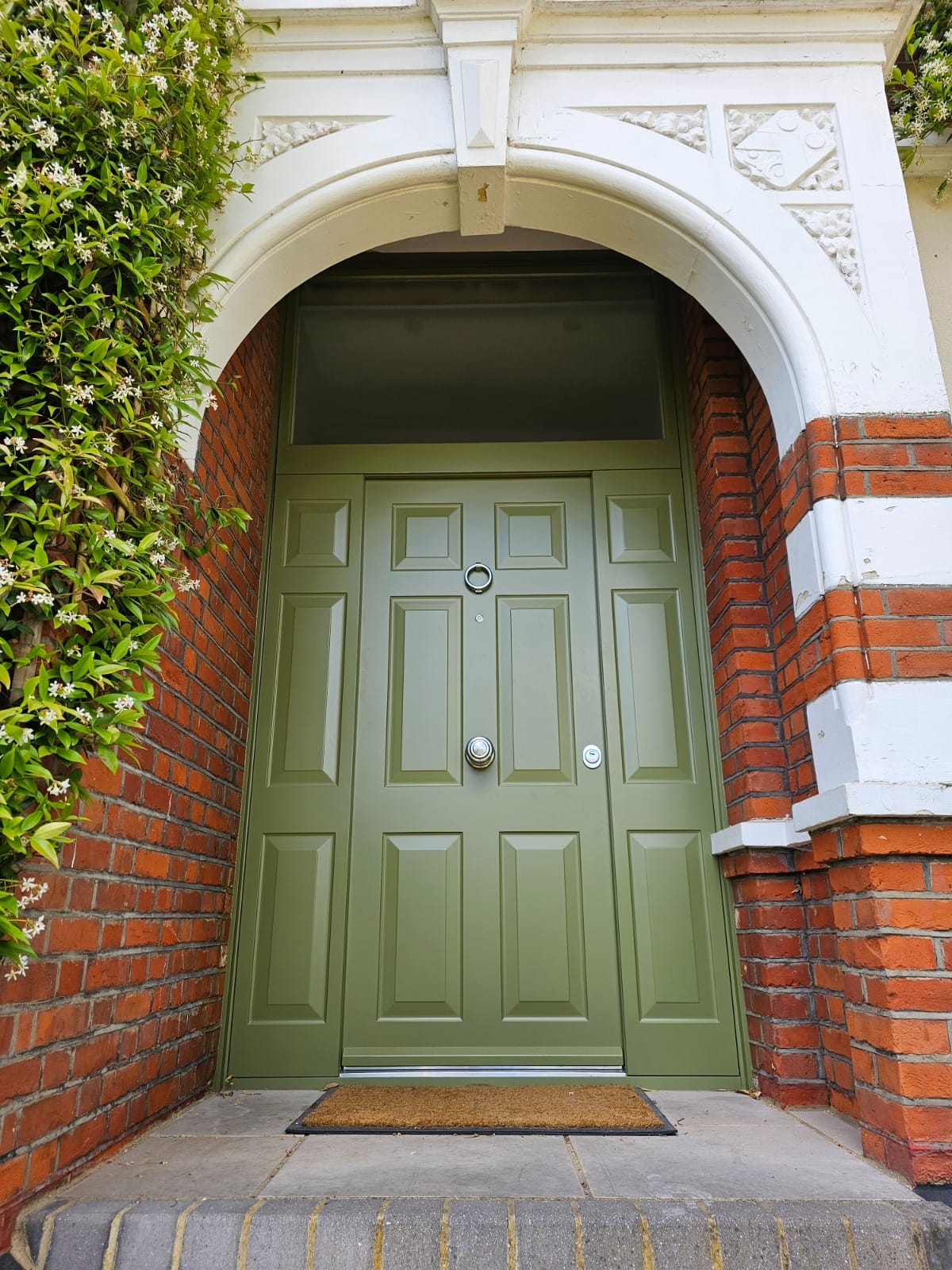
- Traditional country house designs, six-panel Georgian doors, four-panel Victorian doors and solid farmhouse designs, all faithfully reproduced in steel
- Arched and oversized doors, country properties often have non-standard openings, including arched doorways and double-height entrances that off-the-shelf doors cannot accommodate
- Heritage colours, sage greens, olive, cream, walnut and deep reds that complement stone, brick and rendered facades
- Period ironmongery, lion knockers, ring knockers, brass letter plates and traditional lever handles that complete the authentic look
Regional Highlights
The Chilterns and Buckinghamshire
Beaconsfield, Gerrards Cross and Amersham sit within the Chilterns Area of Outstanding Natural Beauty. Properties here range from medieval cottages to substantial Edwardian houses and contemporary country estates. The combination of high property values, semi-rural setting and conservation area coverage makes bespoke steel doors a natural choice.
Surrey and the Home Counties
Virginia Water and Cobham are among the most affluent addresses in the south of England. Large detached properties on generous plots are the norm, and homeowners here expect the highest standards of quality, security and design in every element of their homes.
The North
In Harrogate, the elegant stone properties of this North Yorkshire spa town benefit from entrance doors that complement their Georgian and Victorian architecture while standing up to the harsher northern climate. The combination of heritage aesthetics and weather resistance makes steel an ideal material.
Kent and the South East
Tunbridge Wells and Sevenoaks in Kent offer a wealth of period properties in leafy, semi-rural settings. The conservation areas of Tunbridge Wells in particular require careful attention to door design and materials.
Practical Considerations for Country Installations
Installing a bespoke steel door on a country property involves some additional practical considerations:
- Access, rural properties may have narrow lanes, gravel drives or limited turning space for delivery vehicles
- Structural openings, older country houses often have thick stone or brick walls with deep reveals that require careful measurement and bespoke frame profiles
- Listed building consent, many country properties are Grade I or Grade II listed, requiring Listed Building Consent for a new front door. A bespoke steel door designed to replicate the original design supports a successful application
- Outbuildings, some country homeowners extend their steel door specification to include matching doors for converted barns, orangeries and boot rooms
Architectural Styles and the Right Door for Each
Country homes span several hundred years of British architecture. The right door for a Queen Anne rectory is not the right door for a 1970s architect-designed retreat. A quick guide to the most common country property types and typical SteelR specifications:
Georgian rectory and farmhouse (1714 to 1830)
Strict symmetry, sash windows, a simple rectangular opening with a stone or plastered surround, sometimes a fanlight above. The door itself is typically a six-panel raised-and-fielded design, hand-painted black or deep bottle green. Brass door furniture. A Georgian rectory in Rutland or a farmhouse in Somerset reads as understated and original. In steel, we reproduce the six-panel proportions exactly, matched to the existing surround, with heritage brass from a British foundry.
Regency and early Victorian (1830 to 1870)
Arched or semicircular fanlights above the door become common. Panels remain six across the leaf but with deeper mouldings. Ironmongery shifts from brass to polished steel and cast iron. Black and deep blue dominate. In stone market towns like Stamford, Ludlow, and Tetbury, the arched fanlight above the door is the defining feature. A bespoke steel door can be arched as one integrated piece, with the fanlight glazed in obscure or etched glass.
High Victorian and Arts and Crafts (1870 to 1910)
Four-panel configurations, decorative glazing in the upper two panels, carved porches, lion or ring knockers in brass or oxidised bronze. Popular in Yorkshire spa towns, Lancashire gentleman's estates and Victorian country villas across the Home Counties. The high Victorian door is typically painted a darker tone. Steel reproduces the four-panel grid exactly, with toughened or stained glass to match original specifications.
Edwardian country (1901 to 1914)
Wider openings, often with sidelights either side. The door face itself simplified to four or even two panels. Colour palettes lighten: cream, dove grey, sage green. Brass furniture at its most refined. Edwardian country homes across Cheshire, Surrey and the Chilterns often retain their original proportions with only the door replaced.
Inter-war country (1918 to 1939)
1920s and 1930s country houses blend traditional and modern. Oak board-and-batten doors on farmhouses, glazed steel-frame doors on Arts and Crafts-influenced new-builds. The period is stylistically wide; the steel door can match whichever direction the specific property took.
Post-war and contemporary country
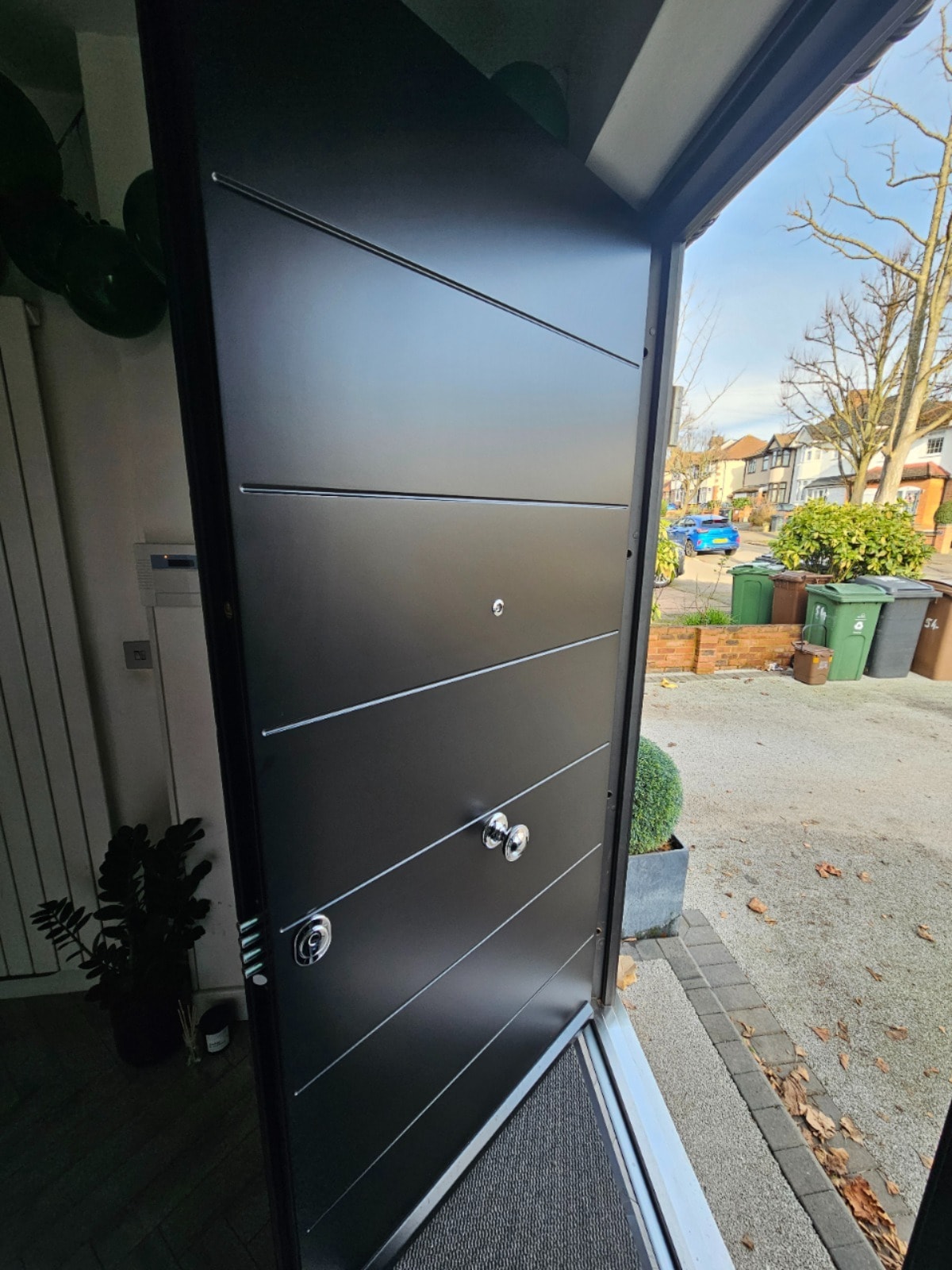
Architect-designed rural homes since the 1960s tend towards contemporary proportions. Flush faces, concealed hinges, minimal hardware, bold colour. These properties benefit most from steel's contemporary design freedom. A 4-metre-wide pivot door in a walnut or anthracite finish, sitting under a slate-clad porch, suits a contemporary country house in a way no timber or composite can match.
Listed Buildings and Conservation Areas
A significant proportion of UK country homes carry some form of heritage protection. Understanding which applies to your property is essential before commissioning a new front door.
Grade I and Grade II* listed
The highest protection tiers. Any alteration to the exterior, including the front door, requires Listed Building Consent from the local authority's conservation officer. Consent is rarely granted to change the door style, but is usually granted to replace a deteriorated door with a like-for-like replacement in a superior material. Steel replicas of original timber designs have been consented to on many Grade II* country properties because steel combines historical accuracy with the durability the original timber lacked.
Grade II listed
Still requires Listed Building Consent, but conservation officers typically have more flexibility. A well-documented application, with drawings showing the new door matches original proportions and period detailing, usually succeeds.
Conservation areas without listing
No formal consent required for a front door change on most country properties. However, some conservation areas carry Article 4 Directions that remove permitted development rights, bringing even unlisted properties under the consent requirement. Your conservation officer will confirm.
Key tips for a smooth consent application
- Commission the door supplier to produce scale drawings showing before and after
- Use historical evidence (original photographs, estate drawings, architectural surveys) to justify the specification
- Specify a heritage finish rather than a contemporary one on protected properties
- Allow 8 to 12 weeks for the consent process before you need the door manufactured
Estate-Scale Specifications
Many country properties extend beyond the main house. Typical additional entrance requirements:
- Boot rooms and secondary entrances, often the most-used door on a working country property, facing the yard or garden. Requires the same security standard as the front door, but the aesthetic can be simpler.
- Garden rooms and orangeries, glazed steel doors with thermally-broken profiles and laminated glass specified to match the main house hardware.
- Converted barns, lodges and staff cottages, formerly industrial openings that often benefit from wider, taller leaves with period steel detailing.
- Entrance gates and gatehouses, steel driveway gates can be specified alongside the main door using the same paint system so the brand continuity runs from the road to the threshold.
A full estate specification is typically commissioned as a single package with matched finishes, hardware and security ratings across every opening. The manufacturing and installation is scheduled in sequence so no part of the property is left unsecured during changeovers.
Country-Specific Weather Engineering
Country homes sit in meaningfully harsher microclimates than urban properties. Points worth specifying on a rural installation:
- Thermal break quality, on exposed elevations, a single-point thermal break is inadequate. Specify a dual thermal break with polyurethane insulation infill for U-values below 1.0 W/m²K.
- Drainage detail, the threshold detailing matters on south-west elevations in high-rainfall areas. A weathered threshold with concealed drainage channels prevents standing water at the door foot.
- Freeze-point protection, multi-point locking systems on exposed rural properties benefit from stainless steel internals and PTFE grease rather than standard mineral oil. Prevents lock seizure in sustained sub-zero conditions.
- UV-stable finish, specify the paint system with a UV inhibitor additive. On south-facing elevations in Kent or Sussex, cheaper paint systems chalk visibly within five years. A powder coat with UV stabiliser remains true for 15-plus.
- Stainless fixings throughout, hinges, frame fixings, thresholds, all stainless steel. Galvanised fixings stain visibly over time in rural settings where iron oxide runs down paintwork.
Country-house and rural-listed-building applications often involve both LBC and Article 4. The decision tree, statutory timing and visual-match guidance are on our heritage steel front doors hub.
Frequently Asked Questions
Are steel front doors suitable for listed country homes?
Yes, provided the door is manufactured to replicate the proportions and detailing of the original. Most UK conservation officers will grant Listed Building Consent for a steel replacement of a deteriorated period door, specifically because steel offers superior longevity to the original timber while visually matching the approved design. Submit scale drawings with the application and provide historical justification.
How do steel doors perform in high-wind exposed country locations?
Better than any alternative. A bespoke steel entrance door is dimensionally stable across the full range of UK weather conditions. It does not warp, swell or leak air like timber. The multi-point locking system, heavy-duty hinges and frame anchoring withstand wind loads on the most exposed ridge-line and coastal properties. We have installed SteelR doors in Snowdonia, Dartmoor and the North Pennines without performance issues.
Will a steel door look out of place on a Cotswold stone cottage?
Not if it is specified correctly. The visible face of the door is painted or powder-coated in any RAL colour, with any panel profile, heritage ironmongery and glazing configuration. A five-panel black cottage door in steel is visually indistinguishable from one in timber. The steel is the structural material beneath. The aesthetics match the property regardless.
How much more does a country installation cost than an urban one?
Slightly more, but not dramatically. The additional cost typically covers specialist access (narrow lanes, soft ground), deeper frame profiles for thick stone or brick walls, and in some cases crane hire for double-leaf installations. As a rule of thumb, expect 10 to 20 percent additional installation cost on rural properties compared to an equivalent urban installation.
Can one supplier handle the front door, boot room, garden room and gate?
Yes, and we recommend it. A single manufacturer specifying every entrance across the estate ensures matched paint finishes, hardware families, security ratings and aesthetic continuity. Sourcing from multiple suppliers leads to mismatched metalwork that reads as inconsistent against the property.
What security rating should a rural country home specify?
LPS 1175 SR3 (Issue 8) as a minimum. Rural homes face longer police response times and often hold significant valuables, artwork or collections. SR3 (the LPCB police-preferred Enhanced upgrade tier above the BS EN 1627 RC4 Standard) provides resistance against sustained attack with tools readily available from the property's own outbuildings. For estates with higher risk profiles, SR4 (LPS 1175 Issue 8 Commercial-grade upgrade) is increasingly specified.
How long does delivery and installation take for a country property?
Typically around 8 weeks from design sign-off to fitted, occasionally longer for remote locations or listed properties. Slightly longer than urban installations due to bespoke frame profiles for thicker walls, potential access planning for remote locations and, on listed properties, the Listed Building Consent window. The installation itself is one to two days for a single leaf, two to four for double-leaf or sidelight configurations.
Do steel doors need maintenance on country properties?
Virtually none. An occasional wipe-down of the face with mild detergent, annual inspection of the hinges and multi-point locking, and replacement of the threshold seal at the 10-to-15-year mark. No painting, no resealing, no hardware refinishing. The ten-year manufacturer warranty on the door construction reflects the fact that steel is engineered to outlast most other elements of the property's external fabric.
The Country Home Investment
A bespoke steel entrance door for a country property is an investment in security, durability and kerb appeal. For homeowners in areas like Marlow, Henley-on-Thames or Alderley Edge, it is also a statement of intent, a signal that every detail of the property has been considered and executed to the highest standard.
At SteelR, we design and manufacture bespoke steel entrance doors for country homes across the UK. Every door is SR3 security rated, Secured by Design accredited and manufactured under ISO 9001 certified quality management. For the full bespoke specification picture, see our bespoke steel front doors UK overview, then contact us to discuss your country home project.