Fire Rated FD30 Front Doors
Fire Rated FD30 Front Door — Flats, New Builds, HMOs and High-Value Homes
FD30, FD30S and FD60 explained
A fire rated front door for your home, flat or development that also meets serious security standards
Every SteelR door carries FD30S fire and smoke rating as standard. Not as an upgrade, not on selected designs. On every door. FD60 is available as an upgrade where the application requires it. This page explains what the ratings mean, where they are legally required, and how fire rating combines with PAS 24, SR3 and Secured by Design on a single door assembly.
There is a broader sibling page on fire rated steel doors aimed at developers, architects and housing associations specifying at scale. This page is focused on the front door of an individual home, flat or HMO.
The rating itself
FD30 is 30 minutes of fire integrity, tested to BS 476-22 or BS EN 1634-1
- FD30: 30 minutes integrity against flame and hot gas
- FD30S: 30 minutes integrity plus cold smoke seal performance
- FD60: 60 minutes integrity against flame and hot gas
- FD60S: 60 minutes integrity plus cold smoke seal performance
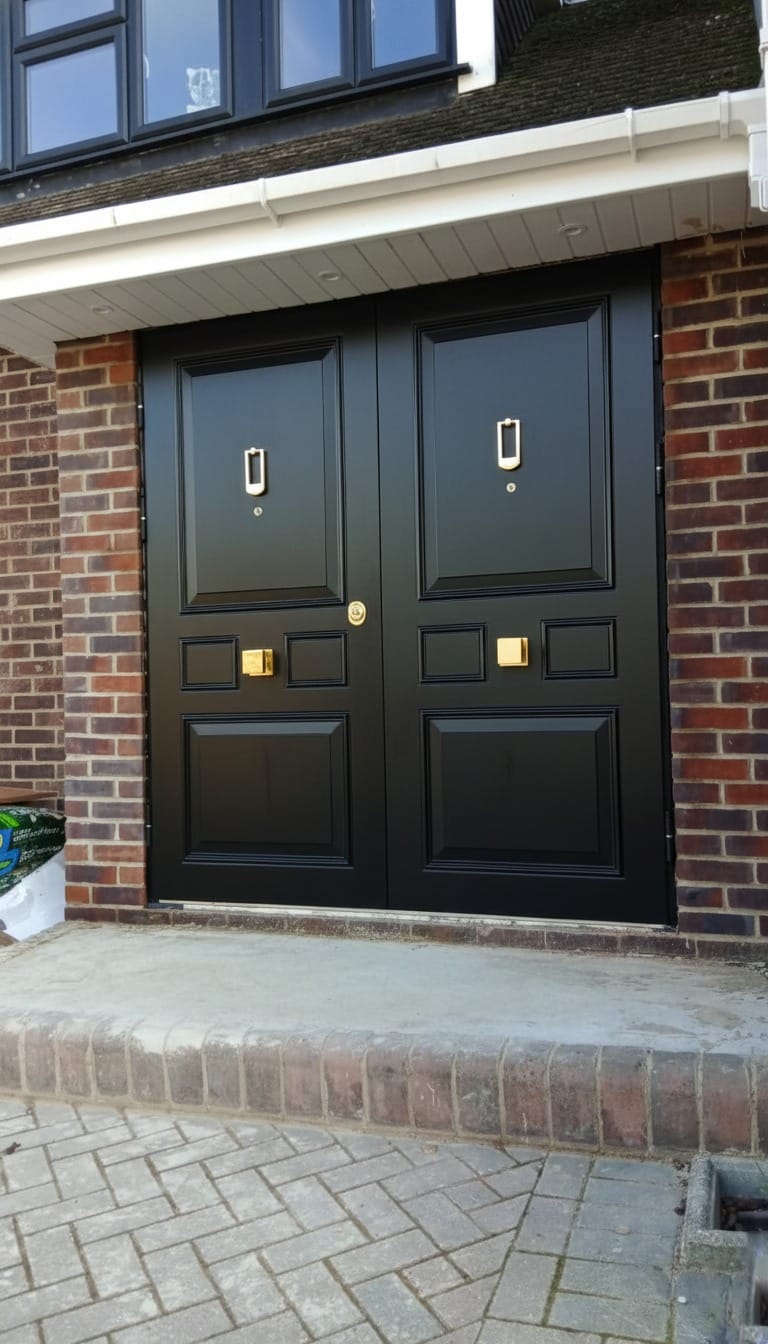
Where it is legally required
Approved Document B, Fire Safety Act 2021, Building Safety Act 2022
Fire plus security plus thermal
One door, four certifications, plus thermal engineering
Installation
A fire door is only rated in situ if installed to specification
Continue Reading
Related reading
Common Questions
Frequently asked questions
What does FD30 actually mean on a front door?
FD30 means the door is rated to resist the passage of fire for 30 minutes under a standardised fire resistance test, typically to BS 476-22 or BS EN 1634-1. Integrity is maintained for 30 minutes, giving occupants time to evacuate and fire services time to arrive. FD30S adds the S for smoke, which means the door also resists the passage of cold smoke under separate testing. FD60 is the 60-minute equivalent, required in higher-risk applications.
Where is an FD30 front door legally required?
FD30 is required on entrance doors to individual flats within multi-occupied residential buildings under Approved Document B of the Building Regulations. Since the Building Safety Act 2022 and the Fire Safety Act 2021, enforcement is materially stricter, particularly in buildings over 11 metres. HMOs, houses in multiple occupation, typically require FD30 or higher on entrance and bedroom doors. Standalone dwellings do not legally require FD30 on the front door, but the rating is often specified by insurers or architects for high-value properties.
What is the difference between FD30 and FD30S?
FD30 is a 30-minute fire integrity rating. FD30S adds the S suffix for smoke seal performance, meaning the door is also tested against cold smoke passage through intumescent and smoke seals fitted to the frame and leaf. FD30S is the current standard for flat entrance doors in multi-occupied buildings because cold smoke is a major cause of fatality in dwelling fires, often ahead of the fire itself reaching occupants. Every SteelR door is FD30S rated as standard.
Do I need FD60 rather than FD30?
FD60 is required in specific applications: doors onto protected escape routes in larger buildings, doors in stairwell enclosures, doors in higher-risk buildings as defined under the Building Safety Act, and doors where the building's fire strategy specifies 60-minute rather than 30-minute compartmentation. A fire risk assessment or the building's approved fire strategy document will specify the requirement. SteelR offers FD60 as an upgrade on every door where the application requires it.
Can one door be fire rated, security rated and thermally engineered all at once?
Yes, and every SteelR door is all three as standard. FD30S fire and smoke rating, PAS 24:2022 security certification and BS EN 1627:2011 RC4 single leaf, unglazed (the European framework for sustained forced-entry resistance) are all applied to the same door as Standard. Secured by Design approval is also included. Thermal break engineering is built into the base profile. LPS 1175 SR3 (LPCB Enhanced upgrade), SR4 (Commercial-grade upgrade under LPS 1175 Issue 8) and FD60 are all available as further upgrades. The point of a bespoke steel door is that you do not have to choose between fire, security and thermal performance; the door is engineered to deliver all three simultaneously.
Is SteelR the right fit
Worth considering SteelR if
- You are a flat owner whose freeholder requires FD30S certification on the entrance door
- You are a landlord or property manager closing FRA actions on flat entrance doors
- You are a developer specifying FD30S as standard on flats, HMOs and new-build dwellings
- You are a Higher-Risk Building duty-holder needing FD60 evidence under the Building Safety Act 2022
- You need fire rating plus PAS 24, BS EN 1627 RC4 and SBD on one door rather than choosing between
Bespoke · UK manufactured · BS EN 1627 RC4 · LPS 1175 SR3 / SR4 available
Enquire about a bespoke SteelR door for FD30 Fire Rated Front Doors
Free consultation with our design team. No obligation. Every door is manufactured in the UK to your specification. Standard residential spec is BS EN 1627:2011 RC4 single leaf, unglazed. LPS 1175 SR3 and SR4 enhanced and commercial-grade certifications are available on request, with LPS 1673 attack-resistance by enquiry. Installed by our in-house fitters.