SR3 Residential Steel Doors
LPS 1175 SR3 Residential Steel Door. The Enhanced Upgrade Tier
LPS 1175 SR3. SteelR's Enhanced upgrade tier
What an LPS 1175 SR3 rating really means on a front door you actually live behind
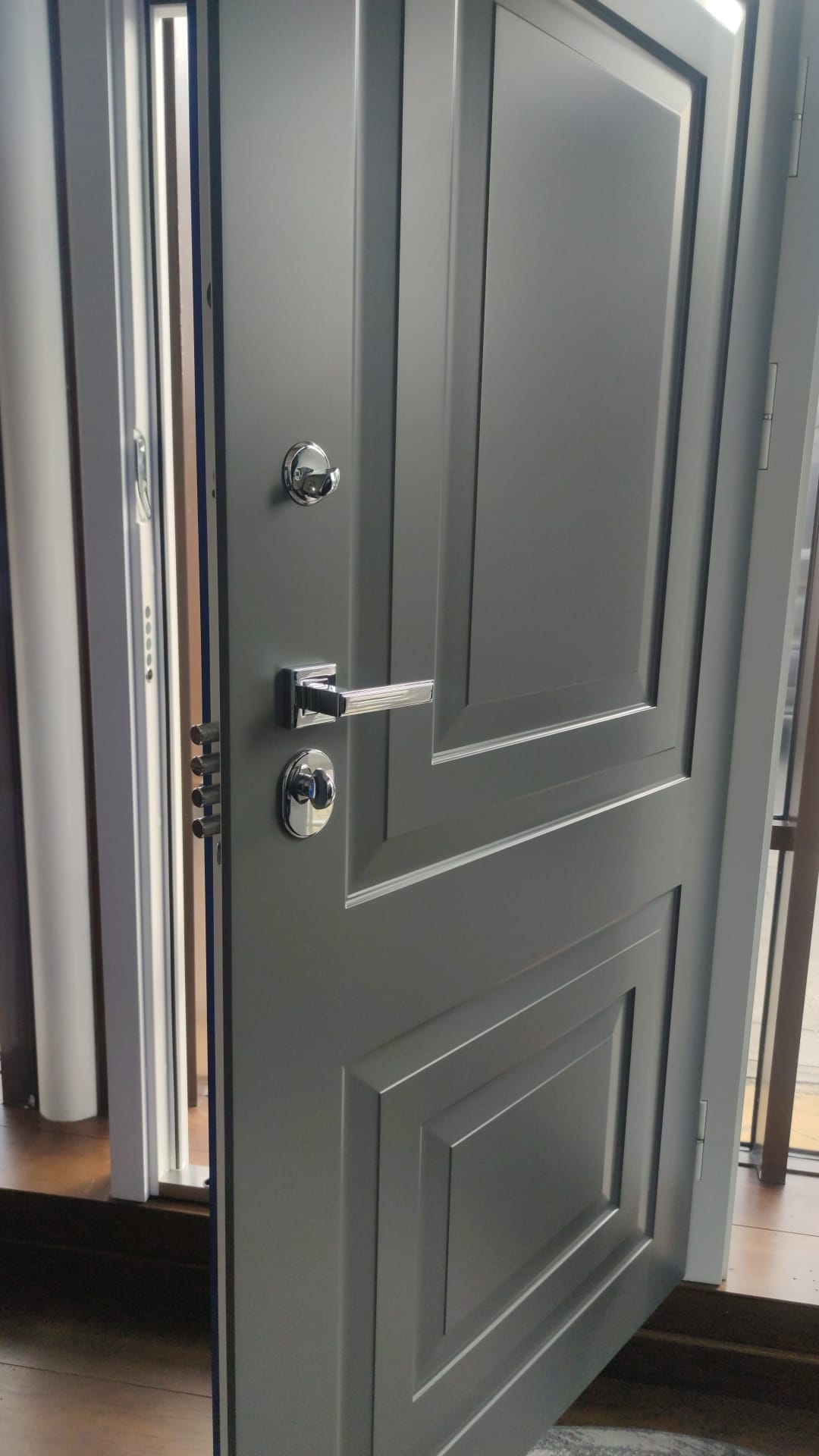
LPS 1175 SR3 is the second tier in SteelR's four-tier security ladder. It sits above the BS EN 1627 RC4 standard residential specification, and below the SR4 Commercial-grade upgrade. It means the door has been independently certified by the Loss Prevention Certification Board (LPCB), part of BRE Global, against a sustained forced-entry attack by a trained attacker using heavy-duty hand and power tools. SR3 is available on any SteelR door as the Enhanced upgrade specification. It is the police-preferred LPCB scheme, recognised by UK home insurers, conservation officers, and specifiers for high-value or threat-assessed residential briefs.
This page explains what SR3 actually tests, how the LPCB scheme differs from the European BS EN 1627 framework SteelR uses for the standard residential specification, why SR3 is the threshold UK home insurers recognise as genuinely serious, and where the SR4 commercial-grade upgrade and LPS 1673 ultra-high tiers sit in relation to it.
The test itself
LPCB-certified attack methodology with heavy tools and a trained tester
How SR3 compares
PAS 24 is the legal minimum. SR3 is a different tier
- PAS 24: one to three minute casual attack, basic hand tools
- SR2: three minutes, screwdrivers, pliers, wedges
- LPS 1175 SR3 (Issue 8): five minutes against crowbars, drills, chisels, heavy-duty cutting tools and a defined power-tool catalogue
- SR4 (LPS 1175): longer duration, adds battery-operated cutting tools and larger prying equipment
The SR4 upgrade
Where SR3 ends, SR4 begins
Why the four-tier ladder matters
Certifications available on any door, not just the flagship
Continue Reading
Related reading
Common Questions
Frequently asked questions
What does LPS 1175 SR3 mean on a residential steel door?
SR3 is Security Rating 3 under the LPCB scheme LPS 1175. It certifies that the door has been independently tested against a sustained forced-entry attack by an experienced intruder using heavy-duty hand and power tools. The LPCB methodology tests the complete door assembly under a defined tool set and attack-duration matrix. SR3 is SteelR's Enhanced upgrade tier, sitting above the BS EN 1627 RC4 standard residential specification. It is available on any SteelR door and is the recommended specification for high-value properties, conservation areas, listed buildings, and properties where an insurer or specifier has requested a police-preferred LPCB scheme certification.
How is SR3 different from PAS 24 and BS EN 1627 RC4?
PAS 24 is the UK minimum security standard required by Approved Document Q for new-build dwellings. It tests resistance to a casual opportunist attack of around one to three minutes using basic hand tools. BS EN 1627 RC4 (the European framework, single leaf, unglazed) is SteelR's standard residential specification, testing sustained forced-entry resistance with heavy-duty hand tools and battery-operated power tools. LPS 1175 SR3 is the LPCB-operated UK scheme used for police-preferred specifications, with a different tool-set and attack-duration methodology. SteelR offers all three on every door: PAS 24 as the regulatory baseline, RC4 as the European standard, SR3 as the LPCB-certified Enhanced upgrade.
Is SR3 the highest residential security rating available?
SR3 is SteelR's Enhanced upgrade tier. SR4 (LPS 1175 D10 Issue 8) is the Commercial-grade tier above it, used in data centres and bank vaults, available on residential specification by upgrade. LPS 1673 attack-resistance certification (the AR.A300, AR.B180E, AR.B300E and AR.C120E classes used on bank vault outer doors and embassy residences) is the Ultra-high tier, available by enquiry where a documented threat assessment justifies it. SteelR offers a four-tier ladder: PAS 24 plus RC4 standard, SR3 enhanced, SR4 commercial-grade, LPS 1673 ultra-high.
Does SR3 affect home insurance premiums?
In most cases yes. Home insurers treat independently certified security standards as material reductions in forced-entry risk. LPS 1175 SR3 certification, combined with Secured by Design approval, is usually sufficient evidence for insurers to accept the property as meeting or exceeding their minimum door specification, and in many cases to offer a premium adjustment. High-net-worth specialist insurers in particular recognise the LPCB scheme as a benchmark. Always confirm with your insurer directly, referencing the SR3 certificate and Secured by Design accreditation supplied with the door.
How does LPS 1175 SR3 testing actually work?
LPS 1175 testing is conducted by the Loss Prevention Certification Board (LPCB), part of BRE Global, a UKAS-accredited certification body. A trained tester attacks the complete door and frame assembly using the tool set specified for the SR3 class, for the LPS 1175 attack-duration matrix. The attacker must fail to create a passage large enough to enter. The test is conducted against the complete door system: frame, leaf, locking mechanism and hardware. Individual component certificates are not sufficient. The whole assembly must pass. SteelR's SR3 specifications use this LPCB-certified pathway.
Is SteelR the right fit
Worth considering SteelR if
- Your insurer requires LPS 1175 SR3 for a premium discount or to bind a higher-value contents schedule
- Your home or specifier has identified the LPCB police-preferred specification as the threshold to meet
- Your conservation officer accepts SR3 because the certification mark is not visible from the streetscape but the audit trail exists
- Your architect is drafting a Performance Specification at the SR3 threshold and needs a UK manufacturer who certifies at that level as standard
- You want the LPCB certificate referenced in the handover pack and a UK warranty enforced against a UK manufacturer
Bespoke · UK manufactured · BS EN 1627 RC4 · LPS 1175 SR3 / SR4 available
Enquire about a bespoke SteelR door for SR3 Residential Steel Doors
Free consultation with our design team. No obligation. Every door is manufactured in the UK to your specification. Standard residential spec is BS EN 1627:2011 RC4 single leaf, unglazed. LPS 1175 SR3 and SR4 enhanced and commercial-grade certifications are available on request, with LPS 1673 attack-resistance by enquiry. Installed by our in-house fitters.