Luxury Steel Entrance Doors, London
Luxury Steel Entrance Doors London — Bespoke, Installed Across All Boroughs
London coverage
Bespoke steel entrance doors for central London townhouses, mansion blocks and conservation-area homes
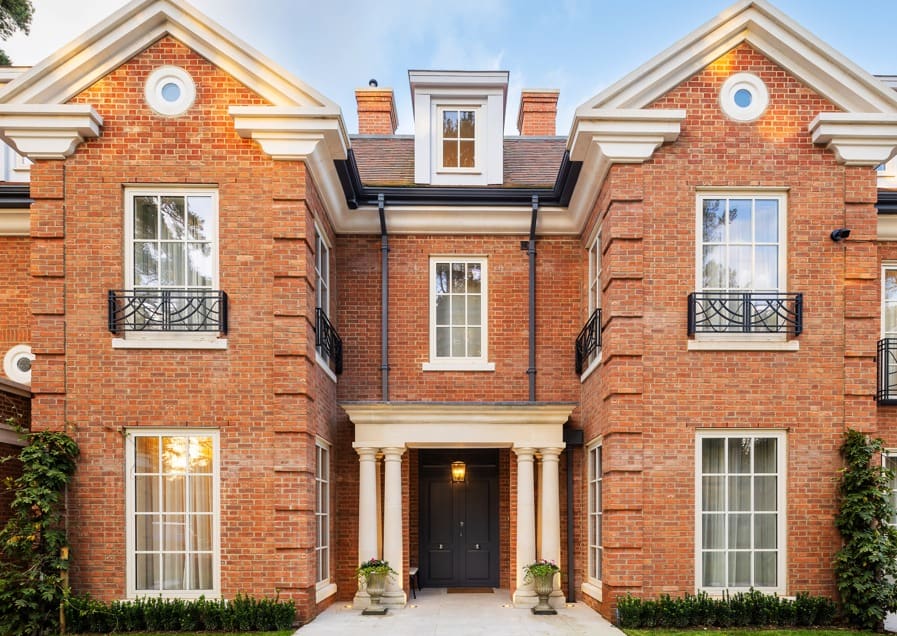
London is the majority of our UK work. The brief varies enormously, from a Georgian portico in Belgravia to a Victorian terrace in Chiswick to a contemporary Mayfair mansion block, but the underlying requirements tend to converge. Owners want a door that respects the architectural period of the building, meets serious security certifications, satisfies planning and conservation area constraints, and will still look correct in twenty-five years when the rest of the street has replaced its doors twice.
This page sets out the specification patterns we see most often in London, the boroughs we work in most frequently, and how the survey-to-installation process handles the practical constraints of central London access. Every door is PAS 24 certified and BS EN 1627:2011 RC4 single leaf, unglazed certified as Standard. LPS 1175 SR3 (LPCB police-preferred Enhanced upgrade), LPS 1175 SR4 D10 Issue 8 (Commercial-grade upgrade) and LPS 1673 attack-resistance (Ultra-high, by enquiry) are available as further tiers.
Borough coverage
Every London borough, no borough surcharge
- West London: Kensington, Chelsea, Fulham, Notting Hill, Holland Park, Chiswick, Hammersmith
- Central: Mayfair, Belgravia, Marylebone, St James's
- North: Hampstead, Highgate, St John's Wood, Primrose Hill
- South West: Putney, Barnes, Richmond, Wimbledon, Clapham, Dulwich
- Islington, Shoreditch, Wapping and wider E1 / N1
Conservation and planning
Coordinated with the planning authority where required
Security specification
The standard a central London door should meet
Access and installation
Central London access is the first thing we survey for
Continue Reading
Related reading
Common Questions
Frequently asked questions
Which London boroughs do you most frequently install in?
Our most frequent London installations are in West London, specifically Kensington, Chelsea, Fulham, Notting Hill, Holland Park, Chiswick, Hammersmith and Mayfair. We also regularly install in North London (Hampstead, Highgate, Primrose Hill, Belgravia, Marylebone), South West London (Putney, Barnes, Richmond, Wimbledon), and North London conservation areas (St John's Wood, Regent's Park). Every London borough is covered, with no borough surcharge.
Do you work in London conservation areas and on listed buildings?
Yes. A significant proportion of our London work is in conservation areas, and we regularly specify doors for listed and grade-II listed properties. The door design is coordinated with the local planning authority and, where appropriate, the conservation officer. We supply the drawings and specification documents planning applications require. Steel doors in black, navy, heritage green, British racing green, or any RAL that respects the conservation area palette are all common specifications.
How do you access central London townhouses for survey and installation?
London access is usually the first constraint discussed on the survey call. Parking permits, ULEZ, scaffolding for upper-floor sidelights, pedestrianised streets and tight terrace frontages are all handled as part of the project. Our installation vehicle and team are ULEZ-compliant. We coordinate with the property manager, porter or concierge on mansion block installations. On tight terrace frontages we stage delivery to minimise street presence.
Can a steel entrance door match a Georgian or Victorian London townhouse?
Yes, and this is the majority of our London work. A bespoke steel door is fabricated, not moulded, so panel proportions, panel depths, moulding profiles, knocker placement and letterplate position are specified to match the architectural period of the building. Six-panel Georgian configurations, four-panel Victorian proportions, Edwardian glazed upper panels and Regency arched fanlights are all typical specifications in our London portfolio. Steel is the structural advantage; bespoke fabrication delivers the historical authenticity.
What security standard should a luxury London front door meet?
For a central London townhouse, the SteelR Standard tier (PAS 24:2022 plus BS EN 1627:2011 RC4 single leaf, unglazed plus FD30S plus Secured by Design plus ISO 9001 plus UK Manufactured) is included on every door. PAS 24 is the regulatory minimum; BS EN 1627:2011 RC4 is the European framework for sustained forced-entry resistance and is materially above PAS 24. For higher-value properties or properties flagged by the owner's insurer, the LPS 1175 SR3 Enhanced upgrade (LPCB police-preferred, recognised by UK home insurers) and the LPS 1175 SR4 D10 Issue 8 Commercial-grade upgrade (the certification used in data centres and bank vaults) are available on every door. LPS 1673 attack-resistance is available by enquiry where a documented threat assessment justifies the Ultra-high tier.
Is SteelR the right fit
Worth considering SteelR if
- You are a Kensington, Chelsea, Holland Park, Notting Hill, Mayfair or Belgravia homeowner planning a townhouse renovation
- You own a prime-residential property whose insurer requires LPS 1175 SR3 or equivalent
- Your architect is specifying for a £2 million plus private residence in a London conservation area
- You are a London developer at the top of the new-build market where the entrance door is part of the elevation statement
- You want a heritage-correct exterior with modern security, fire and thermal performance built in
Bespoke · UK manufactured · BS EN 1627 RC4 · LPS 1175 SR3 / SR4 available
Enquire about a bespoke SteelR door for Luxury Steel Entrance Doors London
Free consultation with our design team. No obligation. Every door is manufactured in the UK to your specification. Standard residential spec is BS EN 1627:2011 RC4 single leaf, unglazed. LPS 1175 SR3 and SR4 enhanced and commercial-grade certifications are available on request, with LPS 1673 attack-resistance by enquiry. Installed by our in-house fitters.