BS EN 1627 RC4 Residential Steel Doors
BS EN 1627:2011 RC4 Residential Steel Door. SteelR's Standard Tier
BS EN 1627:2011 RC4. SteelR's Standard tier on every door
What BS EN 1627:2011 RC4 single leaf, unglazed actually means on the front door of a UK home
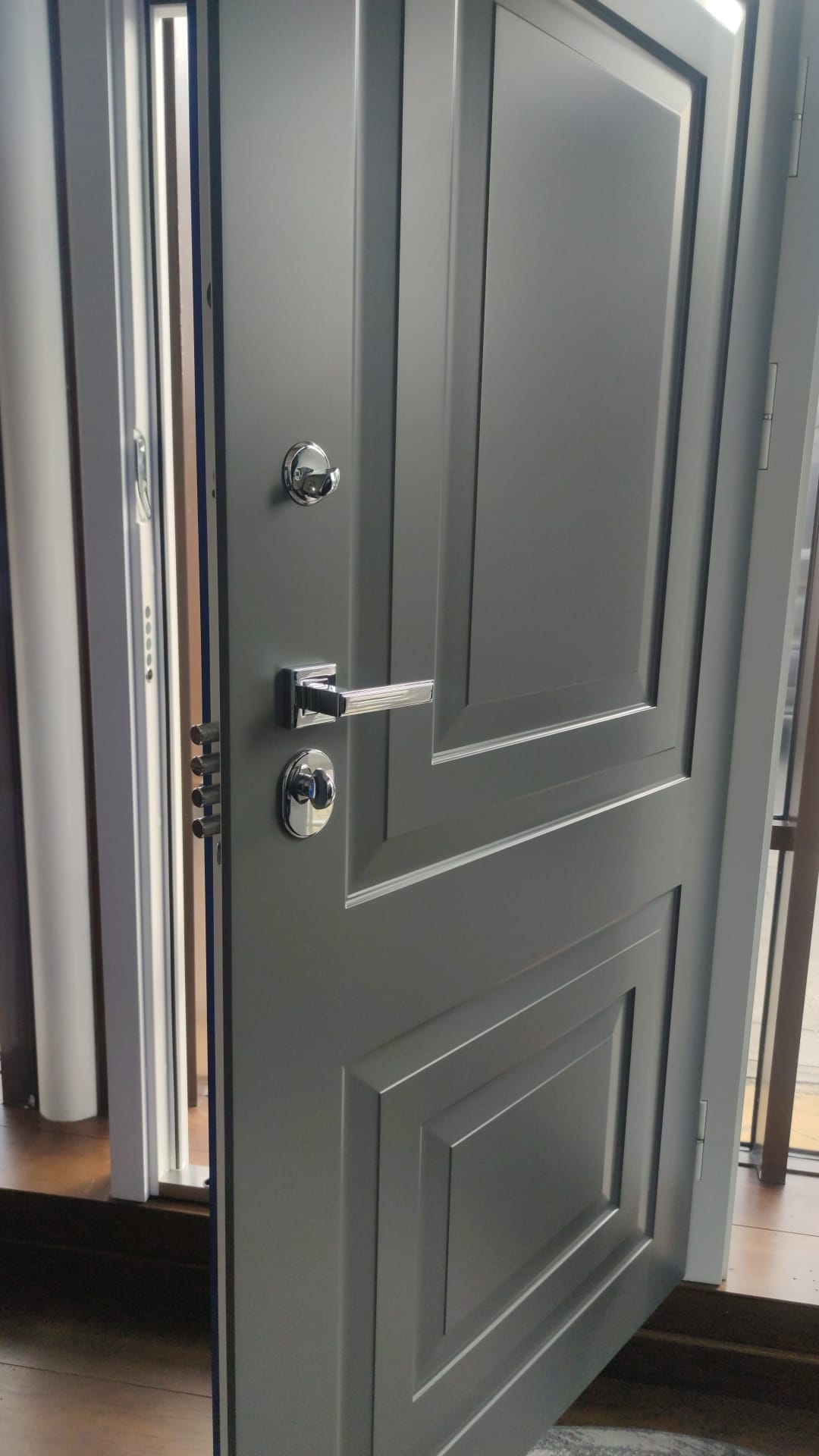
BS EN 1627:2011 RC4 is the first tier in SteelR's four-tier residential security ladder. It is the Standard specification on every bespoke door we manufacture, with no upgrade fee and no flagship-only restriction. RC4 is Resistance Class 4 under the European standard for the burglar resistance of doors and windows, certifying the complete door assembly against a sustained attack by a trained tester using heavy-duty hand tools and battery-operated power tools. The single-leaf, unglazed methodology is the conservative test specification within RC4: no glazing weak points, no inactive leaf reducing the attack surface.
This page explains what RC4 actually tests, why SteelR includes it as Standard rather than as an upgrade, how it differs from the PAS 24:2022 regulatory minimum mandated for new-build dwellings, how the European BS EN 1627 framework relates to the parallel LPCB LPS 1175 scheme, and where the LPS 1175 SR3 Enhanced upgrade and SR4 Commercial-grade upgrade sit in relation to it.
The test itself
Sustained attack with heavy hand tools and battery power tools, full assembly
How RC4 compares to PAS 24
PAS 24 is the legal minimum. RC4 is a different tier
- PAS 24:2022 hardware-only test, one-to-three-minute casual attack, basic hand tools
- BS EN 1627:2011 RC2: three minutes, screwdrivers, pliers, wedges
- BS EN 1627:2011 RC3: heavier hand tools and longer duration than RC2
- BS EN 1627:2011 RC4 (SteelR Standard): sustained attack, heavy-duty hand tools and battery-operated power tools, full assembly tested
RC4 vs LPS 1175 SR3 / SR4
Two parallel schemes. Both available on the same door
Why SteelR includes RC4 as Standard
The genuine baseline, not a flagship-only specification
Continue Reading
Related reading
Common Questions
Frequently asked questions
What does BS EN 1627:2011 RC4 single leaf, unglazed mean on a residential steel door?
RC4 is Resistance Class 4 under BS EN 1627:2011, the European standard for the burglar resistance of doors and windows. RC4 certifies that the complete door assembly has been independently tested at a UKAS-accredited laboratory against a sustained attack by an experienced intruder using heavy-duty hand tools and battery-operated power tools. The single-leaf, unglazed methodology is the conservative test specification within RC4: no glazing weak points, no inactive leaf reducing the attack surface. RC4 is materially above the PAS 24:2022 hardware-only test mandated for new-build dwellings, and is rarely offered as a residential standard in the UK. SteelR includes BS EN 1627:2011 RC4 single leaf, unglazed as the Standard tier on every bespoke door, with LPS 1175 SR3, SR4 and LPS 1673 available as upgrade tiers on the same door.
How does BS EN 1627:2011 RC4 differ from PAS 24:2022?
PAS 24:2022 is the UK security performance standard published by the British Standards Institution and mandated by Approved Document Q of the Building Regulations for new-build dwellings in England and Wales. It tests resistance to a one-to-three-minute casual forced-entry attack using basic hand tools, plus a cut test against glazing and a cylinder attack against the locking mechanism. BS EN 1627:2011 RC4 is a different scheme entirely: a longer attack, a heavier tool set including battery-operated power tools, and a different test methodology (the complete door assembly tested as a system). PAS 24 is the regulatory minimum; RC4 is materially higher. Every SteelR door meets both standards: PAS 24:2022 as the regulatory baseline plus BS EN 1627:2011 RC4 single leaf, unglazed as the Standard tier on every door.
How does BS EN 1627 RC4 differ from LPS 1175 SR3?
BS EN 1627:2011 (the European framework, classes RC1 to RC6) and LPS 1175 (the LPCB scheme, ratings SR1 to SR8) are parallel certification schemes operating under different methodologies and threat models. They are not equivalent: the Loss Prevention Certification Board has stated that over 90% of products tested under EN 1627 RC4 fail to achieve LPS 1175 SR2. The two schemes use different tool sets, different attack durations and different attack objectives. RC4 tests sustained forced-entry resistance against heavy-duty hand tools and battery-operated power tools; LPS 1175 SR3 (Issue 8) tests a five-minute power-tool attack against a defined Issue 8 tool catalogue and is the LPCB police-preferred residential specification recognised by UK home insurers and Secured by Design. SteelR ships RC4 as the Standard residential specification on every bespoke door, with LPS 1175 SR3 available as the Enhanced upgrade tier above it. SR3 is not a replacement for RC4; it is an additional layered accreditation on the same door.
Why does SteelR include BS EN 1627 RC4 as Standard rather than as an upgrade?
RC4 is the European framework for sustained forced-entry resistance. It is the right baseline for any premium residential steel front door. Most UK manufacturers cap their standard residential offering at PAS 24:2022 (the regulatory minimum) and reserve RC4 or LPS 1175 ratings for flagship lines or commercial product. SteelR includes BS EN 1627:2011 RC4 single leaf, unglazed on every bespoke door, with no upgrade fee, no flagship-only restriction, and no exception. The position is that a homeowner specifying a bespoke steel front door from a UK manufacturer should not have to negotiate up from a PAS 24 baseline to get a serious certification. RC4 is the genuine baseline. Upgrade tiers (LPS 1175 SR3 Enhanced, LPS 1175 SR4 Commercial-grade, LPS 1673 Ultra-high) are available on every door for briefs that justify the additional certification.
What documentation does SteelR provide for the BS EN 1627 RC4 certification?
Every SteelR door is supplied with the BS EN 1627:2011 RC4 single leaf, unglazed test certification documentation as part of the handover pack. The pack also includes the PAS 24:2022 certificate, Secured by Design accreditation, FD30S fire and smoke certification, and ISO 9001 manufacturing certifications. Where the door has been specified with an upgrade tier (LPS 1175 SR3, SR4, or LPS 1673), those certifications are included alongside the RC4 baseline. All test reports reference the UKAS-accredited laboratory that conducted the test and are valid for insurer submission, planning authority verification and Building Safety Act compliance documentation.
Is SteelR the right fit
Worth considering SteelR if
- Your specifier or insurer wants a European-standard reference (BS EN 1627 RC4) on the spec rather than the LPS 1175 ladder
- Your project is a high-value residential refurbishment where the door is the next major upgrade after kitchen and bathrooms
- You want a certified Standard tier without the additional cost or lead time of an LPS 1175 SR3 or SR4 upgrade
- Your architect needs a UK manufacturer who issues RC4 single-leaf, unglazed certification as standard, not as a paid extra
- You want the certificate referenced in the handover pack and a UK warranty enforced against a UK manufacturer
Bespoke · UK manufactured · BS EN 1627 RC4 · LPS 1175 SR3 / SR4 available
Enquire about a bespoke SteelR door for BS EN 1627 RC4 Residential Steel Doors
Free consultation with our design team. No obligation. Every door is manufactured in the UK to your specification. Standard residential spec is BS EN 1627:2011 RC4 single leaf, unglazed. LPS 1175 SR3 and SR4 enhanced and commercial-grade certifications are available on request, with LPS 1673 attack-resistance by enquiry. Installed by our in-house fitters.