SR3 vs SR4 Residential Steel Doors
LPS 1175 SR3 vs SR4 on a UK Residential Steel Front Door, Side by Side
LPS 1175 Issue 8. Two tiers, one ladder
SR3 is the Enhanced upgrade tier. SR4 is the Commercial-grade upgrade tier. Both stack on the BS EN 1627 RC4 Standard on the same SteelR door
SR3 and SR4 are the second and third tiers of SteelR's four-tier residential security ladder. They are not separate schemes. They are different rating bands within LPS 1175 Issue 8, the Loss Prevention Certification Board scheme operated by BRE Global. The methodology is the same. The tool catalogue and the attack duration are different.
The four-tier SteelR ladder is: BS EN 1627:2011 RC4 single leaf, unglazed as Standard on every door, LPS 1175 SR3 as the Enhanced upgrade above the Standard, LPS 1175 SR4 (D10 Issue 8) as the Commercial-grade upgrade above SR3, and LPS 1673 attack-resistance as the Ultra-high tier above SR4 (available by enquiry). This page sets out the SR3 vs SR4 decision specifically, where the two tiers actually differ, who specifies each, and how the two certifications behave when stacked with FD30S, FD60 and LPS 1673 on the same bespoke door.
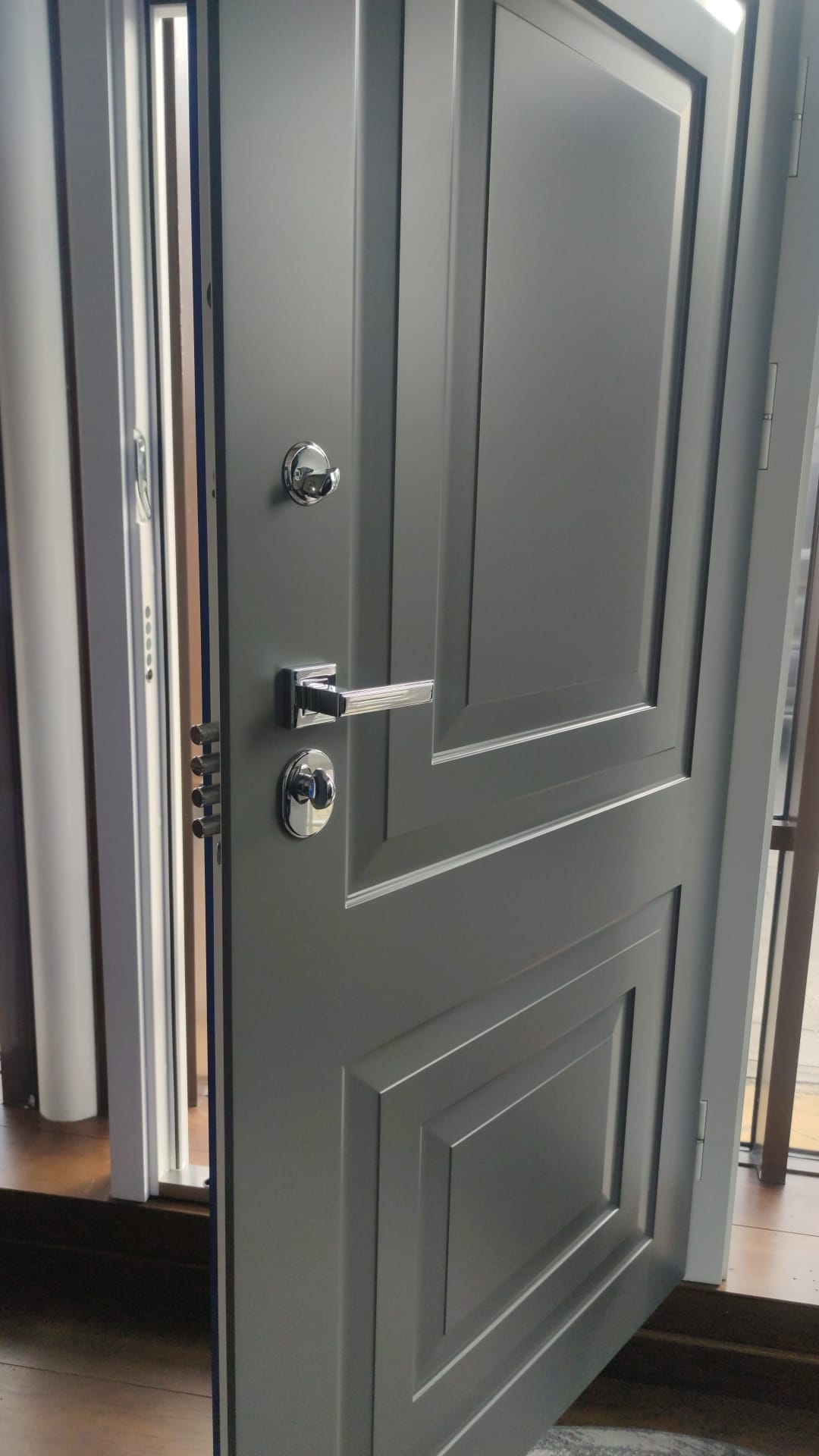
Side by side
SR3 and SR4 compared on the four metrics that matter
- Tool catalogue. SR3 covers bolt cutters, hammers, drills, crowbars and battery-operated power tools under Issue 8. SR4 (D10 Issue 8) extends with larger crowbars, heavier prying equipment and battery-operated cutting tools
- Attack duration. SR3 working-time threshold is 5 minutes under Issue 8. SR4 increases the attack window beyond SR3 within the same Issue 8 framework
- Typical specification context. SR3: high-value properties, conservation areas, listed buildings, insurer-specified or LPCB-preferred briefs. SR4: documented threat assessment, specialist private-bank clients, security-sensitive professions, layered safe-room specs
- SteelR lead time. SR3: standard approximately 8 weeks from sign-off. SR4: standard plus approximately 2 to 3 weeks for the additional Commercial-grade certification process and supply chain coordination
- Standards stacking. Both SR3 and SR4 stack with FD30S (or FD60 upgrade), Secured by Design, PAS 24, ISO 9001 on the same door assembly
Methodology
How LPS 1175 Issue 8 SR3 and SR4 are actually tested
When each tier applies
SR3 for the high-value home brief, SR4 for documented threat or layered safe-room work
Specifying the right tier
How the SteelR survey conversation arrives at SR3 or SR4
Continue Reading
Related reading
Common Questions
Frequently asked questions
What is the actual difference between LPS 1175 SR3 and SR4 on a residential steel door?
SR3 and SR4 are both Security Ratings under LPS 1175 Issue 8, the LPCB scheme operated by BRE Global. The methodology is the same. The difference is the tool catalogue and the attack duration. SR3 is tested against a defined Issue 8 tool set including bolt cutters, hammers, drills, crowbars and battery-operated power tools, with a five-minute working-time threshold. SR4 (D10 designation under Issue 8) extends the tool catalogue with larger crowbars, heavier prying equipment and battery-operated cutting tools, and increases the attack duration. SR4 is the certification used on data centres, bank vaults and embassy residences. SteelR offers SR3 as the Enhanced upgrade tier and SR4 as the Commercial-grade upgrade tier on every bespoke residential door.
Where does SR3 sit in the SteelR four-tier residential security ladder?
SteelR ships every bespoke door at the Standard tier: PAS 24:2022 plus BS EN 1627:2011 RC4 single leaf, unglazed (the European framework for sustained forced-entry resistance) plus FD30S fire and smoke rating plus Secured by Design plus ISO 9001 plus UK Manufactured. LPS 1175 SR3 (Issue 8) is the Enhanced upgrade tier above the Standard. SR4 (LPS 1175 D10 Issue 8) is the Commercial-grade upgrade tier above SR3. LPS 1673 attack-resistance is the Ultra-high tier, available by enquiry. The four tiers stack on the same door rather than replace one another.
Who specifies SR4 on a residential front door rather than SR3?
SR4 is rare on a private home. The legitimate audience is owners with a documented threat assessment from a private security advisor; clients of specialist private banks where the underwriter has flagged a higher risk profile; residences for security-sensitive professions including legal, political and senior financial roles; properties with constructed safe rooms or panic rooms where SR4 sits behind the front door as part of a layered security plan; and owners who, having understood the difference between PAS 24, RC4, SR3 and SR4, decide they want the commercial-grade certification for the reassurance alone. For everyone else, the SR3 Enhanced upgrade or the BS EN 1627 RC4 Standard is the right answer.
Does SR4 affect home insurance premiums differently from SR3?
In most cases the difference is marginal at the homeowner end. Both SR3 and SR4 are LPCB-certified ratings recognised by UK home insurers. SR3 is typically sufficient for standard high-value home policies; specialist high-net-worth insurers (Home and Legacy, Hiscox Private Client, Chubb Premier) recognise SR3 as a benchmark and may offer premium adjustments. SR4 is rarely required by insurers but is occasionally requested for properties with bespoke contents schedules above a defined threshold, or where a specialist underwriter has flagged the address. Always confirm with your insurer directly, referencing the LPCB certificate supplied with the door.
Does SR4 affect the look or design of the door compared to SR3?
No. Both SR3 and SR4 certifications attach to the internal door assembly, frame integration, hardware specification and locking system, not the external aesthetic. A Georgian six-panel door in a heritage colour with brass hardware is a viable SR3 or SR4 specification. So is a contemporary flush leaf in matt anthracite. Period proportions, the full RAL colour palette, hardware finish options and integrated sidelight or fanlight configurations are all available within both tiers. The certification operates inside the door; it does not impose a commercial aesthetic on the outside.
How is the SR3 vs SR4 lead time decided, and how does it compare?
SR3 follows the standard SteelR design process at the standard eight-week lead time. SR4 adds approximately two to three weeks to the standard, reflecting the additional certification process and supply chain coordination for the Commercial-grade certified components. After the on-site survey, the SteelR design team confirms whether the brief justifies the SR4 Commercial-grade tier, the SR3 Enhanced upgrade, or whether the BS EN 1627 RC4 Standard residential specification is more appropriate. There is no obligation to commit to a tier before the survey conversation.
Can SR3 or SR4 be combined with FD30S, FD60 or LPS 1673 on the same door?
Yes. SteelR's bespoke construction stacks certifications rather than choosing between them. Every door ships at FD30S as standard. FD60 fire and smoke rating is available as an upgrade for protected escape routes, stairwells and Higher-Risk Buildings under the Building Safety Act 2022. SR3 or SR4 can be combined with FD30S or FD60 on the same door assembly. LPS 1673 attack-resistance certification (Ultra-high, AR.A300, AR.B180E, AR.B300E, AR.C120E) is available by enquiry where a documented threat assessment justifies it, and stacks above SR4 on the same door. The four-tier ladder is the rule; nothing is mutually exclusive.
Is SteelR the right fit
Worth considering SteelR if
- You have a documented threat assessment from a private security advisor
- You are a client of a specialist private bank where the underwriter has flagged the address
- Your home is the residence for a security-sensitive profession (legal, political, senior financial)
- Your property includes a constructed safe room or panic room behind the front door
- Most homeowners need SR3, not SR4, and that is worth saying upfront
Bespoke · UK manufactured · BS EN 1627 RC4 · LPS 1175 SR3 / SR4 available
Enquire about a bespoke SteelR door for SR3 vs SR4 Comparison
Free consultation with our design team. No obligation. Every door is manufactured in the UK to your specification. Standard residential spec is BS EN 1627:2011 RC4 single leaf, unglazed. LPS 1175 SR3 and SR4 enhanced and commercial-grade certifications are available on request, with LPS 1673 attack-resistance by enquiry. Installed by our in-house fitters.
Talk to our design team about which tier fits your brief
The four-tier ladder