A Standard Written for Data Centres, Not Homes
Behind every data centre, bank vault and pharmaceutical store sits a door specification most homeowners never encounter. It is built to delay a determined, well-equipped attacker working to a specific objective, for far longer than any opportunist break-in lasts. For decades that level of door belonged exclusively to commercial and critical-infrastructure buildings.
That is changing. As of 2026, a small group of UK manufacturers, SteelR among them, offer that same commercial-grade certification as an upgrade on an ordinary residential front door. A standard written for server halls is now being fitted to family homes.
This article is about why that crossover happened, what it changes on the actual door, and which households it genuinely serves. For the full specification of the certification itself, the SR4 residential steel door page is the reference. This is the story behind it.
Why the Residential Threat Profile Changed
A door standard does not move from commercial into residential use without a reason. The reason is that the residential threat profile has shifted.
Over the past decade two things happened at once. Opportunist break-ins, the kind PAS 24 was written to stop, declined as PAS 24 became a universal requirement on new-build dwellings under Approved Document Q. At the same time, planned attacks on high-value properties became more common: attackers arriving with power tools, prepared to spend real time on the door, working to a defined objective inside the house.
The PAS 24 and SR3 specification tree was designed for the earlier pattern. It still covers the broad base of the residential threat pyramid well. What it does not fully cover is the narrow top of that pyramid: the planned, equipped, patient attack on a property the attacker has chosen deliberately. The commercial standard does cover exactly that, because that is the threat commercial security managers have always designed against.
That is the crossover in one sentence. A standard built for a commercial threat model became practically useful on the small slice of residential properties that now face a comparable threat.
Where the Standard Comes From
The commercial certification in question is SR4, Security Rating 4 under LPS 1175 Issue 8. LPS 1175 is the physical-security scheme operated by the Loss Prevention Certification Board, part of BRE (Building Research Establishment). It runs from Security Rating 1 up to Security Rating 8, and SR4 sits at the point where high-end residential meets entry-level commercial.
It is worth being precise about how the certifications stack, because the names invite confusion. Every SteelR door is certified to BS EN 1627:2011 RC4 as Standard. LPS 1175 SR3 is the Enhanced upgrade above it. LPS 1175 SR4 (the D10 designation in the Issue 8 matrix) is the Commercial-grade upgrade above SR3. LPS 1673 attack-resistance is the Ultra-high tier above that. The SR3 vs SR4 comparison walks through the tier choice in detail, and the SR3 guide for homeowners covers the Enhanced tier in full. What matters here is simply that SR4 is the rung where the commercial world begins.
The buildings SR4 was written for are unambiguous. Data centre access doors protecting server halls. Bank vaults and cash-handling rooms. Pharmaceutical and chemical stores. Utility, telecoms and transport infrastructure. Embassy and consular residences. High-value document and art storage. In each case a failed door carries consequences measured in millions of pounds, regulatory liability, or worse. None of that is a normal family home, which is precisely why the crossover is worth examining rather than assuming.
What the Crossover Looks Like on a Real Door
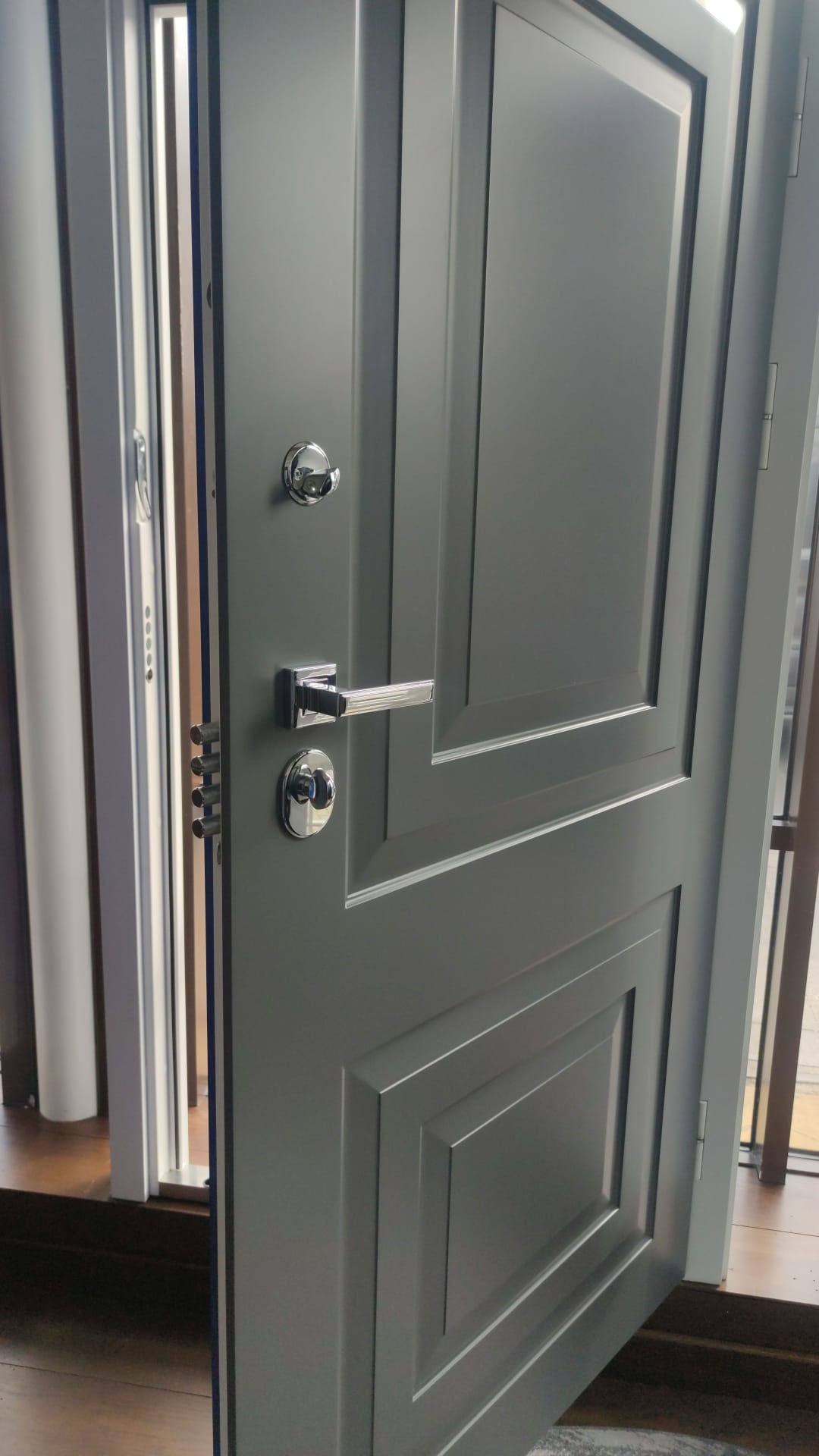
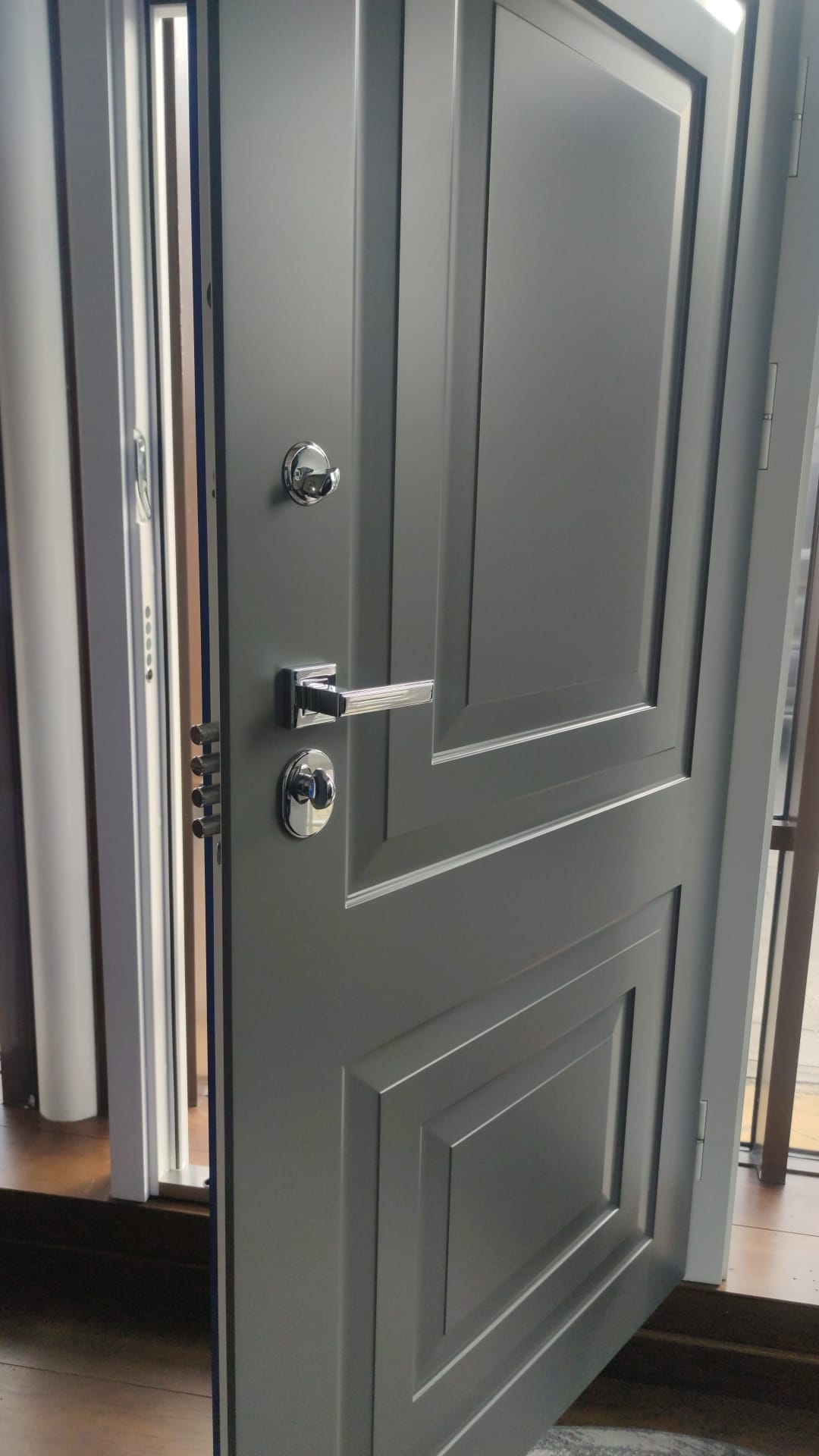
A commercial standard is only meaningful on a home if it changes the physical door. It does. The step from the SR3 Enhanced upgrade to the SR4 Commercial-grade upgrade is genuine engineering, not a marketing label.
| Specification | SR3 (Enhanced upgrade) | SR4 (Commercial-grade upgrade) | |---|---|---| | Door leaf thickness | 70mm | 90mm | | Outer steel skin | 1.5mm gauge | 2mm gauge | | Multi-point lock | 5-point minimum | 7-point | | Hinge configuration | Heavy-duty ball-bearing, 3 per leaf | Heavy-duty ball-bearing, 4 per leaf, reinforced bolt-through | | Door leaf weight | 95 to 120 kg | 130 to 160 kg | | Cylinder | TS007 3-star anti-snap | Sold Secure Diamond |
The test methodology behind those numbers steps up in parallel. SR3 testing under LPS 1175 Issue 8 puts the complete door assembly against a five-minute sustained attack using the Issue 8 tool catalogue. SR4 extends both the tool set and the attack duration: battery-operated cutting tools, larger prying equipment and higher-power rotary tools, against a longer working-time threshold. The battery-operated cutting tool inclusion matters, because it reflects how well-equipped attackers have actually evolved. (LPS 1175 and BS EN 1627 are parallel schemes that run different test methodologies; SteelR's Standard tier is BS EN 1627:2011 RC4, with the LPS 1175 SR3 and SR4 certifications available as upgrades above it.)
Three features of the test are worth understanding. The test is against the complete assembly, so frame, leaf, lock, hinges and any glazing pass or fail as one system; an SR4 door is never an SR4 lock on a lower-rated frame. The test is against a defined tool category, which stops the industry practice of claiming a high rating against a favourable tool selection. And the test is against an attack objective, typically creating an aperture large enough for a person to pass through, not simply the time taken to defeat the lock. When a SteelR door carries the SR4 upgrade, the certificate is supplied in the handover pack and is valid against the door as installed, not only as it left the factory.
Which Households the Crossover Actually Serves
The honest answer to "should this be on my home" is, for most homes, no. The crossover serves a small set of UK households, and SteelR is direct about that rather than pretending otherwise.
High-value properties where a determined attack is plausible. Properties in the high seven figures and above, properties holding significant art or jewellery, properties known locally as the residence of a public-facing individual. These homes face a different threat profile from a typical semi-detached, and a specialist insurer's expectations often reflect that.
Rural and isolated properties. A country estate twenty minutes from the nearest police response is a different security proposition from a terraced street in a town centre. Attack duration matters more when help is further away, and the SR4 upgrade extends the resistance window.
Insurance-driven specifications. Several specialist UK home insurers now explicitly recognise LPS 1175-certified entrance doors as a material reduction in forced-entry risk. On high-value policies that can translate into premium adjustments or the removal of restrictive clauses.
Owners who want the highest available specification. Some homeowners, having understood the difference between PAS 24, RC4, SR3 and SR4, decide they want the commercial-grade certification on their home for the reassurance alone. A home is a long-term asset, and the incremental cost of the upgrade across a twenty-five year service life is modest.
For every household outside those categories, the LPS 1175 SR3 Enhanced upgrade above the BS EN 1627 RC4 Standard is a serious, considered specification that comfortably exceeds the threat profile a typical home faces. The crossover does not make SR4 the right answer for most homes. It makes SR4 available for the homes where the elevated threat profile is real.
Frequently Asked Questions
Why would a residential manufacturer offer a commercial door standard at all?
Because the top of the residential threat pyramid changed. As PAS 24 closed off opportunist break-ins, the remaining serious risk to high-value homes became the planned, equipped attack, which is the threat commercial standards were always written for. SteelR chose to make the SR4 upgrade available on every residential door rather than restricting it to one premium line, so a rural estate, a flagged city townhouse and an architect-specified secure new build all have access to the same option.
Does fitting a commercial-grade door make a home look commercial?
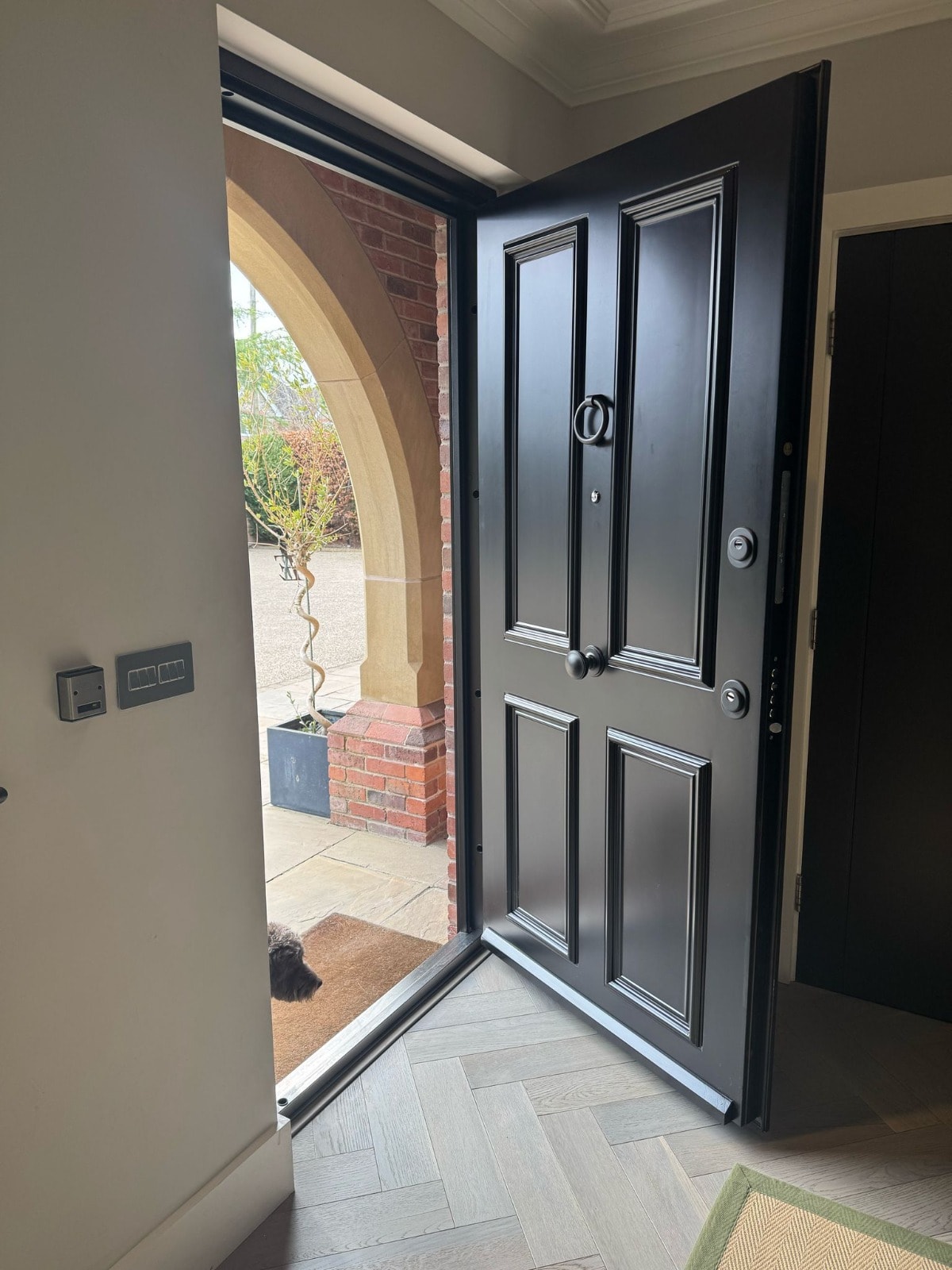
No. The SR4 certification attaches to the internal door assembly, frame integration, hardware and locking system, none of which is externally visible. A Georgian six-panel door in a heritage colour with brass hardware is a viable SR4 specification, and so is a contemporary flush leaf in matt anthracite. The full RAL palette, hardware finishes, glazing and sidelight configurations are all available on a door carrying the upgrade.
Does the SR4 upgrade change the lead time?
The standard SteelR lead time runs approximately eight weeks from first enquiry. A door specified with the SR4 upgrade adds roughly two to three weeks, reflecting the additional certification process and the supply-chain coordination for the certified components. The design team confirms the appropriate tier at the survey stage.
Can a fire-rated door also carry the SR4 upgrade?
Yes. FD30S fire and smoke rating is standard on every SteelR door and applies equally to a door specified with the SR4 upgrade. FD60 is available as a further upgrade where sixty-minute fire integrity is required. The fire rating, the forced-entry certification and the SR4 upgrade all apply to the same door assembly at once.
Is a commercial-grade door overkill for a typical UK home?
For most homes, yes, and that is worth saying plainly. The LPS 1175 SR3 Enhanced upgrade already provides security that significantly exceeds the threat profile most residential properties face. The SR4 upgrade becomes relevant for the specific households set out above: high-value properties, isolated locations, insurer-flagged risk profiles, and owners who want the commercial specification for its own sake.
How is the SR4 certification documented after installation?
The LPS 1175 certificate is supplied in the handover pack alongside the PAS 24 and Secured by Design certificates. The certification is recorded against the property address and kept on file at the SteelR UK facility, so future owners or insurers can verify the specification and request replacement certificates if needed.
The Bottom Line
SR4 under LPS 1175 is a genuine commercial-grade certification, written for data centres, bank vaults and critical infrastructure. Its arrival as a residential upgrade is not a marketing exercise. It is a response to a measurable shift in how high-value UK homes are actually attacked.
For most homeowners, the LPS 1175 SR3 Enhanced upgrade above the BS EN 1627 RC4 Standard remains the right specification. For the small set of households where the elevated threat profile is real, the crossover means the same door engineering used on commercial premises is now available, with the certification to prove it.
Whichever tier suits the property, the starting point is a free on-site survey with a SteelR surveyor. The survey establishes the aperture, the structural context and the threat profile, and from there the design team advises on the right specification. The SR4 residential steel door page holds the full specification, the security specification page sets the four tiers side by side, and the bespoke steel front doors hub covers the complete SteelR service. Representative work includes our contemporary steel doors and traditional designs.