The Reality of UK Burglary in 2026
The Office for National Statistics recorded approximately 280,000 domestic burglaries in England and Wales in the year ending March 2025. While the overall trend has declined from its peak in the early 2000s, the nature of break-ins has shifted. Opportunistic forced entry through the front door remains the single most common method, accounting for around 70% of all domestic burglaries according to police crime data.
For homeowners in affluent areas, particularly across London, Surrey and Hertfordshire, the risk profile is heightened. Properties displaying visible signs of wealth become targets, and professional burglary gangs increasingly operate in these regions using sophisticated reconnaissance techniques.
The front door is the most frequently targeted entry point in UK domestic burglaries, making it the single most important security investment a homeowner can make.
This guide examines what genuinely makes a front door burglar-proof, which standards and certifications to look for, and why the majority of doors fitted across the UK fall short of meaningful security.
How Burglars Target Front Doors
Understanding how forced entry works is essential to preventing it. The methods used against residential front doors fall into several distinct categories, each exploiting different weaknesses.
Cylinder Snapping
This is the most prevalent method of front door attack in the UK. Standard euro profile cylinders, the type fitted to the vast majority of composite and uPVC doors, can be snapped in under 10 seconds using nothing more than a pair of pliers or a mole wrench. Once the cylinder is broken, the locking mechanism can be manipulated from outside and the door opened without visible damage to the frame.
Lock Bumping and Picking
Lock bumping uses a specially cut key blank that, when struck with a blunt object, briefly displaces all the pin tumblers simultaneously. It is quiet, fast and leaves no trace. Lock picking achieves the same result through manual manipulation. Both methods exploit the basic pin tumbler mechanism found in most residential cylinders.
Forced Entry
The most direct approach involves physical force applied to the door itself. Kicking, shoulder-barging and crowbar attacks target the weakest points: the area around the lock keep, the hinge side and the centre of the door leaf. A standard uPVC or softwood timber door can be breached in under 30 seconds with a crowbar.
Letterplate Fishing
Where a letterplate is fitted, burglars use hooked wires or tools to reach through and manipulate interior door handles, thumb-turns or key chains. This method is surprisingly effective against doors where internal hardware is accessible from the letterplate opening.
What Makes a Door Genuinely Burglar-Proof
A truly burglar-proof front door is not defined by a single feature but by the integration of several critical components working as a complete system. Weakness in any single element compromises the whole.
Material Strength
The door leaf itself must resist cutting, drilling and sustained impact. The hierarchy of residential door materials, ranked by security performance, is clear:
- uPVC, weakest. Plastic frame flexes and splits under force
- Softwood timber, splits around lock keeps and hinges
- Hardwood timber, better, but still vulnerable to concentrated force
- Composite, reinforced core with GRP skin offers good resistance
- Aluminium, strong, but softer metal limits top-end performance
- Steel, strongest residential door material available
Steel is the only residential door material capable of achieving LPS 1175 SR3 certification (the LPCB police-preferred rating). The Issue 8 test requires the door to withstand sustained attack using professional-grade tools (crowbars, drills and angle grinders) for a minimum of five minutes. Every SteelR door is BS EN 1627 RC4 certified as Standard, with LPS 1175 SR3 available as the Enhanced upgrade tier on every door. For a comprehensive breakdown, see our security overview.
Multi-Point Locking Systems
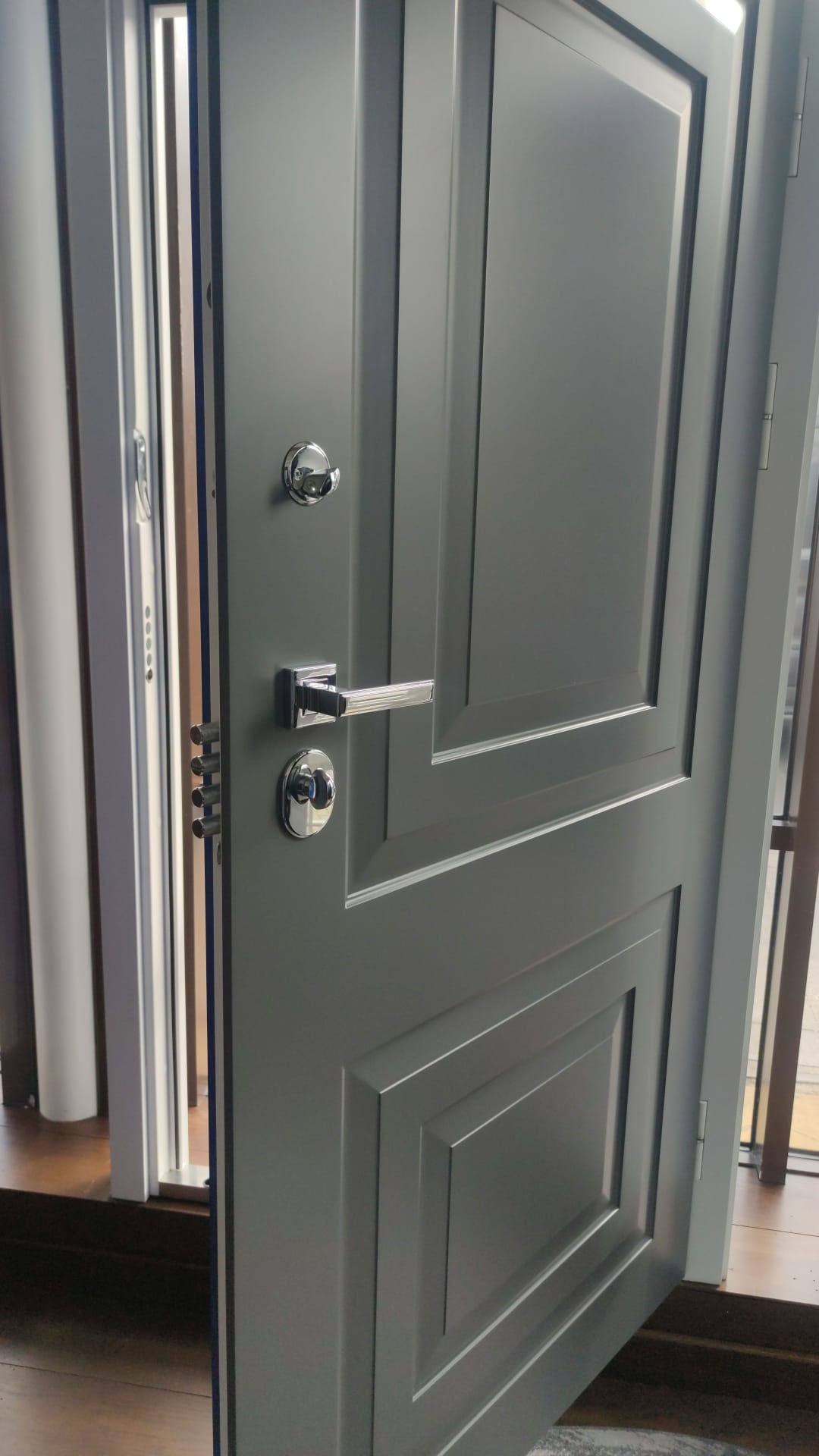
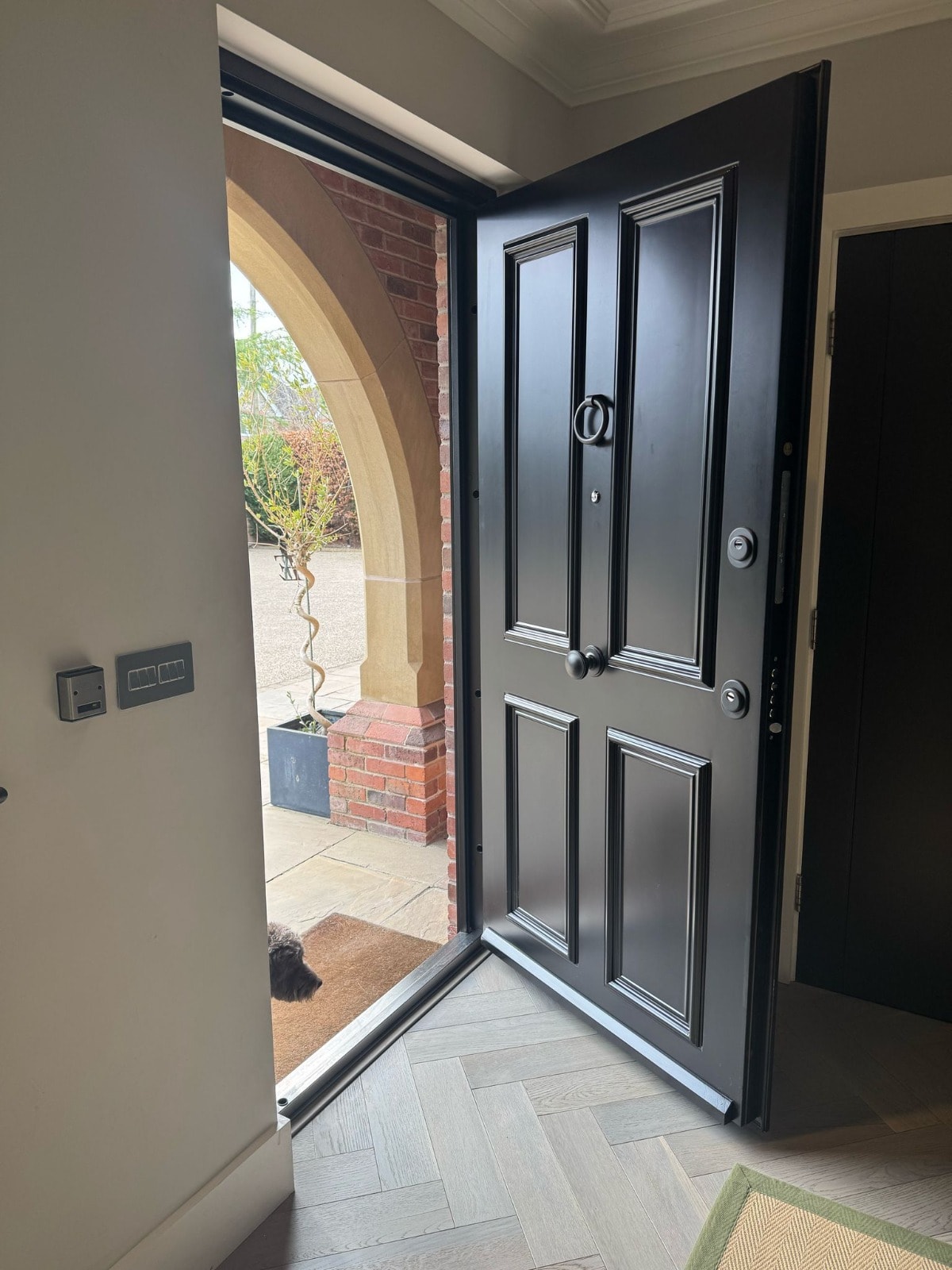
A single deadbolt offers a single point of failure. Multi-point locking engages the door at multiple positions along the frame, typically five, seven or more locking points distributed across the full height. This distributes force across the entire frame perimeter, making concentrated attack far more difficult.
The best systems combine hook bolts, deadbolts and roller cams to create a locking profile that resists both lateral force and vertical lever attacks.
High-Security Cylinders
The locking cylinder must be rated to resist all common attack methods. Look for cylinders certified to TS007 3-star or holding a Sold Secure Diamond rating. These specifications require resistance to snapping, picking, bumping, drilling and extraction. Any door claiming to be burglar-proof that ships with a standard euro cylinder is fundamentally compromised.
Reinforced Frames and Fixings
A strong door in a weak frame offers no security. The frame must be anchored into the structural opening with heavy-gauge fixings, not the plastic plugs and short screws commonly used in mass-market installations. Steel frames welded to the door assembly create a monolithic unit that cannot be separated under attack.
Anti-Lift Hinges
Standard hinges can be attacked by lifting the door off its pins from the hinge side. Dog-bolt hinges or concealed anti-lift pins engage interlocking studs in the frame when the door is closed, preventing removal even if the hinge itself is destroyed.
Glazing Specification
If glazed panels are present, the glass must be laminated security glass, not standard toughened glass, which shatters into granules and creates an immediate opening. Laminated glass holds together when struck, requiring sustained and noisy attack to penetrate. For the highest security, look for glazing tested to EN 356 class P6B or above.
Security Ratings: The Complete Hierarchy
The European standard BS EN 1627:2011 provides the definitive framework for door security classification. Understanding this hierarchy is essential when evaluating any door marketed as burglar-proof.
PAS 24: The Regulatory Minimum
PAS 24 is required by Approved Document Q of the Building Regulations for new dwellings. It tests resistance to basic tools, screwdrivers, pliers, small wedges, for approximately three minutes. PAS 24 represents the minimum legal requirement, not a meaningful security benchmark. Most composite and aluminium doors achieve this level.
SR2 (RC2): Enhanced Security
SR2 tests resistance to simple hand tools for three minutes under the European standard. It is a step above PAS 24 but still represents a relatively modest attack scenario. Premium aluminium doors and some reinforced composite doors achieve SR2.
LPS 1175 SR3. The Police-Preferred Residential Specification
LPS 1175 SR3 is the LPCB police-preferred residential rating. Testing under LPS 1175 Issue 8 subjects the complete doorset to sustained attack using crowbars, drills and angle grinders for five minutes. Only steel doors can achieve this rating. For homeowners seeking serious burglar-resistance certification, the LPS 1175 SR3 Enhanced upgrade tier (above the BS EN 1627 RC4 Standard) is the right specification for most residential properties.
LPS 1175 SR3 is the highest residential security rating routinely specified outside commercial-grade and ultra-high tiers, and is only achievable with steel construction. SteelR also offers SR4 (Commercial-grade) and LPS 1673 (Ultra-high, by enquiry) on residential specification for properties with a documented elevated threat profile.
Full technical details of SR3 testing protocols and what they mean in practice are available on our security specification page.
SR4 and SR5: Commercial and Government
SR4 and SR5 involve power tools and extended attack durations of 10 and 15 minutes respectively. These ratings apply to government buildings, embassies and high-security commercial premises. They are not standard residential specifications, though bespoke solutions can be engineered on request.
The Secured by Design Scheme
Secured by Design (SBD) is the official police security initiative operated by Police Crime Prevention Initiatives (PCPI). Products carrying the SBD accreditation have been independently tested and assessed by police-approved laboratories.
The scheme was established in 1989 and works with manufacturers to ensure products meet minimum security standards. For entrance doors, SBD accreditation typically requires PAS 24 certification at minimum, though many SBD-listed products exceed this baseline significantly.
Secured by Design accreditation is recognised by insurers, police forces and local planning authorities across the UK. Specifying an SBD-accredited door can positively influence both insurance premiums and planning decisions. SteelR doors carry Secured by Design accreditation alongside BS EN 1627 RC4 certification as Standard, with LPS 1175 SR3 Enhanced upgrade available. Browse our collection to see the full range.
Police forces across England and Wales recommend Secured by Design accredited products as the minimum standard for residential door security.
Common Weak Points in Standard Doors
The majority of front doors currently installed across UK homes contain at least one critical weakness. Understanding these vulnerabilities explains why upgrading to a properly specified door is so important.
Standard Euro Cylinders
As outlined above, basic euro cylinders are the single greatest vulnerability in UK residential doors. Despite this being widely known, the majority of composite and uPVC doors are still shipped with standard cylinders that can be snapped in seconds.
Lightweight Door Leaves
Many composite doors use a foam-filled core that offers thermal insulation but negligible resistance to cutting or drilling. The GRP skin provides weather protection, not security. A determined attacker can cut through the leaf of a budget composite door with a hand saw.
Inadequate Frame Fixings
Mass-market door installations frequently use plastic wall plugs and 40mm screws to fix the frame into the structural opening. These fixings offer minimal resistance to lever attacks on the frame. Proper security installations require through-fixings into masonry with minimum 100mm steel anchors.
Accessible Letterplates
Standard letterplates positioned near the lock allow tool insertion for fishing attacks. Where a letterplate is required, it should incorporate an internal restrictor limiting the opening, positioned as far from the locking mechanism as possible.
Single-Point Locks
Older properties frequently have doors secured with a single night latch or mortice deadlock. These offer a single point of resistance that concentrates all force in one location, the area most likely to fail under attack.
Insurance Implications
Home insurance is increasingly linked to door security. Many insurers now specify minimum security standards for external doors, and failing to meet these can result in voided claims or increased premiums.
British Standard locks (BS 3621) have been the traditional insurance requirement, but the industry is moving towards specifying PAS 24 or SR-rated doors as a complete system rather than focusing on the lock alone. Properties in higher-risk areas, including parts of London, Surrey and Hertfordshire, may face specific insurer requirements for enhanced security.
Installing an SR3-rated, Secured by Design accredited door provides the strongest possible position when making an insurance claim following an attempted break-in. It demonstrates that the homeowner took all reasonable steps to secure the property.
Police Recommendations for Front Door Security
UK police crime prevention officers consistently recommend the following minimum standards for residential front doors:
- PAS 24 certification as an absolute minimum
- Anti-snap, anti-pick, anti-bump, anti-drill cylinders (TS007 3-star)
- Multi-point locking with a minimum of three engagement points
- Laminated glazing where glass panels are present
- Secured by Design accreditation where available
- Hinge-side security (dog bolts or anti-lift devices)
For high-value properties, crime prevention officers increasingly recommend SR3-rated steel doors as the most effective single security upgrade a homeowner can make. The investment in a bespoke steel entrance door eliminates the most common points of failure simultaneously.
Why Steel Doors Lead the Field
When every component is considered as a system, material strength, frame integrity, locking specification, hinge security and glazing performance, steel is the only material that delivers uncompromised performance across all criteria.
SteelR doors are manufactured under ISO 9001 quality management, BS EN 1627:2011 RC4 certified as Standard with LPS 1175 SR3 Enhanced upgrade available, and carry Secured by Design accreditation. Every door is built to order with the full RAL colour range available, ensuring that uncompromising security does not require compromise on design.
A bespoke steel entrance door is the most effective single upgrade for residential security, combining BS EN 1627 RC4 Standard certification (with LPS 1175 SR3 Enhanced upgrade and SR4 Commercial-grade upgrade available) with architectural design quality. For the police-preferred specification standard explained in detail, see our Secured by Design steel front door overview.
Frequently Asked Questions
What is the most burglar-proof front door material?
Steel is the most secure residential front door material available. It is the only residential material capable of achieving LPS 1175 SR3 certification (the LPCB police-preferred rating), which tests resistance to sustained attack with professional tools including crowbars, drills and angle grinders. No other residential door material, including composite, aluminium or timber, can match this level of performance.
Are composite doors burglar-proof?
Composite doors offer good security and typically achieve PAS 24 certification, which meets Building Regulations requirements. However, they are not burglar-proof in any absolute sense. The foam core can be cut, the cylinder is often a standard euro profile, and the GRP skin does not resist power tools. For genuine high-security performance, steel doors rated to SR3 represent a significant step up.
What does Secured by Design mean for a front door?
Secured by Design is the official UK police security initiative. A door carrying SBD accreditation has been tested by police-approved laboratories and meets minimum standards for resistance to common burglary methods. The accreditation is recognised by insurers and local authorities, and can positively influence insurance premiums and planning applications.
Will a burglar-proof door reduce my insurance premium?
Many home insurers offer reduced premiums for properties with enhanced security measures, including Secured by Design accredited or SR-rated doors. The extent of the reduction varies by insurer and location, but demonstrating that your front door meets a recognised security standard strengthens your position. Always inform your insurer when upgrading your door specification.
How much does a burglar-proof steel front door cost?
Bespoke steel entrance doors with SR3 certification typically represent a significant investment compared to mass-market alternatives. However, the cost should be weighed against the security performance, longevity and the potential impact on insurance premiums and property value. Every door is built to individual specification, request a consultation for accurate pricing based on your requirements.
Do I need planning permission to install a burglar-proof door?
In most cases, replacing a front door does not require planning permission under permitted development rights. However, properties in conservation areas, listed buildings or those subject to Article 4 directions may face restrictions on external alterations. Always check with your local planning authority before proceeding, particularly in sensitive areas across Surrey, Hertfordshire and London.