Best Is Not a Property of a Door
Every guide to the best steel front doors produces a ranked list, and every ranked list quietly assumes a single buyer with a single requirement. In practice the homeowners asking this question want at least four different things, and the specification that satisfies one of them is over-engineered or under-engineered for the others.
A flat entrance door on an escape route has a fire requirement that a detached house does not. A listed building has a planning constraint that overrides most aesthetic preferences. An insurer's brief may name a certification the homeowner has never heard of. A family replacing a tired timber door may care most about draughts, noise and how it looks from the street.
These are not degrees of the same requirement. They lead to genuinely different doors. This guide sets out the four, so you can identify which conversation you are actually having before comparing anything.
Requirement One: Verified Security Performance
This is the buyer who wants the door to resist a determined attempt at forced entry, and wants that resistance evidenced rather than asserted.
The specification question here is which standard and which class. PAS 24:2022 is the UK baseline for enhanced-security doorsets and the standard behind Approved Document Q for new dwellings. Above it, BS EN 1627:2011 grades doorsets in resistance classes against attackers with progressively more capable tools, and LPS 1175 is the LPCB standard used where the threat assessment is higher, expressed as security ratings such as SR3 and SR4. Secured by Design is the UK police-preferred specification covering the complete system.
Two details separate a real security purchase from an assumed one. First, the rating must belong to the complete doorset, tested as an assembly of leaf, frame, hinges, locks, cylinder, fixings and glazing, not to a component. Second, it must cover your configuration: a rating earned on a solid single leaf does not automatically transfer to the same door with sidelights and a fanlight.
Our comparison of security ratings from SR1 to SR3 explains how the tiers relate, and the SR4 Commercial-grade page covers when the higher upgrade is genuinely warranted rather than simply available.
Requirement Two: Regulatory or Insurance Compliance
Here the specification is not a preference. Something external has set it.
Common triggers include a flat or HMO entrance door on an escape route, where fire performance is a legal requirement rather than a feature; a new dwelling subject to Approved Document Q; a Higher-Risk Building over 18 metres or seven storeys under the Building Safety Act 2022; or an insurer or underwriter who has named a certification in a schedule.
If this is your situation, the correct order of operations is to establish the required standard first and choose the door second. Buying a door you like and then discovering it does not satisfy the brief is an expensive sequence. Our guides to fire-rated front doors and UK regulations, HMO front door requirements and home insurance door security ratings cover the three most common versions of this.
The practical point: ask the party who set the requirement to state it in writing, including the standard and the class. Then check the certificate against that wording rather than against a description.
Requirement Three: Planning and Heritage Constraint
For a listed building, a property in a conservation area, or a home in an area with an Article 4 direction, the constraint arrives before the specification.
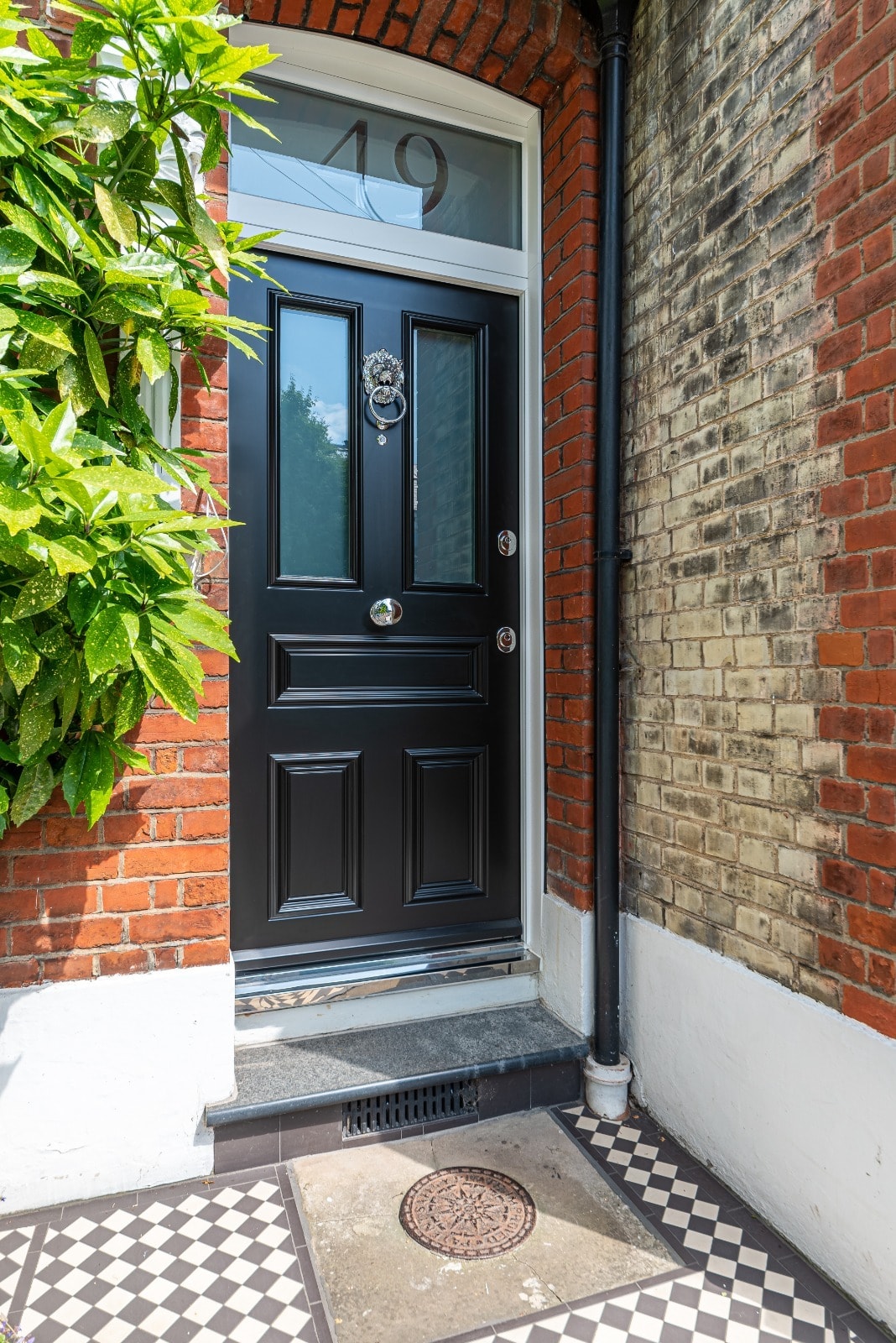
The question is not which door is strongest but which door the local planning authority will accept, and that is usually a conversation about proportion, panel layout, glazing pattern, ironmongery and finish rather than about steel as a material. Steel is often more accommodating here than people expect, because a made-to-measure doorset can reproduce period proportions precisely rather than approximating them with a standard size.
Our guides to steel doors in conservation areas and the heritage steel front doors page cover what tends to gain consent and what tends not to. The general principle is that authorities respond to evidence of matched detail, so drawings and a clear specification do more work than material arguments.
Requirement Four: Everyday Performance and Appearance
The largest group, and the one most poorly served by ranked lists. This buyer is replacing a door that is draughty, tired or unattractive, wants better security as part of the package rather than as the sole objective, and cares a great deal about how the front of the house looks.
The relevant comparisons here are thermal performance, acoustic performance, finish durability, hardware quality and design. Our guides to thermal performance and U-values and whether steel doors reduce noise cover the measurable parts, and the RAL colours guide covers finish.
The honest note for this group: if verified security is not a driver, a well-made composite or timber door may serve perfectly well, and we say so in our steel versus composite comparison. Steel earns its place when certification, longevity, dimensional stability or a bespoke opening are part of the requirement.
The Comparison Table That Is Actually Useful
Rather than ranking doors, compare candidates on the criteria your requirement selects:
| Requirement | What to compare | What to ignore | |---|---|---| | Verified security | Standard, class, doorset certification, whether it covers your configuration | Component specifications quoted alone | | Regulatory or insurance | The exact wording of the brief, then the certificate against it | Anything not named in the requirement | | Planning or heritage | Proportion, panel layout, glazing pattern, ironmongery, drawings | Security class beyond what you want | | Everyday performance | U-value, acoustic data, finish system, hardware, warranty | Attack-resistance marketing |
The mistake this table is designed to prevent is comparing doors on the criteria that matter to a different buyer.
Where SteelR Sits
SteelR is built for the first three requirements, and honest about the fourth.
Because every door is drawn to the opening rather than selected from standard sizes, the certification, the fire rating, the proportions and the finish are all specified per project rather than chosen from a range. That is what makes a regulatory brief or a planning constraint straightforward to satisfy: the door is designed around the requirement instead of the requirement being fitted to the door.
If your driver is the fourth requirement alone, better everyday performance and a better-looking entrance with no certification or planning constraint attached, say so when you speak to us. It is a legitimate reason to buy a steel door and it is also a legitimate reason not to, and we would rather tell you that early than sell you specification you have no use for.
The collection shows what design to opening produces across period and contemporary properties, and the team is available to work out which requirement is actually driving your project before anyone talks about a door.
Frequently Asked Questions
What is the best steel front door in the UK?
There is no single answer, because four different requirements lead to four different specifications. If verified security is the driver, compare certification standards and classes and check they cover your configuration. If a regulation or an insurer has set the brief, establish that wording first and choose the door against it. If the property is listed or in a conservation area, the planning constraint comes first. If the objective is a better-performing, better-looking front door, compare thermal and acoustic performance, finish and hardware.
How do I compare steel front doors fairly?
Compare on the criteria that your requirement selects, and confirm that any security rating applies to the complete doorset in the configuration you are ordering. The most common error is comparing a certified made-to-measure doorset against a standard-size commodity door on price alone, when they are different products with different testing, different tolerances and different lifespans.
Is a higher security rating always better?
No. A higher class means the doorset resisted a more capable attack in test, which usually means more material, more cost and a longer lead time. SR4 Commercial-grade certification is genuinely warranted where a surveyor, insurer or threat assessment has asked for it. For most homes, BS EN 1627:2011 RC4 already sits materially above the PAS 24 baseline mandated by Approved Document Q for new dwellings.
Do I need a steel front door, or would a composite door do?
For many homes a well-made composite door is a sensible choice, and it is worth saying so. Steel earns its place where certification is required or requested, where the opening is non-standard, where fire performance is a legal requirement, or where a twenty-five to forty year lifespan and dimensional stability matter. Our steel front door versus composite comparison sets the two side by side without pretending they compete on every point.
Can a steel front door be fitted to a listed building?
Frequently, yes, but consent comes first and the conversation is about detail rather than material. Planning authorities respond to evidence that proportions, panel layout, glazing pattern and ironmongery match the property and the streetscape. A made-to-measure doorset has an advantage here because period proportions can be reproduced precisely rather than approximated with a standard size. Our conservation areas planning guide covers the process.