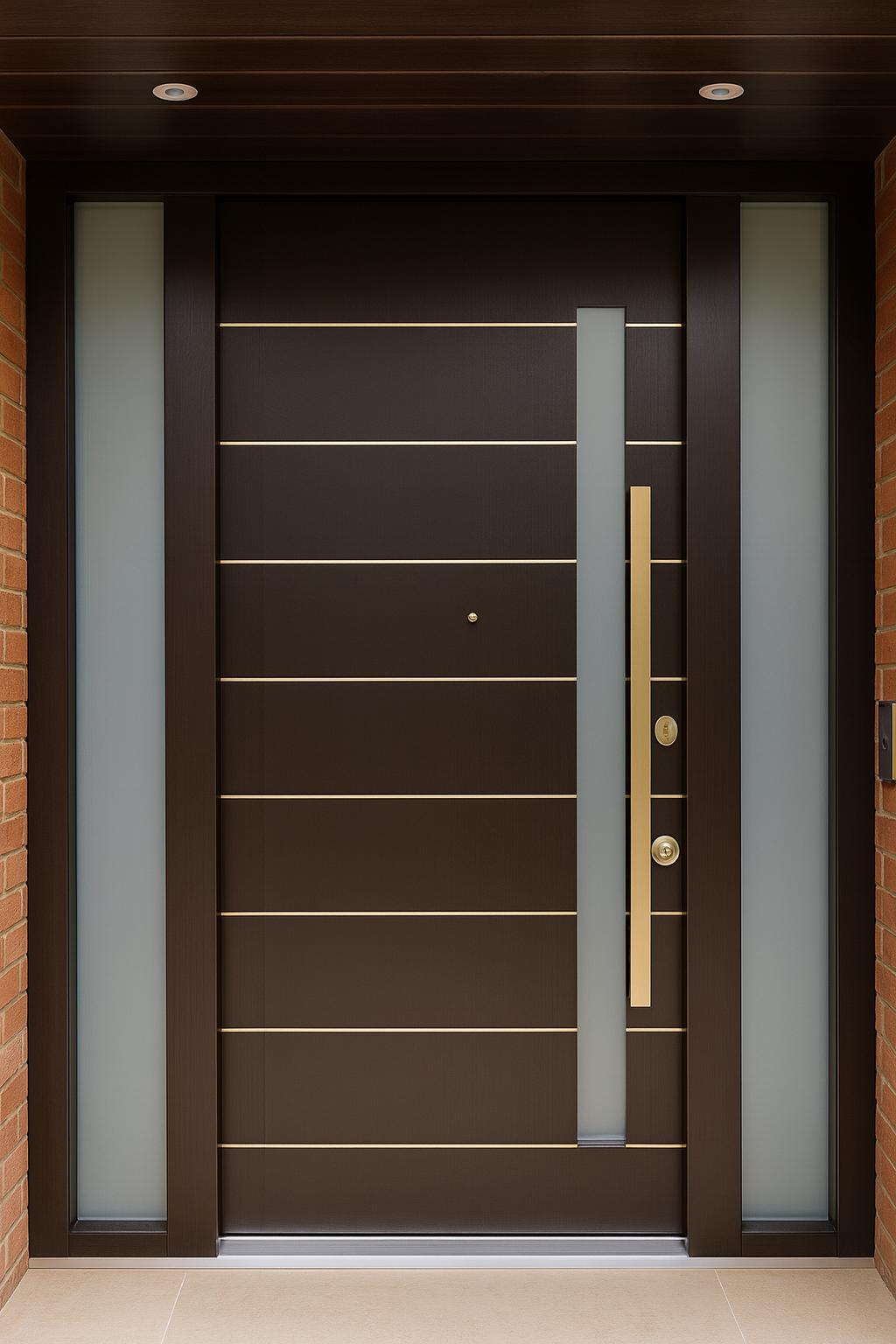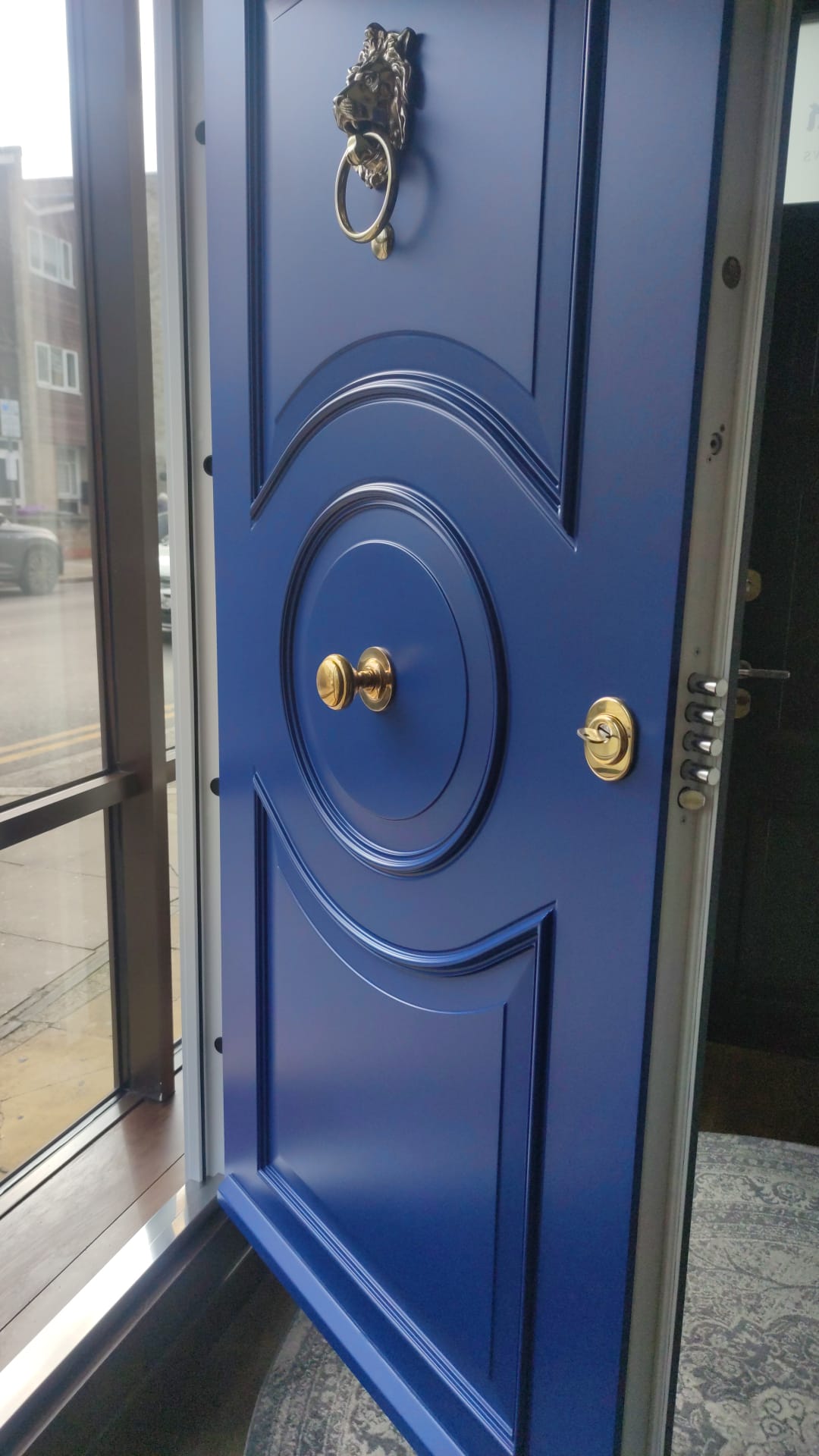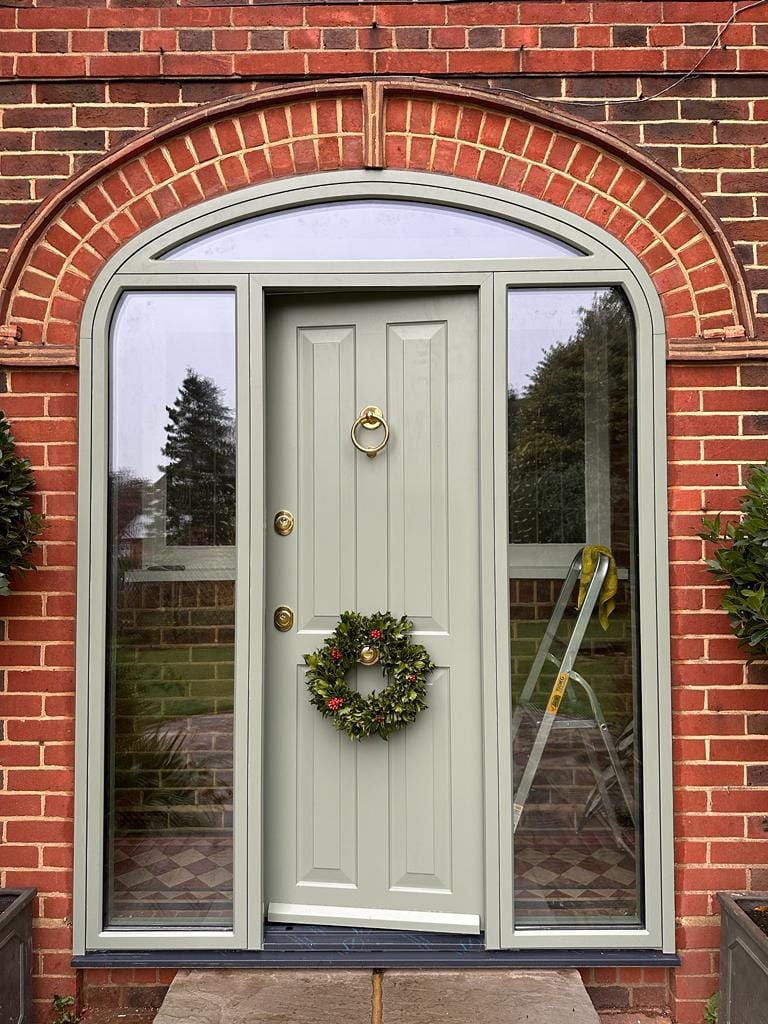
The Language of Door Colour
Colour is often the first thing a visitor notices about an entrance door. Before they register the proportions, the hardware or the material, they see the colour, and form an immediate impression of the property behind it. Choosing the right shade is consequently one of the most considered decisions in any door specification.
The challenge is precision. "Dark green" means something different to every person, every paint manufacturer and every screen. Without a universal colour language, specifying and reproducing an exact shade is guesswork. This is the problem the RAL system was designed to solve, and it is the standard used across the European door, window and architectural coatings industry.
What the RAL Colour System Is
RAL (Reichsausschuss fur Lieferbedingungen) is a colour matching system established in Germany in 1927. It assigns a unique numerical code to each standardised colour, ensuring that a colour specified in London is manufactured identically in any factory in Europe. When you specify RAL 7016, you get anthracite grey. Every time, in every batch, to a defined tolerance.
RAL colours are not mixed from a base, they are formulated to an exact spectral specification. Each RAL code defines the colour's hue, saturation and lightness to a precision that ensures visual consistency across different materials, surfaces and lighting conditions.
For entrance doors, RAL specification eliminates the ambiguity of descriptive colour names. "Heritage green" might mean anything. RAL 6012 (black green) is absolute.
RAL Classic vs RAL Design
The RAL system comprises two main collections, and understanding the distinction is important when specifying a front door colour.
RAL Classic
RAL Classic is the original collection, containing 215 colours organised by a four-digit numbering system. The first digit indicates the colour family: 1xxx (yellows), 2xxx (oranges), 3xxx (reds), 4xxx (violets), 5xxx (blues), 6xxx (greens), 7xxx (greys), 8xxx (browns), 9xxx (whites and blacks).
RAL Classic is the industry standard for architectural applications. When a door manufacturer refers to "the full RAL range," they typically mean RAL Classic. These are the colours that powder coating plants hold in stock, ensuring short lead times and consistent availability.
RAL Design
RAL Design is a newer, expanded collection of 1,825 colours organised by a seven-digit code based on the CIELAB colour space (hue, lightness, chroma). RAL Design offers far greater subtlety, multiple variations of similar shades that allow designers to fine-tune their colour selection.
RAL Design colours are available from specialist coaters but may carry longer lead times and a premium cost, as they are typically mixed to order rather than held in stock. For clients seeking an exact shade that falls between RAL Classic options, RAL Design provides the solution. Explore our full colour options to see what is available.
The Most Popular Door Colours in the UK
Front door colour preferences in the United Kingdom reflect a combination of architectural tradition, regional character and evolving design trends. Analysis of specification data reveals clear patterns.
Black: RAL 9005 (Jet Black)
Black remains the most specified front door colour in the UK by a significant margin. It works with virtually every architectural style, from Georgian townhouses to contemporary new builds. RAL 9005 is a pure, deep black. RAL 9017 (traffic black) offers a marginally softer alternative with a very slight brown undertone that reads warmer in natural daylight.
Black doors are the default choice in Notting Hill and across central London, where they complement white stucco, London stock brick and Portland stone facades with equal authority.
Anthracite Grey: RAL 7016
RAL 7016 has emerged as the second most popular door colour in the UK, particularly for contemporary and transitional architecture. It offers the gravitas of black with a softer, more modern sensibility. Anthracite grey pairs exceptionally well with zinc cladding, slate roofing and grey render, materials prevalent in contemporary British residential design.
Dark Green: RAL 6007 (Bottle Green) and RAL 6005 (Moss Green)
Dark green is the classic English country door colour. RAL 6007 is the deeper, more traditional shade, almost black in low light, while RAL 6005 is a slightly brighter, more saturated green. Both work beautifully with red brick, Cotswold stone and timber-framed properties.
Navy Blue: RAL 5004 (Black Blue) and RAL 5011 (Steel Blue)
Navy has gained significant ground as a front door colour over the past five years. RAL 5004 is the darkest option, a blue-black that reads as navy in direct light and near-black in shade. RAL 5011 is a more clearly blue shade. Navy doors are particularly popular in Fulham and across south-west London, where they introduce colour to otherwise neutral facades without appearing bold or conspicuous.
Heritage Colours for Period Properties
Period properties often demand colours that are historically appropriate. The following RAL shades are commonly specified for listed buildings, conservation areas and heritage restorations:
- RAL 6012 (black green), the Georgian front door green, deep and almost black
- RAL 3007 (black red), a dark, muted red appropriate for Victorian and Edwardian properties
- RAL 6020 (chrome green), a mid-green with brown undertones, suitable for Arts and Crafts and rural properties
- RAL 8019 (grey brown), a sophisticated dark brown that complements exposed timber and warm stone
- RAL 7022 (umbra grey), a warm dark grey with brown undertones, appropriate for Georgian and Regency townhouses
For properties in conservation areas, it is advisable to consult the local authority's colour guidance before specifying. Some conservation officers maintain approved colour schedules, and RAL codes simplify the approval process by providing an unambiguous reference.
Regional Colour Preferences Across the UK
Door colour preferences are not uniform across the country. Regional architecture, local materials and cultural sensibility all influence the palette.
London and the South East, Black and anthracite grey dominate, with navy blue growing. Neutral, understated tones that complement the density and formality of urban terraces. White (RAL 9010) appears on occasional Georgian properties where a lighter contrast is preferred.
The Cotswolds and Home Counties, Dark green, olive and muted earth tones. The warm honey tones of Cotswold stone call for colours with depth and warmth. RAL 6014 (yellow olive) and RAL 7006 (beige grey) are regional favourites, particularly in villages around Marlow and the Chilterns.
The North of England, Darker, more robust colours predominate. Black, dark grey and deep blue-greens suit the stone and slate architecture of Yorkshire, Lancashire and the Lake District. RAL 7021 (black grey) is a popular alternative to pure black, offering warmth against grey stone.
Scotland, Deep heritage colours reflecting the Scottish baronial tradition. Dark reds, forest greens and charcoal greys. RAL 3011 (brown red) is specified more frequently in Scotland than anywhere else in the UK.
Dual-Colour Specification
One of the advantages of bespoke steel entrance doors is the ability to specify different colours for the exterior and interior faces. This dual-colour approach is increasingly popular and offers genuine design flexibility.
The exterior colour is chosen to complement the facade, streetscape and architectural context. The interior colour is chosen to work with the hallway decor, flooring and interior design scheme. There is no requirement for the two to match.
Common dual-colour combinations include:
- Exterior black / interior white, the most popular combination, creating a seamless transition from the bold exterior to a bright hallway
- Exterior anthracite grey / interior cream, a softer pairing that works well with warm interior schemes
- Exterior dark green / interior sage, a tonal variation that carries the colour theme through with reduced intensity
- Exterior navy / interior pale grey, a sophisticated combination for contemporary interiors
Dual-colour specification is a standard option on SteelR doors, finished with the same polyester powder coat process on both faces. Browse our collection to see how different colour combinations present in completed installations.
How to Choose the Right Colour
Selecting a front door colour involves balancing aesthetic preference with architectural context. The following framework helps structure the decision.
Consider the Facade Material
The colour of the surrounding facade is the primary context. Warm materials (red brick, sandstone, timber cladding) generally suit warm door colours (greens, browns, warm greys). Cool materials (London stock brick, slate, render, concrete) suit cooler tones (black, anthracite, navy, blue-grey).
Assess the Streetscape
In terraced and semi-detached streets, a degree of visual harmony with neighbouring properties is usually appropriate. A front door should express individuality without jarring against the street context. In detached properties, particularly those set back from the road, there is considerably more freedom to make a bold statement.
Hardware Compatibility
Door hardware colour should be specified in conjunction with the door colour. The three standard hardware finishes, chrome, brass and black, interact differently with different door colours:
- Chrome hardware works best with cool door colours: black, grey, navy, white
- Brass hardware complements warm colours: green, brown, red, cream
- Black hardware (often called "black antique") provides a tonal match with dark doors and a strong contrast with lighter shades
Lighting Conditions
The same RAL colour will appear significantly different depending on orientation. A north-facing door receives cool, indirect light that suppresses warm undertones. A south-facing door receives warm, direct light that amplifies warmth. A colour that appears sophisticated on a north-facing facade may look flat on a south-facing one, and vice versa. This is one of the strongest arguments for requesting a physical sample before committing.
Requesting Colour Samples
No screen can accurately reproduce a RAL colour. The colour you see on a monitor is influenced by display calibration, ambient lighting and colour profile settings. For a decision of this significance, a physical RAL colour sample or a sprayed metal sample from the manufacturer is essential.
RAL produce a standard fan deck (the RAL K7 or K5) that shows every Classic colour on a coated card. Your door manufacturer should be able to supply sprayed sample panels on the actual substrate, steel coated with the powder coat finish, so you can assess the colour, texture and sheen level in situ, against your facade, in natural light.
To discuss colour options or request a consultation with your preferred RAL specification, contact our design team.
Trending Colours for 2026
Colour trends in architecture move slowly compared to fashion or interiors. A front door is a long-term commitment, and trend-chasing is inadvisable. That said, several shifts are evident in the 2026 specification landscape.
Sage green (RAL 6021) has become one of the most requested colours for residential entrance doors, driven by the broader movement towards natural, biophilic tones in architecture and interiors. It is soft enough to feel contemporary but grounded enough to suit traditional properties.
Warm greys, particularly RAL 7048 (pearl mouse grey) and RAL 7044 (silk grey), are replacing cooler greys for homeowners who want a neutral door that reads warmer than anthracite. These shades work particularly well with natural timber and stone facades.
Dark teal (RAL 5020) occupies the space between blue and green, offering an alternative to both navy and dark green. It is a confident, distinctive choice that works surprisingly well with both red brick and pale render.
Matte black finishes continue to gain ground. While standard polyester powder coat produces a slight sheen, fine-textured or low-gloss finishes deliver a more contemporary, matte appearance. RAL 9005 in a matte or satin finish is now as commonly specified as the traditional gloss.
The most enduring approach is to select a colour that complements the property's architecture and materials rather than following a trend. A well-chosen RAL colour on a quality steel door will look as appropriate in 2046 as it does today.
The Powder Coating Process
RAL colours on steel entrance doors are applied through polyester powder coating, an industrial finishing process that delivers superior durability compared to liquid paint.
The process involves:
1. Surface preparation, the steel is shot-blasted or chemically pre-treated to create a clean, profiled surface 2. Powder application, electrostatically charged powder particles are sprayed onto the grounded steel surface, where they adhere evenly 3. Curing, the coated door enters a curing oven at approximately 200C, where the powder melts, flows and cross-links into a continuous, hard film
The resulting finish is resistant to UV degradation, salt spray, chipping and scratching. It does not peel, crack or blister in the way that conventional paint can over time. The finish is also environmentally superior, powder coating produces no volatile organic compounds (VOCs) and any overspray is recaptured and reused.
Every SteelR door is finished in the full RAL colour range using this process, applied under ISO 9001 quality management. The colour is consistent across the door leaf, frame and any sidelights, ensuring a unified appearance. Combined with SR3 security certification and Secured by Design accreditation, the result is an entrance door that performs as well as it looks, for decades.
Frequently Asked Questions
What is the most popular RAL colour for front doors in the UK?
RAL 9005 (jet black) is the most frequently specified front door colour in the UK, followed by RAL 7016 (anthracite grey). Black suits virtually every architectural style and remains the default choice for period properties, townhouses and contemporary homes alike.
Can I have a different colour on the inside and outside of my door?
Yes. Dual-colour specification is a standard option on bespoke steel entrance doors. The exterior and interior faces are powder coated independently, allowing you to match the exterior to your facade and the interior to your hallway decor. There is no additional charge for dual-colour finishes on SteelR doors.
How do I choose the right RAL colour for my property?
Start with the facade material and surrounding architecture. Warm materials (red brick, sandstone) suit warm colours (greens, browns). Cool materials (grey brick, render, slate) suit cooler tones (black, grey, navy). Always view a physical colour sample against your facade in natural daylight before committing, as screens cannot reproduce RAL colours accurately.
What is the difference between RAL Classic and RAL Design?
RAL Classic contains 215 standardised colours used across industry and architecture. RAL Design contains 1,825 colours organised by the CIELAB colour model, offering finer gradations. RAL Classic colours are held in stock by most powder coaters. RAL Design colours may require custom mixing and longer lead times.
Will the colour fade over time?
Polyester powder coating is highly resistant to UV degradation. A properly applied powder coat finish on a steel entrance door will maintain its colour integrity for decades under normal UK weather conditions. The finish is also resistant to salt spray, making it suitable for coastal installations without accelerated fading.
What RAL colours are suitable for conservation areas?
Conservation area colour requirements vary by local authority. Commonly approved heritage shades include RAL 6012 (black green), RAL 3007 (black red), RAL 9005 (jet black), RAL 8019 (grey brown) and RAL 7022 (umbra grey). Request your local authority's colour guidance before specifying, and use the RAL code to provide an unambiguous reference in your application. For the wider picture of how colour fits into a complete bespoke specification, see our bespoke steel front doors UK overview.