The Details That Define an Entrance
A beautifully engineered steel door deserves hardware that matches its ambition. The knocker, handle, letter plate and numerals are not afterthoughts, they are the jewellery of your facade, the elements visitors see first and touch before anything else. Choosing the right front door hardware finishes is one of the most consequential design decisions in any entrance project.
Hardware finish affects far more than appearance. It determines how your door ages, how much maintenance it requires, and whether the overall composition reads as cohesive or disjointed. This guide covers every finish option available for bespoke steel entrance doors, with practical advice on matching hardware to door colour, period authenticity and long-term durability.
Types of Front Door Hardware
Before considering finish, it helps to understand the individual components that make up a complete door furniture scheme.
Knockers
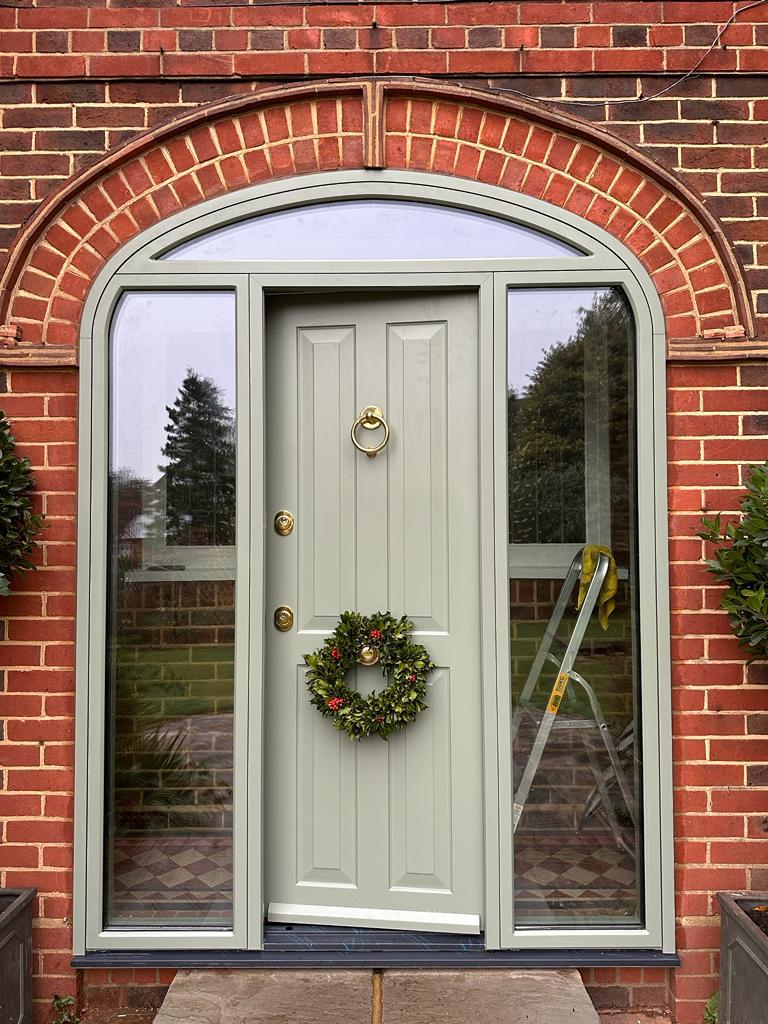
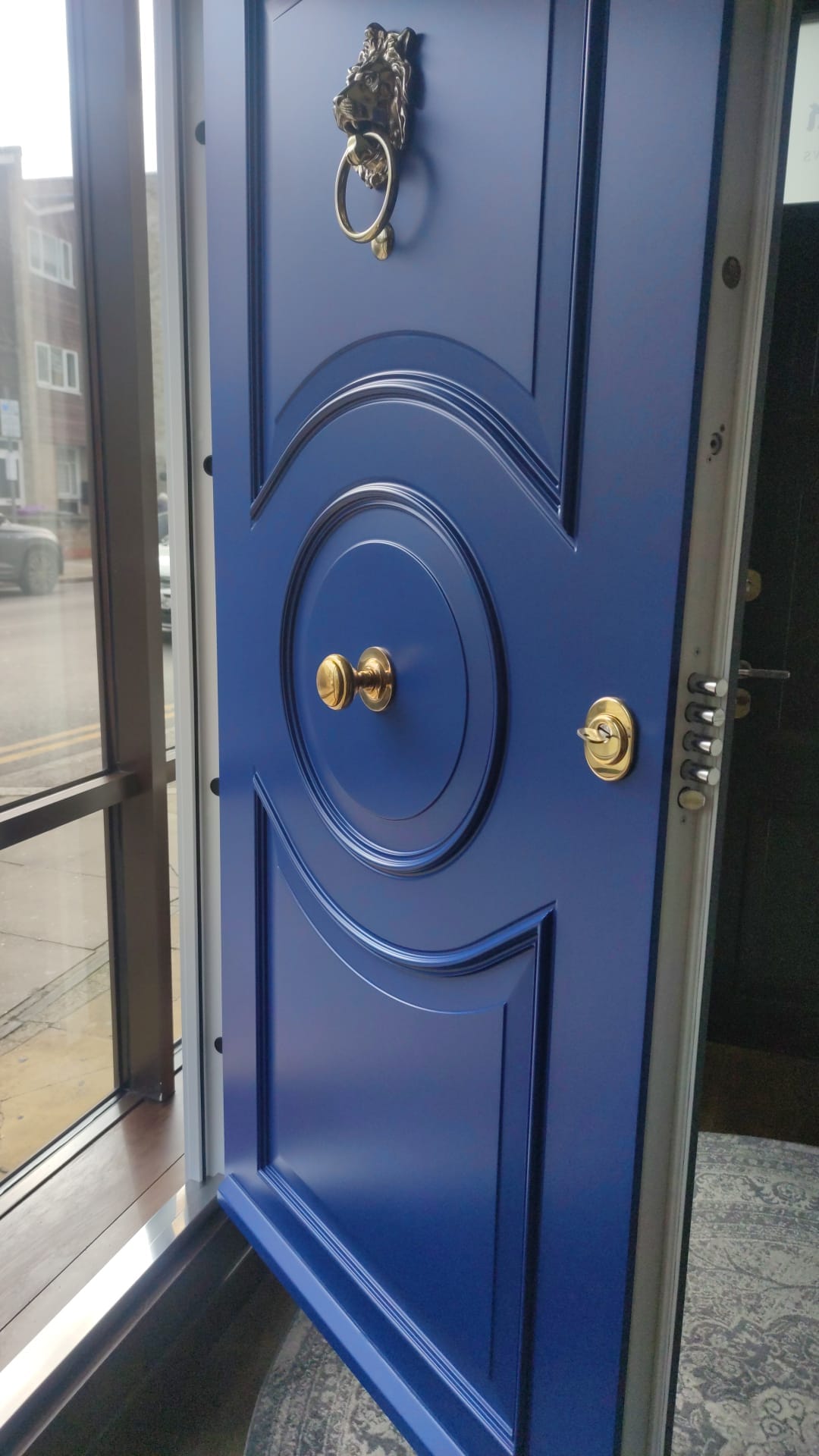
The door knocker is the centrepiece of a traditional entrance. Options range from ornate lion head knockers, a staple of Georgian and Victorian townhouses, to minimal ring pulls and contemporary geometric designs. A knocker should be proportionate to the door: oversized on a narrow door looks clumsy, while a small knocker on a grand double entrance disappears entirely.
Handles and Pull Bars
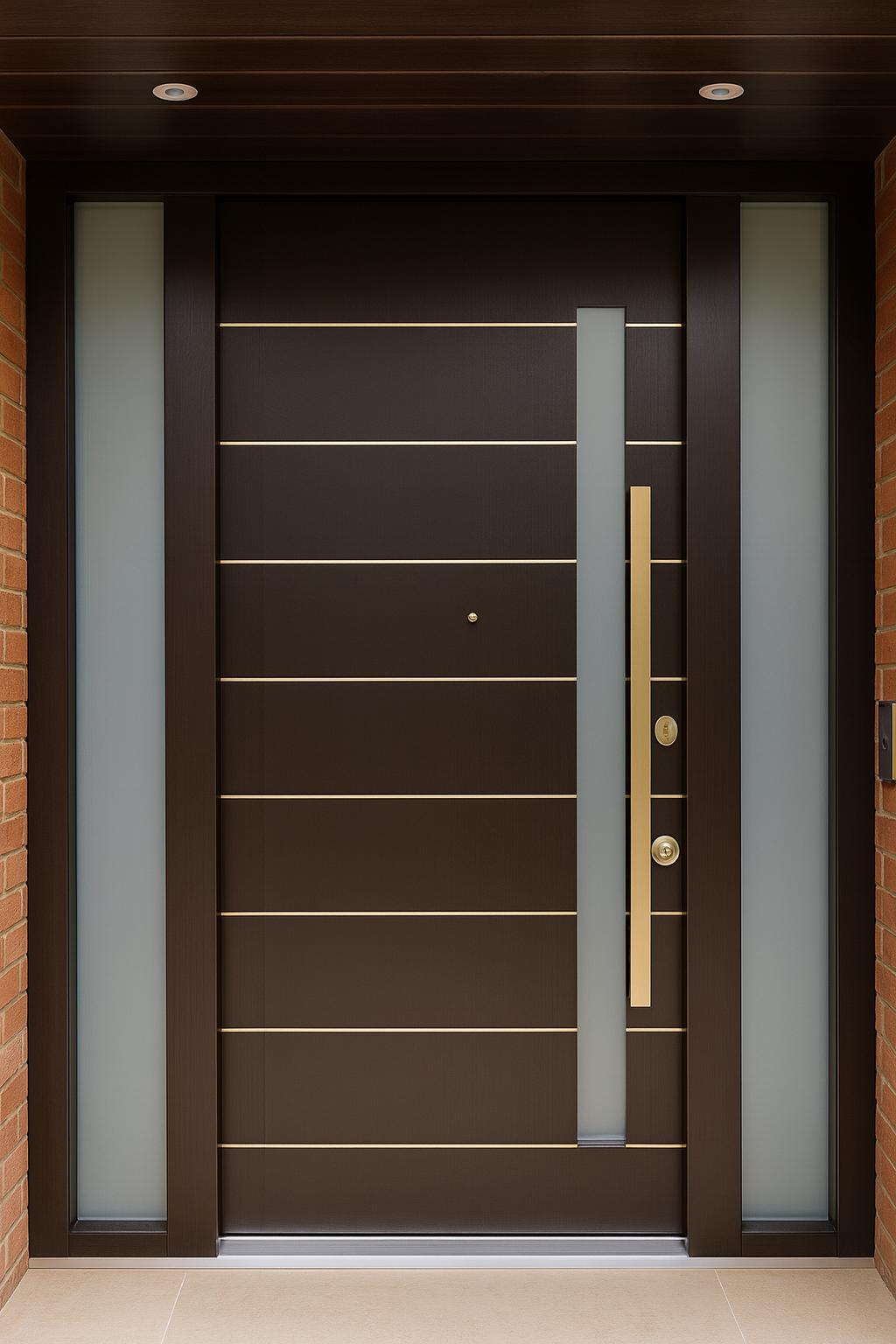
Lever handles remain the most practical choice for everyday use, but full-height pull bars have become increasingly popular on contemporary designs. The weight and action of a handle communicates quality instantly. On a steel door, the handle must complement the door's inherent solidity, lightweight hollow fittings feel entirely wrong.
Letter Plates
The humble letter plate is often overlooked, yet it occupies a prominent position on most front doors. Proportions matter: a slim, elegantly profiled letter plate enhances the door's design, while a bulky or poorly positioned one undermines it. For properties where post delivery is handled by a secure box, omitting the letter plate entirely creates a cleaner facade. Browse the SteelR collection to see how different hardware combinations work in practice.
Numerals and Signage
House numbers in matching hardware finish complete the composition. Individual numerals in a well-chosen typeface, typically a serif for traditional homes and a sans-serif for contemporary ones, add a considered, architectural quality. Some homeowners in Holland Park and surrounding streets prefer bespoke engraved plaques that incorporate both the number and house name.
Finish Options in Detail
Polished Brass
Polished brass is the classic choice for period properties. It has a warm, golden lustre that pairs beautifully with deep door colours, black, navy, dark green and burgundy. Unlacquered polished brass develops a natural patina over time, gradually acquiring the softer, more complex character that antique brass possesses. Many homeowners consider this living finish part of the appeal.
Lacquered polished brass maintains its bright, mirror-like appearance for longer but will eventually need re-lacquering as the coating wears. For a freshly polished look without ongoing maintenance, PVD-coated brass is the modern alternative.
Polished brass is the finish of choice across much of Chiswick, where Victorian and Edwardian terraces benefit from its warmth and historical authenticity.
Satin Brass
Satin brass offers the same warm gold tone as polished brass but with a brushed, matte texture that diffuses light rather than reflecting it sharply. It is more forgiving of fingerprints and minor scratches, making it a practical choice for busy households. Satin brass reads as contemporary-traditional, familiar enough for period homes, refined enough for modern designs.
Polished Chrome
Polished chrome delivers a bright, cool, mirror-like finish that suits contemporary and Art Deco-influenced designs. It is inherently resistant to tarnishing and requires minimal maintenance, a wipe with a soft cloth restores its shine. Chrome pairs naturally with cooler door colours: greys, silvers, whites and pale blues.
The reflective quality of polished chrome can be striking against a dark door, creating a deliberate contrast that draws the eye. It is a popular specification for new-build developments where a clean, modern aesthetic is the brief.
Satin Chrome
Satin chrome has the same cool undertone as polished chrome but with a softer, brushed surface. It conceals fingerprints effectively and has a quietly sophisticated appearance. Satin chrome is arguably the most versatile finish, pairing well with both warm and cool door colours without competing for attention.
For architects specifying hardware across multiple units in a development, satin chrome offers consistency and low maintenance, qualities that simplify long-term estate management.
Matt Black
Matt black hardware has moved from niche to mainstream over the past decade. Its appeal is straightforward: it pairs with virtually any door colour and creates a clean, graphic quality. On a black door, matt black hardware blends seamlessly for a monolithic look. On a coloured door, it provides a grounding, architectural contrast.
The finish itself requires careful specification. Powder-coated matt black is durable and repairable. Painted finishes are less resilient. PVD matt black is the premium option, offering superior scratch resistance and colour stability. Properties across Wimbledon frequently specify matt black hardware for its understated, modern character.
Bronze and Antique Bronze
Bronze finishes range from warm, reddish tones to dark, aged patinas. True bronze hardware, cast from bronze alloy, develops character over decades. For most residential applications, bronze-effect finishes applied via PVD or specialist coating provide the aesthetic with more predictable long-term behaviour.
Antique bronze, with its deliberately darkened, uneven patina, suits arts and crafts homes, barn conversions and properties where a sense of age and authenticity is valued. It works particularly well with natural materials: oak frames, stone surrounds, handmade brick.
Matching Hardware to Door Colour
The relationship between door colour and hardware finish is the single most important consideration in achieving a cohesive entrance. The full colour options available for bespoke steel doors span the entire RAL range, so the hardware pairing possibilities are extensive.
Warm Door Colours
Deep reds, greens, blues and earth tones pair naturally with brass finishes, polished or satin depending on the desired formality. The warm undertones in brass complement the richness of these colours. Bronze is an equally strong choice, particularly for heritage properties.
Cool Door Colours
Greys, pale blues, white and anthracite work best with chrome or matt black hardware. The cool metal tones create a harmonious, contemporary palette without any tonal conflict.
Black Doors
Black is the most versatile door colour for hardware pairing. Polished brass on a black door is a timeless combination, the contrast is sharp and elegant. Matt black hardware on a black door creates a tonal, sculptural effect. Chrome on black is crisp and modern. The choice depends entirely on the architectural context and personal preference.
Heritage Considerations
For period properties, historical accuracy can guide the hardware finish. Georgian townhouses traditionally featured polished brass. Victorian and Edwardian homes used a wider range, including brass, black iron and, later, chrome. Conservation officers rarely specify hardware finish, but choosing an appropriate option strengthens any planning application.
PVD Coatings: The Modern Standard
Physical Vapour Deposition (PVD) is a vacuum coating technology that bonds an ultra-thin metallic layer to the hardware surface at a molecular level. The result is a finish that is dramatically harder, more scratch-resistant and more colour-stable than traditional plating or lacquering.
PVD coatings are available in brass, chrome, bronze, matt black and several other tones. The key advantages are significant:
- Scratch resistance, PVD finishes are 5-10 times harder than conventional electroplated surfaces
- Colour stability, no tarnishing, fading or discolouration over decades of exposure
- Chemical resistance, unaffected by cleaning products, pollution or salt air
- Consistent appearance, every piece finished in the same batch matches precisely
For a premium entrance door with a design life measured in decades, PVD-coated hardware is the logical specification. The initial cost premium over standard finishes is modest relative to the total door investment, and the elimination of ongoing maintenance represents genuine long-term value.
Period Versus Contemporary Hardware
The choice between period and contemporary hardware styles is not simply aesthetic, it communicates the entire design intent of the entrance.
Period Hardware
Traditional hardware includes lion head knockers, urn knockers, ring pulls, decorative escutcheons and profiled letter plates. These components carry strong historical associations and are most convincing when specified with attention to period accuracy. A Georgian-style door with Victorian hardware, for example, creates a subtle but noticeable dissonance.
Period hardware is typically available in brass, bronze and black iron finishes. The craftsmanship of the casting and finishing is immediately apparent, weight, sharpness of detail and surface quality all vary enormously between manufacturers. Request a consultation to discuss hardware options with the SteelR design team.
Contemporary Hardware
Contemporary hardware favours clean geometry: square backplates, cylindrical knobs, rectangular letter plates and linear pull bars. The design language is reductive, every unnecessary detail is removed. Finishes tend towards satin chrome, matt black and satin brass.
Contemporary hardware allows the door itself to be the design statement. On a ribbed or textured door panel, minimal hardware lets the surface treatment speak. On a flat, panelled door, a single striking pull bar can provide all the visual interest needed.
Maintenance by Finish Type
Every hardware finish has its own maintenance characteristics. Understanding these at the specification stage avoids disappointment later.
Brass (Unlacquered)
Requires periodic polishing with a quality brass cleaner to maintain brightness. Without polishing, it develops a natural patina, attractive to some, unacceptable to others. Frequency depends on exposure: a sheltered porch may need polishing twice a year, a fully exposed door quarterly.
Brass (Lacquered)
Wipe clean with a damp cloth. Do not use abrasive cleaners, which damage the lacquer. Expect to re-lacquer every 3-5 years depending on exposure. Once lacquer begins to fail, the degradation is visible and unsightly until addressed.
Chrome (Polished or Satin)
The lowest-maintenance option in traditional finishes. Wipe with a damp cloth or mild soap solution. Chrome does not tarnish, fade or require periodic treatment. Minor water spots can be buffed away instantly.
Matt Black (Powder Coated)
Wipe with a damp cloth. Avoid abrasive pads. Minor scratches can be touched up with matching paint. Powder-coated finishes are resilient but not immune to impact damage, particularly on high-traffic doors.
PVD (Any Colour)
Wipe with a damp cloth. No polishing, no re-coating, no special treatment. PVD finishes maintain their appearance indefinitely under normal residential conditions. This is the closest thing to a maintenance-free hardware finish currently available.
Bronze
Similar maintenance to brass. Unlacquered bronze develops a green verdigris patina in damp conditions, which can be attractive or problematic depending on the desired look. Regular waxing with a microcrystalline wax preserves the original tone while allowing a gentle patina to develop.
Specifying Hardware for Security Doors
On a door engineered to meet the SR3 security rating, hardware must be security-rated to match. Handles, cylinders and locking mechanisms are all tested as part of the doorset certification. Decorative hardware, knockers, letter plates, numerals, does not affect the security rating but must be installed without compromising the door's tested performance.
Anti-snap, anti-pick and anti-bump cylinder locks are standard on Secured by Design certified doorsets. The external handle or knob conceals the cylinder and provides no leverage point for attack. Hardware manufacturers who supply security-rated components typically offer them in all standard finishes, so there is no need to compromise on appearance for the sake of security.
Every SteelR door is manufactured under ISO 9001 quality management, ensuring every hardware installation meets precise tolerance and performance standards.
Making Your Selection
The best approach to hardware selection is to consider it as an integral part of the door design from the outset, not as a final decision made after the door is built. The interplay of door colour, panel design, glazing and hardware creates a composition, and every element should be considered together.
If you are uncertain, request physical hardware samples in your shortlisted finishes and hold them against a colour swatch of your chosen door. The difference between a finish that works and one that merely exists on the same door is immediately obvious in person.
Frequently Asked Questions
What is the most durable front door hardware finish?
PVD-coated hardware offers the highest durability of any finish currently available. The molecular-level bonding process creates a surface that resists scratches, tarnishing and colour change for decades. For a bespoke entrance door designed to last a lifetime, PVD is the recommended specification.
Can I mix hardware finishes on my front door?
Mixing finishes is possible but requires careful consideration. A polished brass knocker with a satin chrome handle, for example, looks intentional only if the overall design supports it. In most cases, a single consistent finish across all hardware components creates the most refined result.
Which hardware finish suits a black front door best?
Black doors are uniquely versatile. Polished brass creates a classic, high-contrast pairing favoured on period townhouses. Matt black hardware produces a seamless, monolithic effect popular in contemporary design. Satin chrome offers a modern, cool alternative. The right choice depends on the architectural style and your personal aesthetic.
How often does brass hardware need polishing?
Unlacquered polished brass in a sheltered porch typically needs polishing two to four times per year to maintain its bright appearance. In exposed positions, quarterly polishing is advisable. Lacquered brass requires only wiping with a damp cloth but will need re-lacquering every three to five years.
Does hardware finish affect door security?
The decorative finish does not affect security performance. However, on a door certified to SR3 or Secured by Design standards, all locking hardware must be security-rated and tested as part of the doorset. Anti-snap, anti-pick cylinders are standard regardless of the chosen finish.
What hardware finish is best for a coastal property?
Salt air accelerates corrosion on most metal finishes. PVD-coated hardware and marine-grade stainless steel offer the best resistance. Chrome performs reasonably well in coastal conditions. Unlacquered brass will patina rapidly and require frequent maintenance. Matt black powder coating holds up well provided it is not chipped or scratched. For the wider context of how hardware fits into a complete bespoke specification, see our bespoke steel front doors UK guide.