Two Materials, Two Very Different Doors
When homeowners begin researching premium entrance doors, steel and fibreglass (GRP) consistently appear as the two main alternatives to timber. Both are marketed as low-maintenance, secure and thermally efficient. Both are presented as modern improvements over traditional wooden doors.
But the similarities are largely superficial. Steel and fibreglass doors are fundamentally different products, in their construction, their performance under test conditions, their design possibilities and their long-term behaviour. This comparison sets out the facts clearly so you can make an informed decision based on what actually matters for your property.
Fibreglass doors dominate the mid-market in the UK. Steel doors occupy the premium segment. Understanding why requires examining each material on its merits.
What Fibreglass (GRP) Doors Actually Are
Fibreglass entrance doors, technically glass-reinforced plastic (GRP) doors, consist of a moulded GRP skin bonded to a core of polyurethane foam or, in some cases, a combination of foam and timber sub-frames. The GRP skin is moulded from a master pattern, which is why fibreglass doors can convincingly replicate the grain and panel detail of timber.
The manufacturing process is essentially industrial moulding. A factory produces skins from a set number of moulds, fills them with insulating foam, fits a pre-hung frame and pre-machines the lock pockets. This standardised production is what makes fibreglass doors relatively affordable and widely available.
The key point is that fibreglass doors are mould-constrained. The styles available are limited to the moulds the manufacturer has invested in. Adding a new design means creating a new mould, an expensive tooling exercise that manufacturers only undertake for styles with proven mass-market demand.
Security: A Measurable Difference
Security is not a matter of opinion. It is tested, graded and certified under recognised standards. The difference between steel and fibreglass in security performance is one of the most significant distinctions between the two materials.
Steel Doors
A properly engineered steel entrance door achieves LPS 1175 SR3 (Issue 8), the LPCB police-preferred residential rating. SR3 testing subjects the door to sustained attack with heavy-duty tools including crowbars, drills, chisels and angle grinders for a minimum of five minutes against a defined attack objective. The test simulates a determined, equipped intruder with time and intent. SteelR doors are also BS EN 1627:2011 RC4 certified as Standard (the European framework for sustained forced-entry resistance), with SR3 available as the Enhanced upgrade tier.
Steel doors achieve this rating because the material itself resists cutting, drilling and levering. Combined with multi-point locking systems, anti-drill cylinders and reinforced strike plates, a steel door is a genuinely formidable barrier. Every SteelR door ships with BS EN 1627 RC4 as Standard, with LPS 1175 SR3 available as the Enhanced upgrade tier on every door. For a detailed breakdown of security certifications, see our security overview.
Fibreglass Doors
Fibreglass doors typically achieve PAS 24 certification, which tests resistance to opportunistic manual attack with lighter tools for approximately three minutes. PAS 24 is the minimum standard required under Part Q of the Building Regulations for new dwellings. It is a respectable baseline, but it sits several performance categories below BS EN 1627 RC4 and LPS 1175 SR3.
The GRP skin and foam core of a fibreglass door are inherently softer materials than steel. While the lock hardware may be identical, the surrounding material determines how well the door resists forced entry at points away from the lock. GRP can be cut, cracked or punctured with tools that would be ineffective against a steel skin.
Steel doors provide security performance that is measurably and significantly superior to fibreglass at every level of testing.
Durability and Weathering
The UK climate subjects entrance doors to rain, wind, UV radiation, frost cycles and temperature swings, sometimes within a single week. How a door material responds to these conditions over decades determines its real-world durability.
Steel
Steel entrance doors are manufactured from galvanised steel, pre-treated and finished with multi-layer paint systems designed for exterior exposure. The steel itself does not warp, shrink, swell or crack with temperature changes. It is dimensionally stable across all conditions, meaning the door maintains its fit within the frame year after year.
The finish is the element that requires consideration. Modern powder-coat and wet-spray finishes on steel doors are highly UV-resistant and durable, but they can be scratched or chipped by impact. A quality manufacturer will provide touch-up paint for minor damage. With basic care, a steel door will maintain its appearance and performance for 40 to 50 years or more.
Fibreglass
GRP doors perform well in the first decade. The moulded skin resists rot and insect attack, and the foam core provides good insulation. However, GRP is susceptible to UV degradation over extended periods. Darker colours can fade noticeably after 10 to 15 years of direct sun exposure, and the surface can develop a chalky texture as the resin breaks down.
The foam core can also degrade in extreme conditions. Cheaper fibreglass doors may develop warping or bowing as the core material settles unevenly, leading to seal compression, draught ingress and difficulty latching. The realistic working life of a quality fibreglass door is 15 to 25 years before replacement becomes advisable.
Design Flexibility
For homeowners and architects who care about the entrance making a specific design statement, the difference in customisation between the two materials is substantial.
Steel
Because steel doors are fabricated rather than moulded, the design possibilities are effectively unlimited. You can specify any RAL colour from the full range of over 200 options. Dual-colour finishes, a different colour inside and outside, are standard. Panel configurations, glazing positions, decorative ironmongery, handle styles and knocker designs are all specified to the individual order.
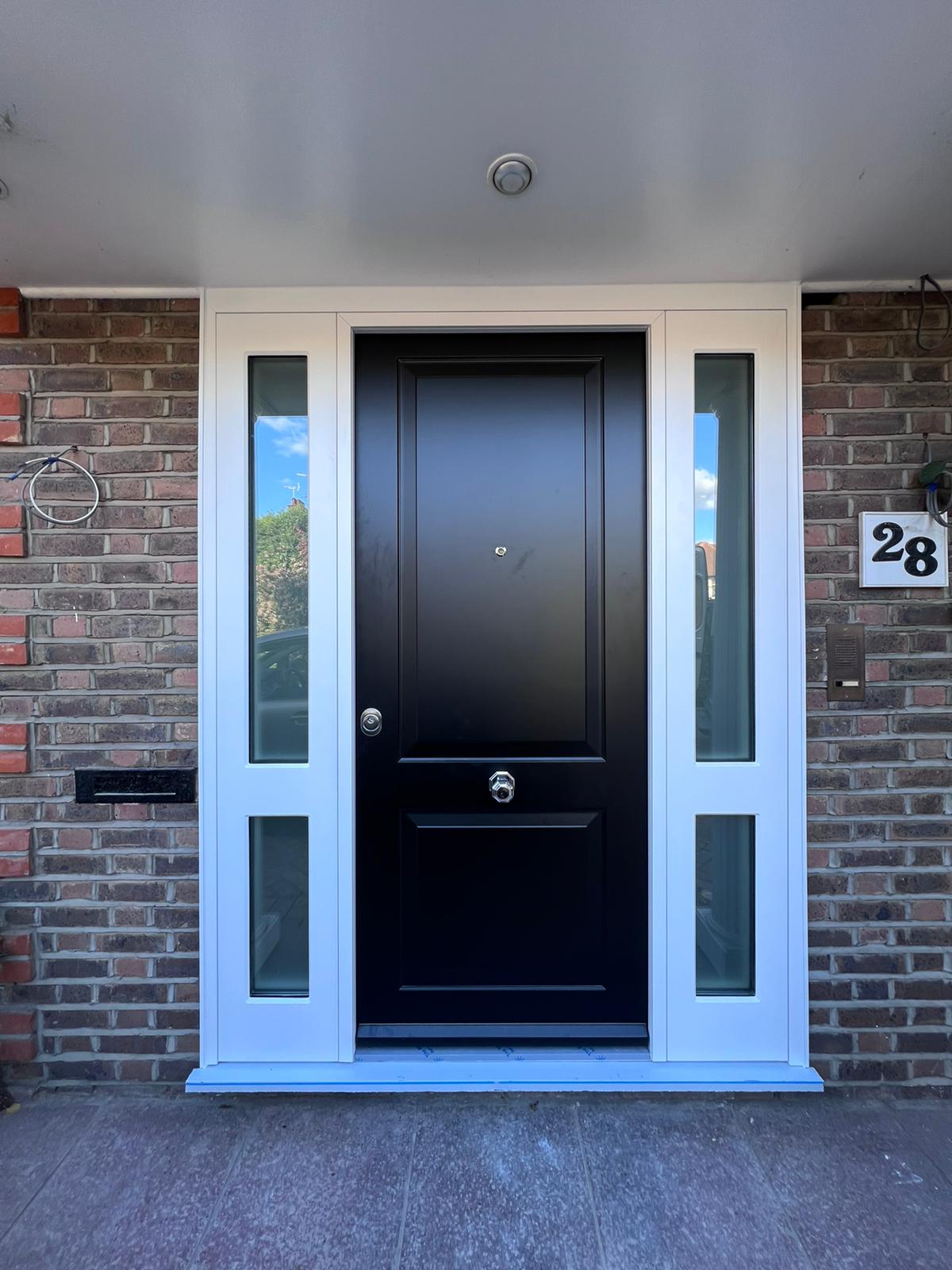
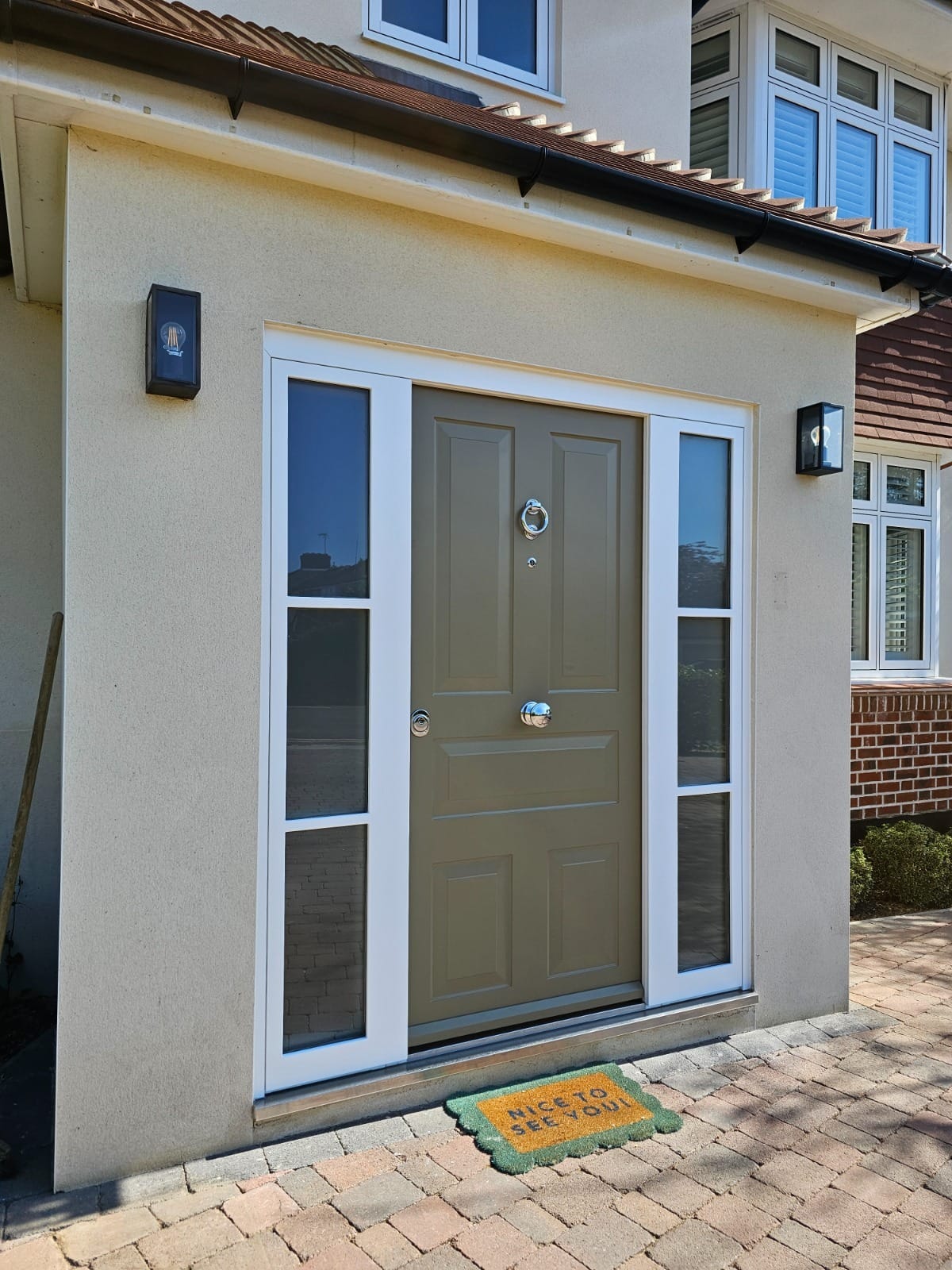
There are no standard sizes. Each door is manufactured to the precise dimensions of your opening, whether that is a standard single leaf, a double door, a door with sidelights or an arched configuration. Explore the SteelR collection to see the breadth of design that bespoke steel manufacturing makes possible.
Fibreglass
Fibreglass doors offer a respectable range of styles (typically 20 to 40 panel designs) in a selection of 15 to 30 colours. Some manufacturers offer dual-colour options. However, the designs are fixed by the mould, and the sizes are standardised. If your opening does not match the manufacturer's standard dimensions, adaptation is limited to reducing the frame size with fillers, which is not ideal for a premium aesthetic.
For properties with non-standard openings, period proportions or specific architectural requirements, fibreglass cannot match the design freedom of bespoke steel fabrication.
Thermal Performance
Both materials deliver thermal performance that significantly exceeds traditional timber doors. The differences between them are real but modest.
Steel
Steel doors with an insulated core and thermal break technology achieve U-values typically from 1.5 W/m²K, with thermal-upgrade specifications available achieving as low as 0.8 W/m²K. The thermal break, a non-conductive barrier between the inner and outer steel skins, prevents cold bridging through the steel. Without a thermal break, steel would conduct heat directly through the leaf, negating the benefit of the insulating core.
Any reputable steel door manufacturer incorporates thermal break technology as standard. The result is thermal performance that comfortably exceeds Building Regulations requirements (maximum 1.8 W/m²K for new builds under Part L).
Fibreglass
Fibreglass doors with a solid foam core achieve U-values typically between 0.9 and 1.4 W/m²K. The GRP skins provide some insulation, and the foam core is an effective thermal barrier. Fibreglass does not conduct heat as readily as steel, so cold bridging through the skin is less of a concern.
In practical terms, both materials perform well thermally. The difference in energy bills between a steel door at 0.9 W/m²K and a fibreglass door at 1.1 W/m²K is negligible for a single entrance door. Thermal performance is not a decisive factor between these two materials.
Maintenance
Neither material requires the sanding, repainting and draught-proofing that timber doors demand. But the maintenance profiles differ.
Steel
Steel doors require minimal maintenance. An annual wipe-down with a damp cloth and mild detergent keeps the finish clean. Lubrication of the locking mechanism once a year ensures smooth operation. Inspect the seals and weather-stripping periodically, though these should last many years before replacement is needed. Touch-up paint should be applied to any chips or scratches to prevent surface corrosion, though modern galvanised and powder-coated finishes are highly resistant. Learn more about what to expect during the installation and aftercare process through our process page.
Fibreglass
Fibreglass doors also require minimal regular maintenance, similar wiping and hardware lubrication. However, the GRP surface may need polishing or recoating after 8 to 12 years to restore its appearance, particularly on south-facing elevations. If the foam core develops issues (bowing, delamination), repair options are limited and replacement is usually the practical solution.
Cost Comparison
Price is a legitimate consideration, and the two materials sit at different points in the market.
Fibreglass
A quality fibreglass entrance door from a reputable UK manufacturer typically costs between £1,200 and £3,000 installed, depending on style, glazing and hardware. Premium fibreglass doors with enhanced features can reach £3,500. This positions fibreglass as an accessible upgrade from basic UPVC or low-end timber.
Steel
Bespoke steel entrance doors are a premium product. SteelR's pricing starts higher than fibreglass, reflecting the SR3 security rating, ISO 9001 certified UK manufacturing, bespoke design process and professional structural installation. For homeowners in London, Surrey and Hampshire who view the entrance door as a long-term investment in security and design, the price reflects the specification.
When comparing cost, the lifecycle perspective is important. A steel door lasting 40 to 50 years may cost less per year of service than a fibreglass door replaced every 20 years. The security and design advantages accrue throughout the life of the product. For a full breakdown of what moves the number on a SteelR specification, see our steel front door cost guide.
When Each Material Makes Sense
Both materials serve legitimate markets. The right choice depends on your priorities, property type and budget.
Choose Fibreglass When:
You need a solid, attractive entrance door at a moderate price point. Your priority is a significant upgrade from UPVC or ageing timber without the investment of bespoke steel. The property is a standard new build or family home where Part Q compliance (PAS 24) meets your security needs, and you are content with the available range of standard styles and colours.
Choose Steel When:
Security is a primary concern, particularly for high-value properties, rural homes or properties with valuable contents. You want complete design freedom to specify a door that responds to the architecture of your home. Longevity matters, you want to install a door once and not think about replacement for decades. The entrance is a design statement, not just a functional element. You require fire ratings (FD30/FD60) for regulatory compliance. You want a Secured by Design accredited product that exceeds the regulatory minimum.
The UK Market Context
The UK entrance door market has evolved significantly over the past decade. Fibreglass (GRP) has largely replaced UPVC at the mainstream level, offering a better aesthetic and improved security at an accessible price point. It is the default choice for volume housebuilders and the most common upgrade for homeowners replacing old doors.
Steel entrance doors remain a specialist product in the UK, though demand is growing as awareness of security ratings, fire regulations and design possibilities increases. The market for bespoke steel doors is driven by affluent homeowners, architects specifying for premium projects and developers building at the upper end of the market.
The trend is clear: as UK homeowners become more informed about security standards, material longevity and genuine design quality, steel doors are moving from niche to recognised premium in the residential market. The conversation is shifting from "steel or fibreglass" to "what level of performance and design do I actually need", and for many homeowners, the answer leads to steel.
Frequently Asked Questions
Are steel doors colder than fibreglass doors?
No. Modern steel entrance doors incorporate thermal break technology and insulated cores that prevent cold bridging through the steel skins. The resulting U-values (typically from 1.5 W/m²K, with thermal-upgrade specifications achieving as low as 0.8 W/m²K) are comparable to fibreglass doors and significantly exceed Building Regulations requirements. The perception that steel doors are cold dates from industrial steel doors without thermal breaks, which are an entirely different product.
Do steel doors rust in the UK climate?
Steel entrance doors are manufactured from galvanised steel and finished with multi-layer paint systems specifically designed for exterior exposure. Galvanisation provides a zinc barrier that prevents corrosion of the underlying steel. With a quality powder-coat or wet-spray finish, rust is not a practical concern. Minor chips should be touched up promptly, but modern finishes are highly durable.
Can fibreglass doors achieve SR3 security ratings?
No. GRP and foam core construction cannot achieve LPS 1175 SR3 testing. The material does not have the structural resistance to withstand the sustained forced attack that SR3 testing requires. Fibreglass doors typically achieve PAS 24, which tests resistance to lighter tools over a shorter period. For properties requiring any of the LPCB-certified residential tiers (SR3 Enhanced, SR4 Commercial-grade or LPS 1673 Ultra-high), steel is the only material that reaches them.
How long do fibreglass doors actually last?
Quality fibreglass doors from reputable manufacturers typically last 15 to 25 years before the GRP skin shows significant UV degradation or the foam core develops issues. Cheaper fibreglass doors may show signs of fading, chalking or bowing within 10 years. By comparison, a well-maintained steel door has a working life of 40 to 50 years or more.
Is it worth paying more for a steel door over fibreglass?
The answer depends on your priorities. If maximum security, unlimited design customisation, fire rating capability and a 40-year-plus lifespan matter to you, steel represents better long-term value despite the higher upfront cost. If you need a solid, attractive door at a moderate price and are content with standard designs and PAS 24 security, fibreglass is a practical choice. The two products serve different segments of the market.
Can I get a steel door that looks traditional rather than industrial?
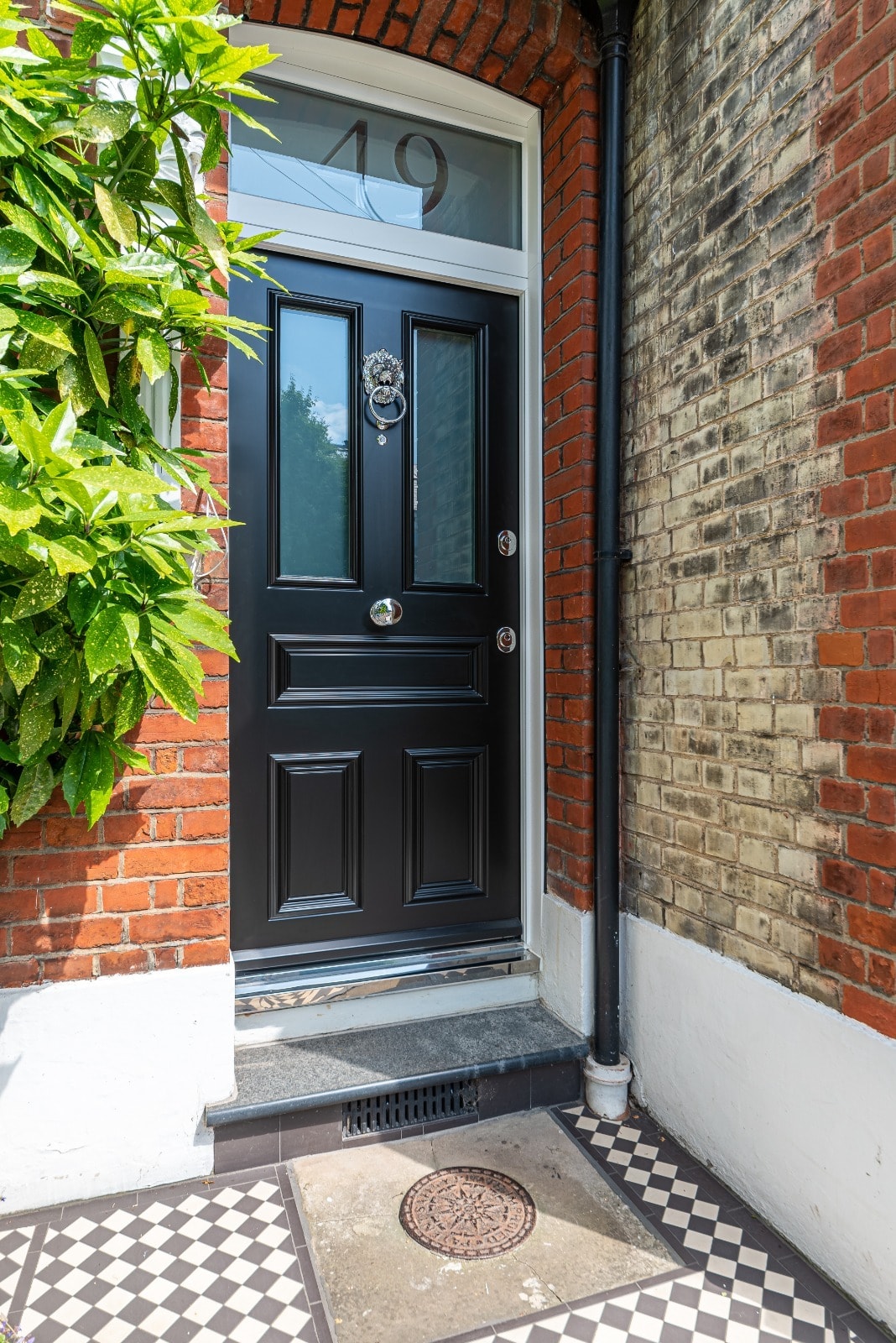
Absolutely. Bespoke steel entrance doors are available in any architectural style, from Georgian panelled designs with lion-head knockers and fanlights to contemporary flush-face configurations with minimalist hardware. The full RAL colour range means any colour is available, including heritage shades. Steel doors do not have an inherent aesthetic; they take whatever form the design requires. For a wider side-by-side of steel against the main alternatives, see our steel front door vs composite hub page.