Two Very Different Products Share One Name
Search for a steel security door in the UK and you will find two very different products wearing the same label. The first is the commodity steel door: an off-the-shelf galvanised leaf with a multi-point lock, sold in standard sizes, usually developed for warehouses, plant rooms and fire exits, and increasingly marketed to homeowners. The second is the certified residential steel doorset: a made-to-measure entrance door engineered, tested and certified as a complete assembly for the front of a home.
Both are steel. Both are stronger than a standard uPVC or timber door. But they are not the same product, they do not offer the same protection, and they do not look remotely alike on the front of a house. This guide explains the difference so you can decide which one you are actually being offered.
What a Commodity Steel Door Gives You
There is nothing wrong with a commodity steel door in the right place. For a garage, an outbuilding, a side gate or a commercial unit, an off-the-shelf steel leaf with a multi-point lock is a practical purchase. It resists casual attack far better than a hollow timber door and it is quick to supply.
The limitations appear when it is used as the front door of a home:
- Standard sizes. The door is made first and sold later, so the opening has to suit the door. Odd-sized period openings mean packing, infill panels or compromise.
- Component claims, not doorset certification. Many commodity doors quote the lock's specification or the steel gauge rather than a security rating earned by the whole doorset under test. A strong lock in an untested assembly tells you little about how the complete door performs under attack.
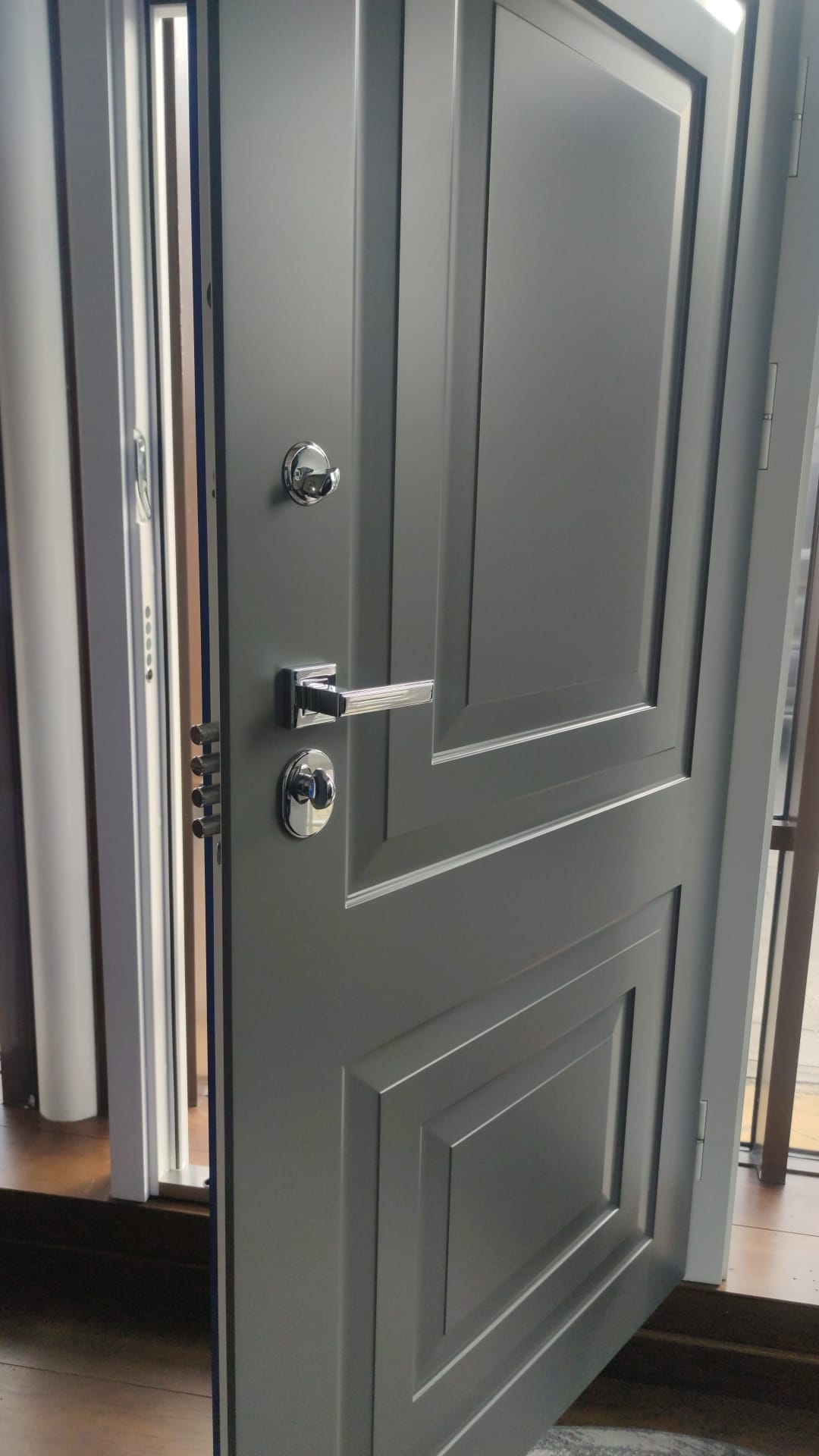
- Industrial appearance. Flush grey leaves and cottage panels designed for factories look like what they are. On a residential street the door announces itself for the wrong reasons.
- Thermal and acoustic performance. Doors developed for plant rooms were not designed around the insulation, draught sealing and comfort a home entrance needs.
What a Certified Residential Doorset Gives You
A certified residential steel doorset approaches the problem from the opposite direction. The door is designed for homes, made to measure for the opening, and, critically, the security claim belongs to the complete doorset: leaf, frame, hinges, locks, cylinder, fixings and any glazing, tested together as one assembly.
The certifications to look for are specific:
- PAS 24:2022 is the baseline UK standard for enhanced-security doorsets and the requirement behind Approved Document Q for new dwellings. Our PAS 24 steel entrance door page explains what the test involves.
- BS EN 1627:2011 resistance classes grade a doorset against increasingly capable attackers. Every SteelR door is certified to BS EN 1627:2011 RC4 as Standard, a class associated with experienced attackers using tools such as drills and crowbars.
- LPS 1175 is the LPCB standard used for higher-threat applications. SteelR offers LPS 1175 SR3 as the Enhanced upgrade and SR4 as the Commercial-grade upgrade on any door. Our guide to front door security ratings from SR1 to SR3 covers how the tiers compare.
- Secured by Design is the UK police-preferred specification, covering the complete door system. See our Secured by Design steel front door page for what approval covers.
The difference in substance is simple: a commodity door asks you to trust its components, while a certified doorset shows you what the whole assembly survived under independent test conditions.
Security Without the Industrial Look
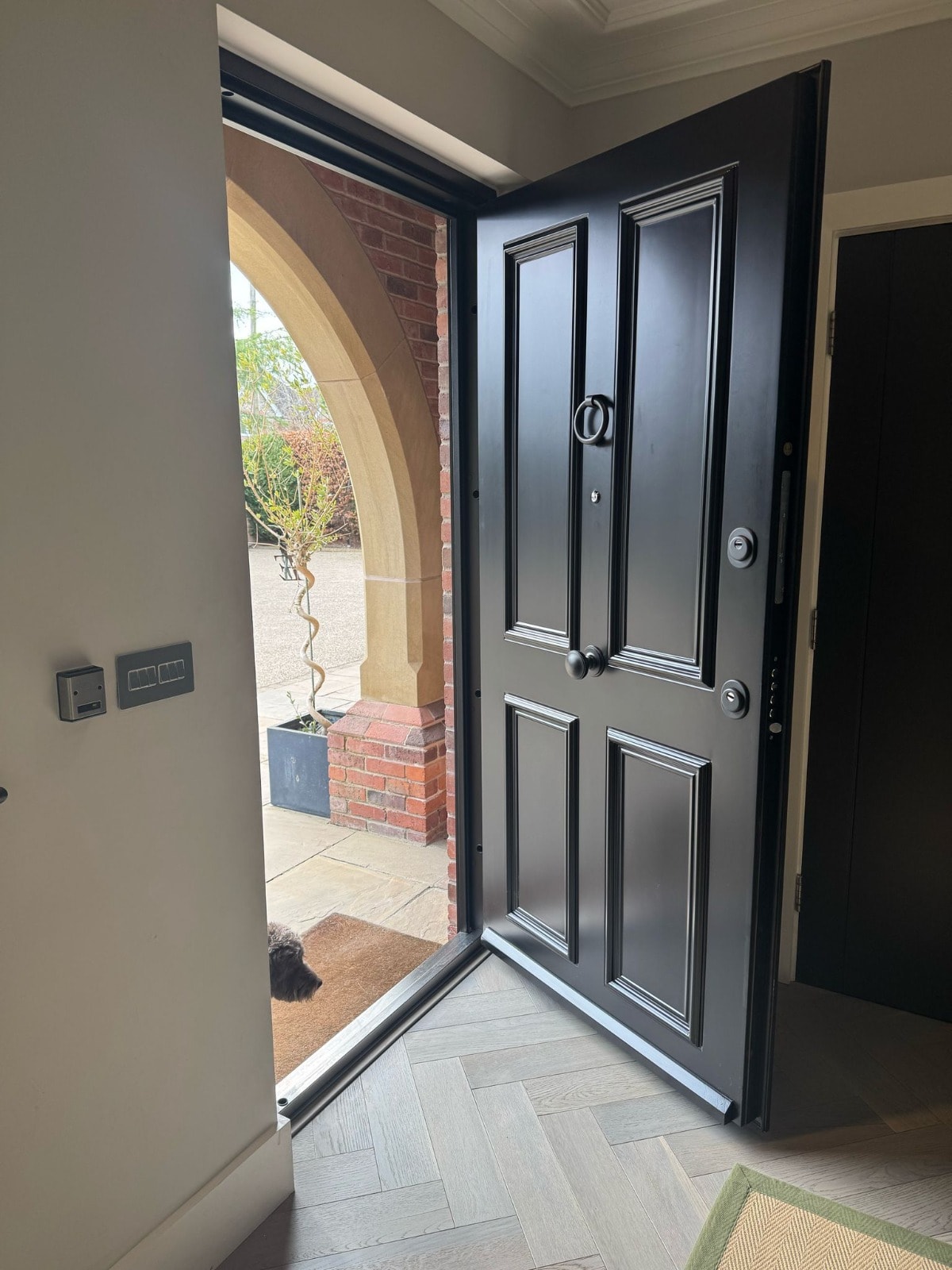
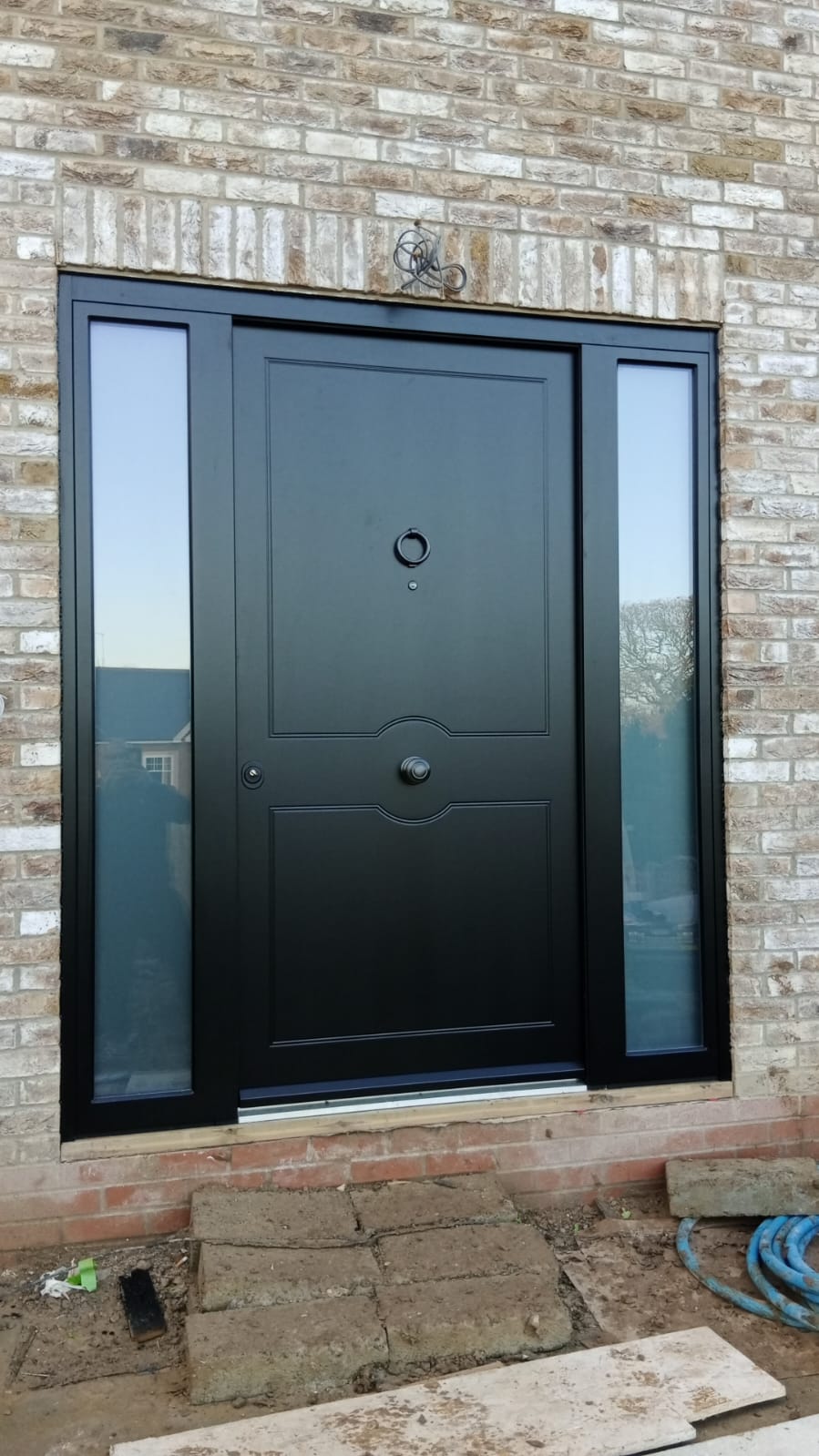
The reason many homeowners hesitate over a steel security door is the mental image of a flush grey slab. On a bespoke residential doorset that image is wrong. Panel moulding can be period or contemporary, the finish can be any RAL colour with different colours inside and out, and hardware ranges from traditional lion knockers and brass furniture to minimal bar handles in matt black.
Glazing does not have to be sacrificed either. Laminated security glass held in internal beads can be designed into the leaf, sidelights and fanlights while the doorset keeps its certified rating, a subject we cover in depth in our security glass guide. Browse the collection and it becomes clear that the most secure doors on it do not look like security doors at all.
Fire Performance Comes as Part of the Package
A front door protects against more than intruders. Every SteelR specification is FD30S fire and smoke rated as standard, with FD60 available as an upgrade, which matters for flats, HMOs and any dwelling where the entrance door sits on an escape route. Commodity steel doors may carry a fire rating, but as with security, ask whether it applies to the doorset as supplied and fitted, not just the leaf.
What to Ask Any Supplier Before You Order
Whichever route you take, five questions separate a genuine security purchase from an assumption:
1. Is the security rating certified for the complete doorset, and can you show the certificate? 2. Does the certification apply to the door in my configuration, including glazing and hardware? 3. Is the door made to measure for my opening or adapted from a standard size? 4. Who installs it, and is the installation covered by the same company that made the door? 5. What are the fire rating, the warranty terms and the aftercare arrangements?
A supplier with a certified product answers all five without hesitation. If the answers stay vague, you are looking at a commodity door regardless of what the listing calls it.
Where SteelR Sits
SteelR manufactures bespoke steel entrance doors in the UK for homes, certified to BS EN 1627:2011 RC4 as Standard with LPS 1175 SR3 and SR4 upgrades, PAS 24:2022, Secured by Design approval and FD30S fire rating, installed nationwide by our own DBS-checked team on a lead time of around 8 weeks. If you are weighing up a steel security door for your home, our security overview sets out the full certification ladder, or contact the team to talk through what your property actually needs.
Frequently Asked Questions
Are steel security doors suitable for a normal house?
Yes. A certified residential steel doorset is designed for homes, made to measure, finished in any RAL colour with period or contemporary panelling, and does not look industrial. The doors developed for warehouses and plant rooms are a different product, and the distinction is worth checking before ordering: a residential doorset is certified as a complete assembly and designed around the appearance, insulation and comfort of a home entrance.
What security rating should a residential steel door have?
PAS 24:2022 is the UK baseline for enhanced-security doorsets and the standard behind Approved Document Q. Beyond that, BS EN 1627 resistance classes and LPS 1175 ratings grade doors against progressively more capable attack. Every SteelR door carries BS EN 1627:2011 RC4 as Standard, with LPS 1175 SR3 available as the Enhanced upgrade and SR4 as the Commercial-grade upgrade for the highest-risk applications.
Is a steel security door better than a composite door?
They serve different requirements. A composite door meets the general market; a certified steel doorset is engineered for verified security performance, with ratings such as RC4 and LPS 1175 that composite doors are not typically tested to. Our steel front door vs composite comparison sets the two side by side honestly, including where a composite door is the sensible choice.
Do steel security doors come with glazing?
Yes, provided the glazing is part of the certified design. Laminated security glass held in internal beads can be built into the leaf, sidelights and fanlights while the doorset keeps its rating. The key question for any supplier is whether the certification applies to the glazed configuration you are ordering, not only to the solid version.
How long does a bespoke steel security door take?
SteelR doors are made to measure with a lead time of around 8 weeks from signed-off design to installation, with the SR4 commercial-grade upgrade at around 10 weeks. Installation is carried out by our own team, typically in a single day for a standard door and two days for double doors or configurations with sidelights.