The Timber Door Tradition
For centuries, the default material for a British front door has been timber. Oak, mahogany, pine and more recently engineered hardwoods have graced the entrances of homes from country cottages to London townhouses. Timber has warmth, character and a deep-rooted association with quality craftsmanship.
But timber also comes with compromises that many homeowners are no longer willing to accept. As security threats evolve, energy efficiency standards rise and lifestyle expectations shift towards low-maintenance living, an increasing number of homeowners are considering steel as a timber front door alternative.
This guide provides a complete, honest comparison of steel vs timber doors to help you decide which material is right for your home.
Security: A Decisive Difference
This is the area where the gap between steel and timber is widest.
Timber doors, even high-quality hardwood doors, offer limited resistance to forced entry. A standard timber door can typically be breached in under 30 seconds by an intruder using basic tools such as a crowbar or a heavy kick. The wood around the lock and hinges is the weakest point, it splits and gives way under concentrated force.
Steel entrance doors certified to BS EN 1627:2011 RC4 as Standard, with the LPS 1175 SR3 Enhanced upgrade available, withstand sustained attack using professional-grade tools including crowbars, drills and angle grinders. The steel construction, reinforced frame, multi-point locking system and security-rated hardware work together as a tested system. No timber door, regardless of species or construction method, can achieve LPS 1175 SR3.
For homeowners who take home security seriously, this is often the deciding factor.
Durability and Lifespan
Timber is a natural material, and natural materials degrade over time when exposed to the elements:
- Warping and twisting, timber absorbs and releases moisture with seasonal changes, causing the door to swell in winter and shrink in summer. This leads to sticking, binding and gaps that compromise both security and insulation.
- Rot, the base of a timber door and areas around glazing are particularly vulnerable to wet rot, especially on exposed elevations
- Cracking and splitting, UV exposure and repeated wet-dry cycles cause timber to crack and split over time, requiring filler and repair
- Typical lifespan, a well-maintained hardwood door may last 20 to 30 years, though many softwood doors deteriorate significantly within 10 to 15 years
Steel does not warp, swell, shrink, crack, split or rot. A steel entrance door finished with a professional multi-layer paint system maintains its structural integrity and appearance for decades. The material is dimensionally stable regardless of temperature, humidity or UV exposure.
The lifespan of a quality steel door comfortably exceeds 30 years with minimal intervention.
Maintenance
This is where timber's romantic appeal meets practical reality.
Timber doors require regular, ongoing maintenance to remain functional and attractive:
- Sanding and repainting every 3 to 5 years (more frequently on exposed south and west-facing elevations)
- Checking and adjusting hardware as the timber moves seasonally
- Treating or replacing sections affected by rot or insect damage
- Re-sealing around glazing as putty or sealant deteriorates
Over a 30-year period, the cumulative cost and effort of maintaining a timber door is substantial.
Steel doors require virtually no maintenance. An occasional wipe with a damp cloth to remove dirt is all that is needed. There is no repainting cycle, no seasonal adjustment and no risk of rot or insect damage. The locks and hardware are specified for long-term durability and are easily serviced if required.
Thermal Performance
Modern building standards demand good thermal performance from entrance doors. How do the two materials compare?
Timber has natural insulating properties, and a solid hardwood door provides reasonable thermal performance. However, as timber warps and gaps develop around the edges and glazing, the effective insulation decreases significantly over time. Draught-proofing timber doors is an ongoing battle.
Steel doors with an insulated core and thermally broken profiles achieve excellent U-values, typically from 1.5 W/m2K for a solid panel door, with thermal-upgrade specifications available achieving as low as 0.8 W/m2K. The thermal break prevents cold bridging through the steel, and because the door does not warp or move, the seal between door and frame remains consistent over time. This means the thermal performance on day one is the same as the thermal performance ten years later.
Design and Aesthetics
One of timber's undeniable strengths is its natural beauty, the grain, the warmth, the tactile quality. But does choosing steel mean sacrificing aesthetics?
Timber doors offer a wide range of designs, from traditional panelled doors to contemporary flush designs. The natural grain adds character, and timber can be stained or painted to achieve a variety of looks. However, timber doors from most suppliers come in standard sizes, and fully bespoke timber doors from specialist joiners are expensive and still carry the maintenance burden.
Steel doors offer complete design freedom. Because every steel door is manufactured to order, you can specify:
- Any RAL colour from a palette of over 200 options
- Dual-colour finishes, a different colour inside and outside
- Any panel configuration, from Georgian six-panel to sleek contemporary designs
- Custom dimensions, no standard sizes, so the door fits your opening perfectly
- Decorative glazing, leaded lights, stained glass, frosted panels, Crittall-style patterns
- Period-appropriate hardware, lion knockers, ring knockers, brass letter plates, or contemporary pull bars and lever handles
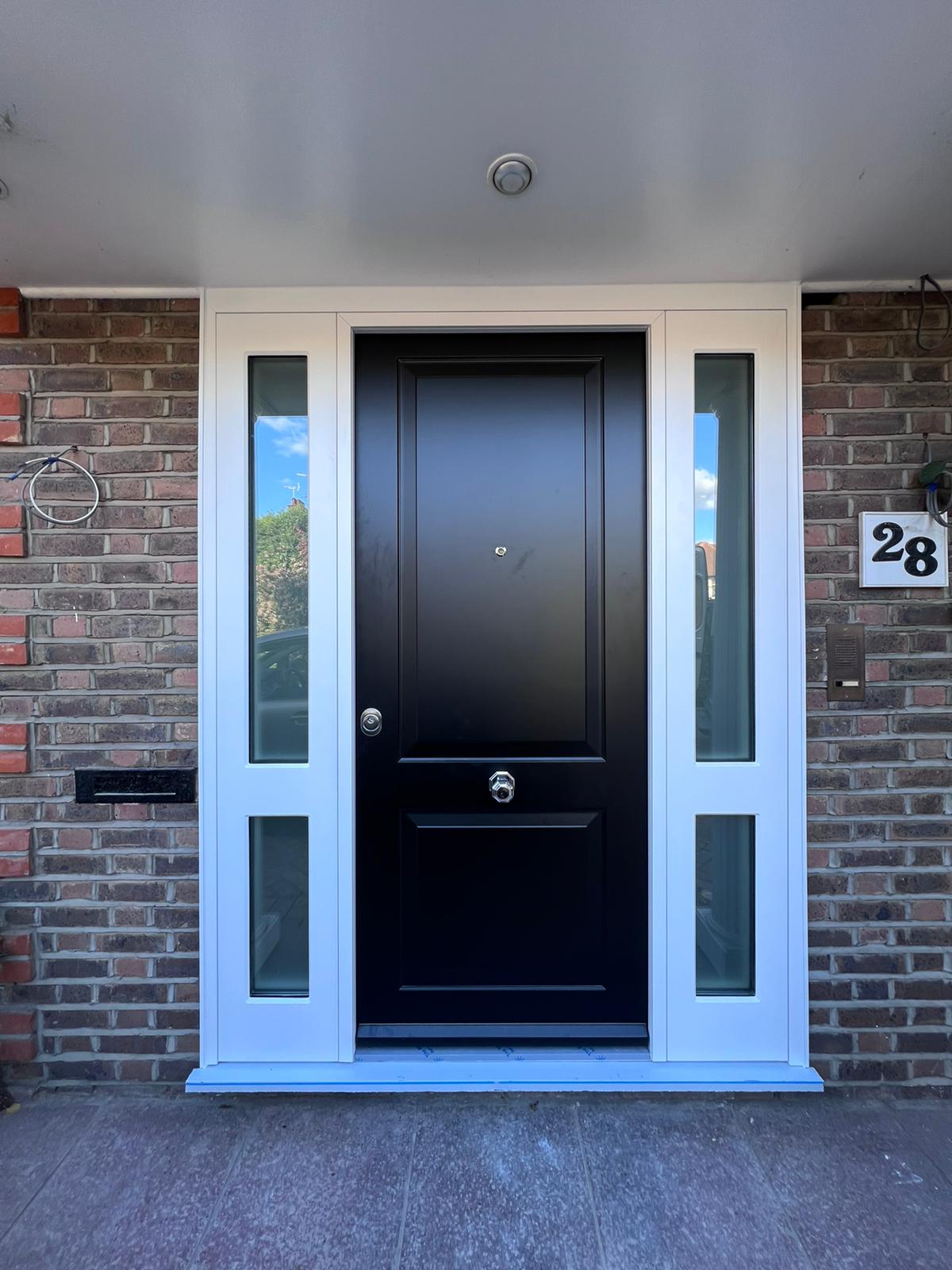
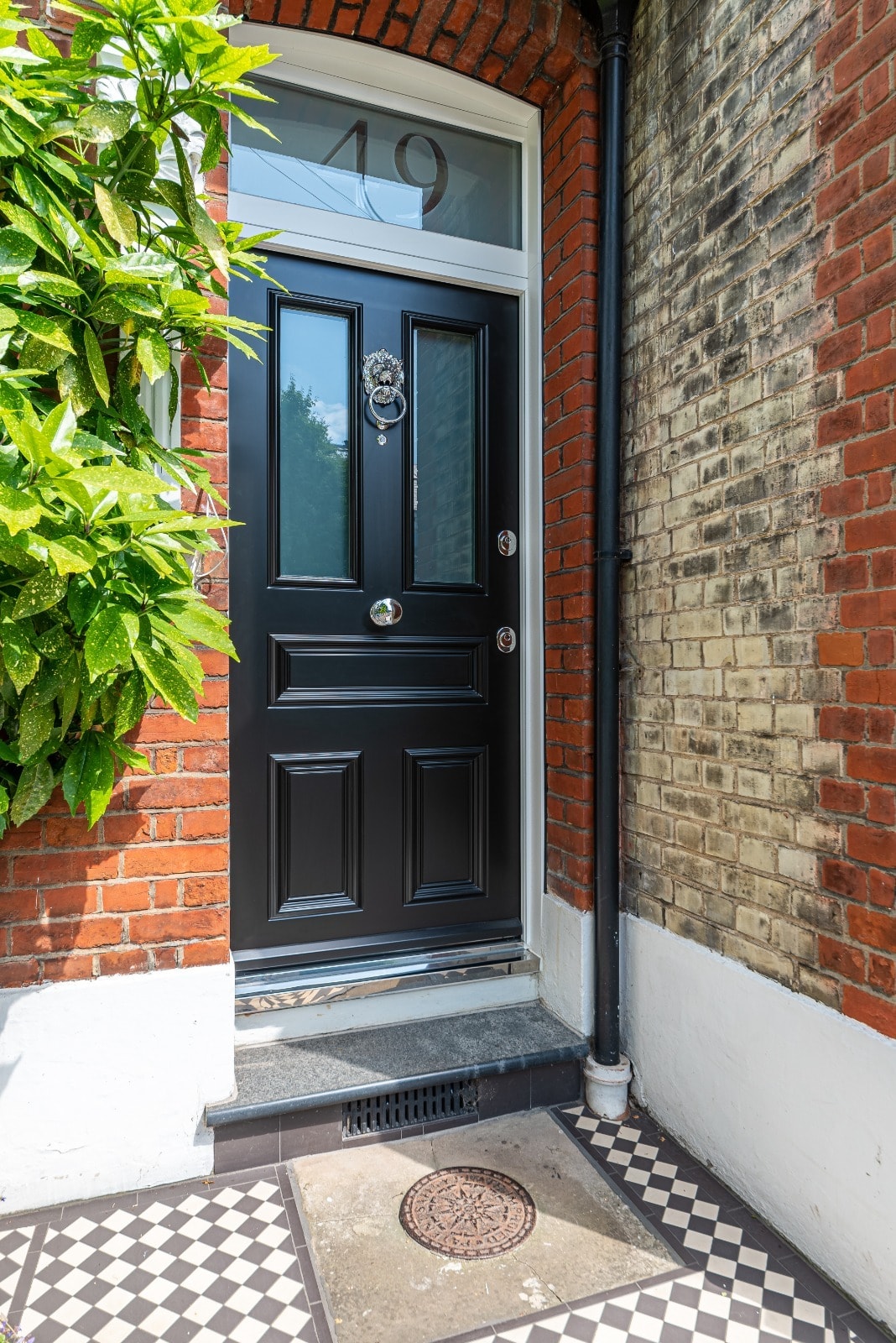
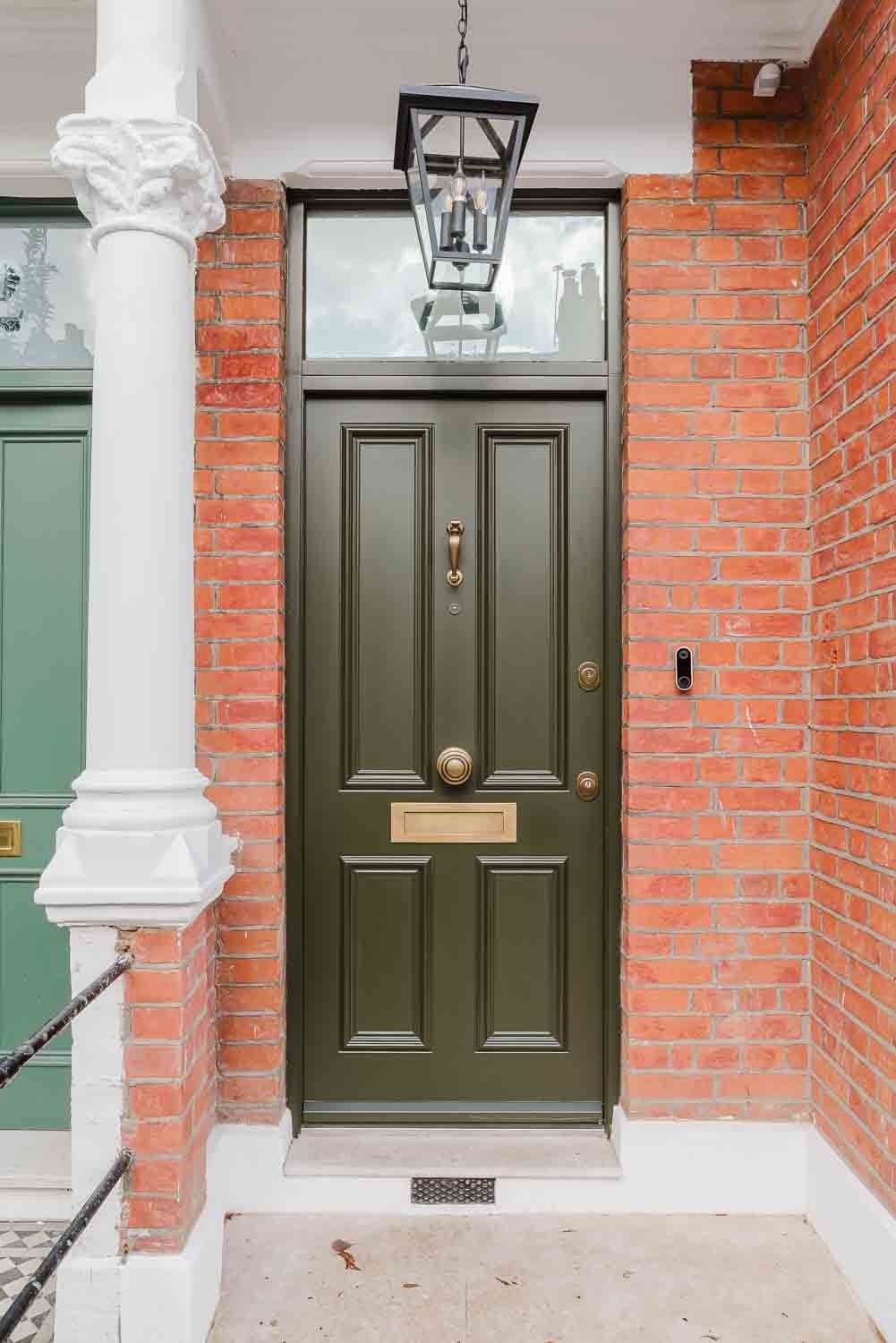
A bespoke steel door can faithfully replicate the look of a traditional timber door, including the panel proportions, moulding profiles and hardware placement, while delivering performance that timber cannot match. Equally, it can achieve bold contemporary designs that push beyond what timber can structurally achieve.
Weight and Operation
Timber doors are relatively lightweight and easy to operate, though this can change as they swell and bind seasonally.
Steel doors are heavier than timber equivalents. However, professional installation ensures that the door is hung on appropriate heavy-duty hinges and operates smoothly. The additional weight is actually a benefit, it contributes to the solid, reassuring feel of the door and discourages forced entry.
Environmental Considerations
Timber is a renewable resource, and responsibly sourced timber from FSC or PEFC certified forests has genuine environmental credentials. However, the frequent repainting cycle involves solvents and paints, and premature replacement due to rot or deterioration adds to the lifetime environmental cost.
Steel is one of the most recycled materials on earth. At the end of its long service life, a steel door is fully recyclable. The longer lifespan and absence of regular painting also reduce the lifetime environmental impact. A steel door that lasts 40 years has a smaller footprint than two or three timber doors over the same period.
Cost Comparison
Timber front doors range widely in price: - Off-the-shelf softwood doors: £200 to £600 - Engineered hardwood doors: £800 to £2,000 - Bespoke joinery-made hardwood doors: £2,000 to £5,000+ - Add maintenance costs of £150 to £300 every 3 to 5 years
Steel entrance doors start from a higher initial price point, reflecting the SR3 security rating, bespoke manufacture and professional installation. However, when you factor in the zero maintenance cost and significantly longer lifespan, the total cost of ownership over 30 years is often comparable, while the security, performance and convenience are in a different league.
Which Should You Choose?
Choose timber if you prioritise the natural grain and tactile quality of real wood, you are willing to commit to regular ongoing maintenance, and security beyond PAS 24 is not a primary concern.
Choose steel if you want LPCB-certified residential security (BS EN 1627 RC4 as Standard, with LPS 1175 SR3 Enhanced, SR4 Commercial-grade and LPS 1673 Ultra-high available as upgrades), zero maintenance, complete design freedom, superior long-term durability and a door that will perform consistently for decades.
At SteelR, we manufacture bespoke steel entrance doors that deliver on every measure, SR3 security, Secured by Design accreditation, ISO 9001 certified quality and complete design freedom. Whether you want a door that replicates the warmth of traditional timber or a bold contemporary statement, we design and build it to your exact specification, with installations across London, Surrey and the wider Home Counties. For a fuller side-by-side of how steel compares against the main alternatives, see our steel front door vs composite hub. Contact us to start the conversation.
Frequently Asked Questions
Do timber doors look better than steel doors?
Timber offers natural grain and visible warmth that is hard to replicate. However, a well-specified steel door matches timber convincingly at normal viewing distance, especially when finished in heritage RAL colours with the correct panel proportions. Many SteelR installations on period properties look like painted timber to passersby. If you want the character of unpainted hardwood grain on display, timber remains the only option; for any painted finish, steel delivers the same aesthetic without maintenance.
How much maintenance does a timber front door need?
Real timber doors typically need re-oiling or repainting every 3 to 5 years in UK weather, depending on the finish and level of exposure. Draught seals and weatherstripping need periodic replacement. Warping, splitting and swelling can occur with seasonal humidity and need correction. Total cost of maintenance over 20 years often approaches or exceeds the original door price. Steel doors with powder coat are effectively maintenance-free for their 25 to 40 year lifespan.
Is a solid timber door as secure as a steel door?
Solid timber doors can be secure when specified carefully, but rarely reach LPS 1175 SR3. Most premium timber doors stop at PAS 24 certification. To reach SR3 in timber requires heavy engineered cores, steel-reinforced stiles and upgraded locking, which makes the door very expensive and diminishes the natural wood aesthetic. Steel achieves LPS 1175 SR3 more consistently and at a more predictable price point.
Will steel doors show fingerprints or dents?
No. Powder-coated steel is highly resistant to fingerprints and everyday knocks. The finish is impact-resistant (not simply paint) and can take the occasional brush from a vacuum cleaner or pram without marking. Timber is actually more prone to visible marks from daily use because the grain shows scratches and the finish wears at high-contact points.
Which is better for a listed building or conservation area?
For listed buildings, conservation officers may require like-for-like timber restoration if the original door survives. In conservation areas without listed status, modern steel doors designed to match historic timber proportions are routinely approved, provided they replicate the panel layout, proportions and finish of the period. Speak to your local conservation officer about material preference before ordering either option.
Do timber doors last longer than steel in the long run?
Well-maintained hardwood doors can last 50+ years, but require continuous upkeep. Steel doors last 25 to 40+ years with no upkeep. The honest comparison is: timber with commitment to maintenance vs. steel without. In practice, steel outlasts most real-world maintained timber because most homeowners do not sustain a 5-year repaint cycle over 30 years, and small maintenance failures compound into bigger problems over time.