London's Period Property Heartlands
London is home to some of the finest period architecture in the world. From grand Georgian crescents to ornate Victorian terraces and elegant Edwardian semis, the capital's residential streets are a living museum of British architectural history. For homeowners renovating these properties, every detail matters, and the entrance door is where first impressions begin.
This guide explores the best areas in London for period property renovations and explains why a bespoke steel entrance door is the perfect finishing touch for a heritage home.
West London: Georgian and Victorian Grandeur
Kensington and Chelsea
Kensington and Chelsea contain some of London's most prestigious period properties. The white stucco terraces of Kensington, many dating from the 1840s and 1850s, demand entrance doors that respect their classical proportions. Six-panel Georgian designs with brass lion knockers and elegant fanlights are the natural choice here. Chelsea's mix of Georgian townhouses and Victorian villas offers equally rich opportunities for sympathetic door upgrades.
Both boroughs contain extensive conservation areas, which means any external alteration, including a new front door, must preserve or enhance the character of the streetscape. A bespoke steel door finished to replicate traditional painted timber satisfies conservation officers while delivering SR3 security and modern thermal performance.
Fulham and Notting Hill
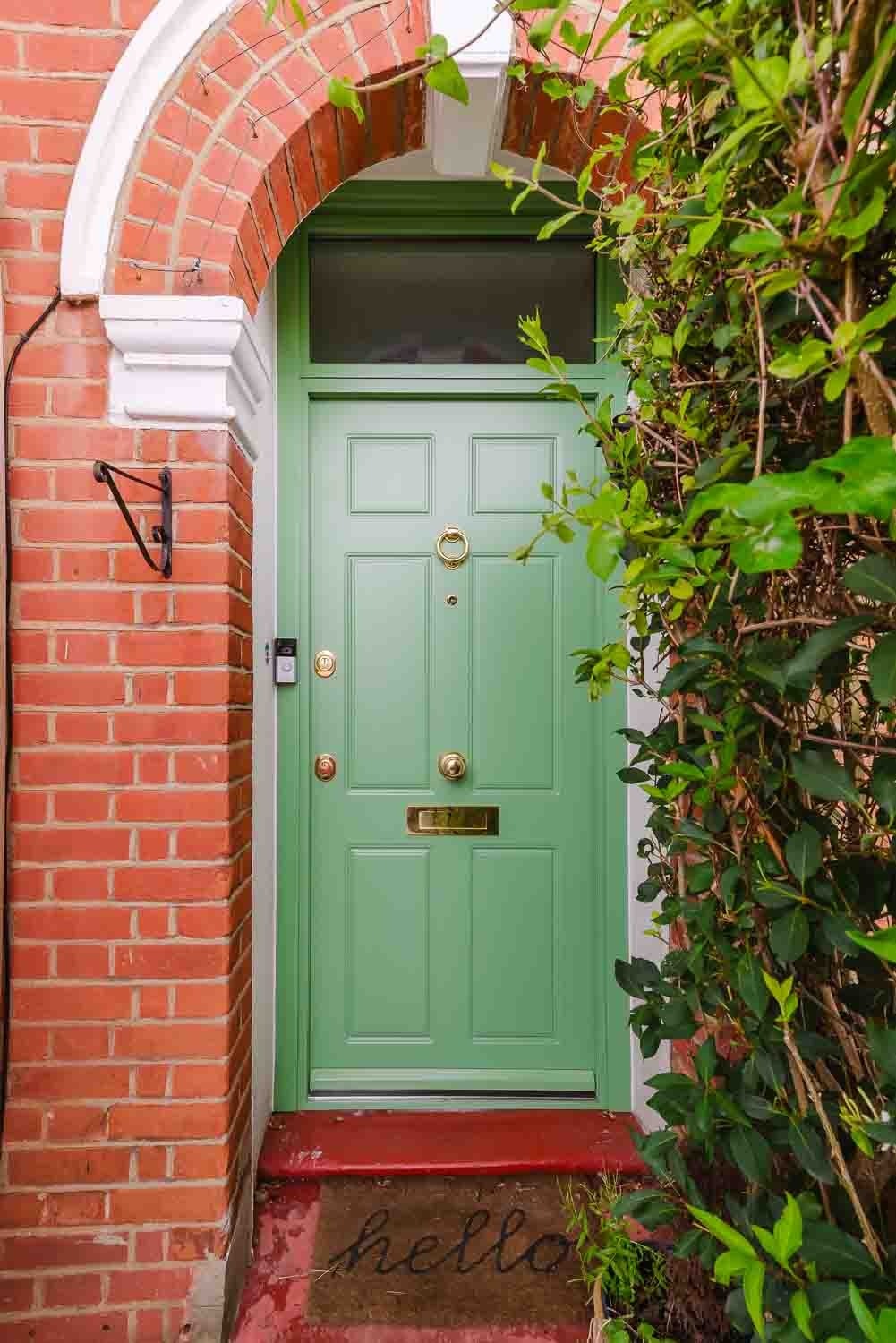
Fulham has become one of London's most popular renovation hotspots, with its long streets of Victorian terraced houses offering excellent potential for modernisation. The classic Fulham terrace features a four-panel front door with decorative glazing, a design that translates beautifully into steel.
Notting Hill is synonymous with colourful facades and distinctive front doors. The pastel-painted stucco houses of Notting Hill are among the most photographed in London, and a bold, well-chosen door colour is essential to the neighbourhood's character. With a bespoke steel door, you can specify any RAL colour to complement your facade while ensuring the highest security standards.
North London: Leafy Victorian and Edwardian Suburbs
Hampstead and Highgate
Hampstead and Highgate are two of London's most desirable residential villages, prized for their period architecture, leafy streets and proximity to Hampstead Heath. Hampstead's Georgian and early Victorian houses are among the most valuable in the capital, while Highgate's Victorian and Edwardian properties sit within one of London's oldest conservation areas.
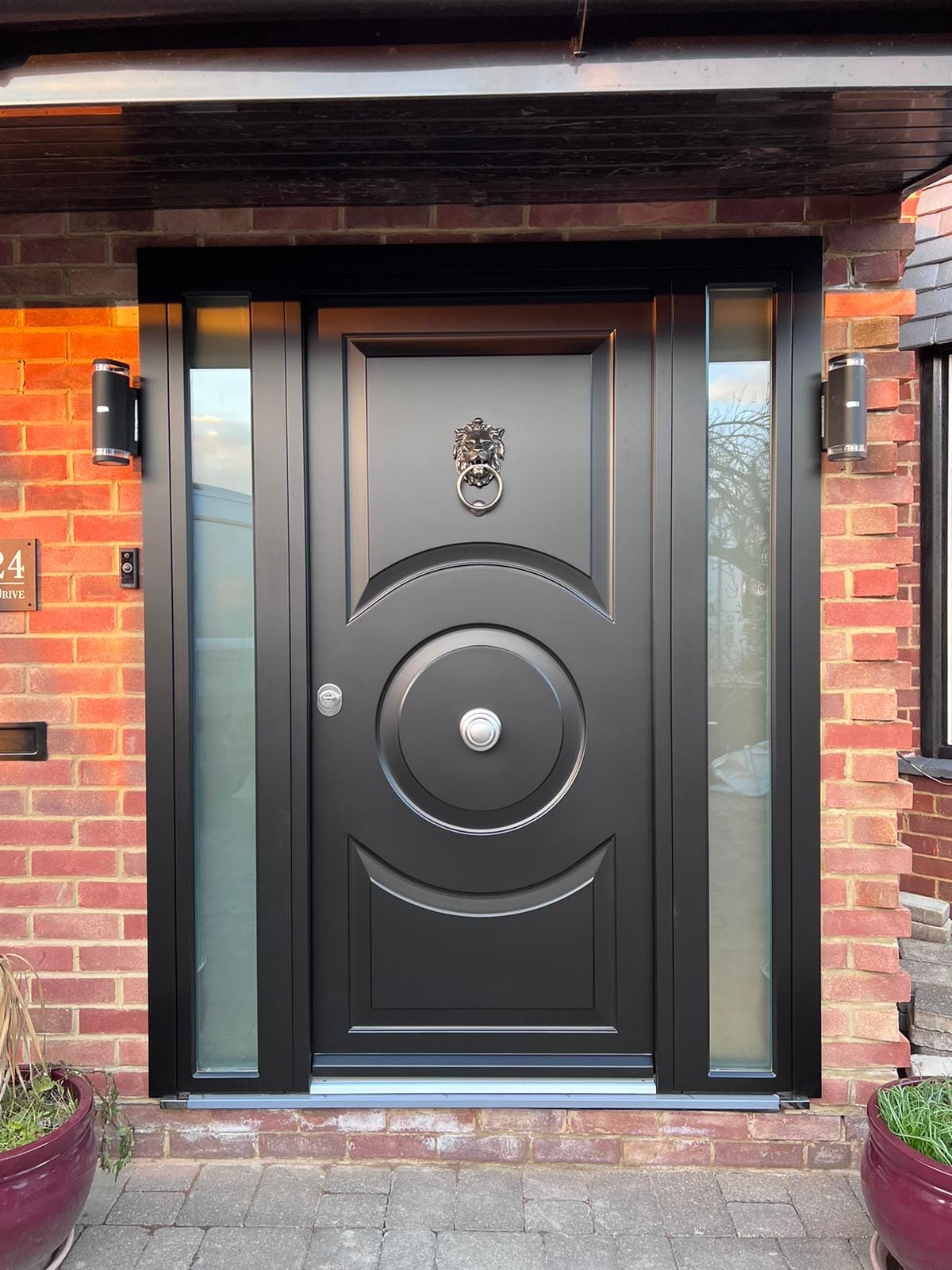
The detached and semi-detached properties common in these areas are particularly well-suited to grand entrance door designs, double doors with sidelights, arched fanlights and traditional ironmongery. Security is also a key consideration for these high-value homes, making SR3-rated steel doors an intelligent investment.
Islington
Islington offers a concentration of Georgian and early Victorian townhouses that rivals anywhere in London. The elegant squares and terraces of Canonbury, Barnsbury and Duncan Terrace are architectural treasures. Islington homeowners are known for their attention to period detail, and a faithful reproduction of a Georgian six-panel door in steel, complete with brass hardware and a period-appropriate colour, is the ideal complement.
South London: Hidden Gems
Dulwich, Blackheath and Greenwich
South London contains some of the capital's best-kept secrets for period property enthusiasts. Dulwich Village is one of the most charming residential pockets in London, with its mix of Georgian, Victorian and Edwardian houses set around the famous Dulwich Picture Gallery. The village atmosphere and conservation area status make sympathetic renovation essential.
Blackheath combines elegant Georgian terraces overlooking the heath with substantial Victorian houses on the surrounding streets. The area's architectural cohesion makes it particularly important to choose a front door that respects the period character.
Greenwich offers everything from grand Georgian townhouses near the Royal Observatory to Victorian terraces in the streets surrounding Greenwich Park. The UNESCO World Heritage Site status of parts of Greenwich adds an extra layer of heritage consideration to any renovation project.
Battersea and Richmond
Battersea has undergone remarkable transformation in recent years, with Victorian terraces being renovated to an exceptionally high standard. The area's period properties respond well to contemporary-traditional door designs that bridge the gap between heritage aesthetics and modern performance.
Richmond feels more like a country town than a London borough, with its Georgian high street, Victorian residential roads and proximity to Richmond Park. The affluent, conservation-conscious character of Richmond makes it a natural fit for bespoke steel doors that combine period authenticity with lasting quality.
Why Steel Doors Are Perfect for London Period Properties
London's period properties face a unique combination of challenges that steel entrance doors are perfectly positioned to address:
- Conservation area compliance: a bespoke steel door can faithfully replicate any period design to satisfy planning requirements
- Security: high-value London properties are attractive targets. BS EN 1627:2011 RC4 single leaf, unglazed is included as Standard on every SteelR door, with LPS 1175 SR3 (LPCB police-preferred Enhanced upgrade), LPS 1175 SR4 D10 Issue 8 (Commercial-grade upgrade) and LPS 1673 attack-resistance (Ultra-high, by enquiry) available where the threat profile justifies it
- Thermal performance: period properties are often draughty, and a thermally broken steel door significantly reduces heat loss through the entrance
- Zero maintenance: unlike timber, steel doors do not warp, rot or require regular repainting, which is particularly valuable in London's variable climate
- Design precision: non-standard openings are common in period properties, and bespoke steel doors are manufactured to exact dimensions
Borough by Borough: Architectural Character and Typical Specification
Not every period street in London reads the same, and the right door specification varies significantly from one conservation area to the next. The notes below are drawn from projects we have specified for clients across the capital.
Kensington Kensington's signature streets are dominated by stucco-fronted Italianate terraces from the 1840s to the 1870s, with six-panel double-leaf doors set behind porticos with columns. Typical specification: SR3 steel leaf in gloss black or a very deep Oxford blue, polished brass or unlacquered brass ironmongery, fanlight above with radial glazing bars, door surround kept in original stone or stucco. Most streets sit inside the Kensington conservation area, and the Royal Borough takes a close view of proportion and glazing pattern.
Chelsea Chelsea splits into three flavours: the tall Georgian townhouses of Cheyne Walk and the Chelsea Embankment, the mid-Victorian brick-and-stucco terraces around Sloane Square, and the Queen Anne Revival red-brick mansions of Cadogan Square. Door specifications tend to follow the architecture closely. Black with brass is the safest choice near the river; deeper colours and panel mouldings suit the red-brick stock further inland. Chelsea's conservation areas are among the most closely monitored in London.
Notting Hill Notting Hill's pastel stucco terraces on streets such as Lancaster Road and Lonsdale Road invite confident colour. Typical specifications we have built include a custard yellow (RAL 1017), a coral red (RAL 3012), a dusty pink (RAL 3014) and a cerulean blue (RAL 5012). The panel style is usually early Victorian four-panel or six-panel, with a rectangular fanlight. Article 4 Directions apply on parts of the Ladbroke Estate; check the conservation area appraisal before committing to a non-traditional colour.
Holland Park Holland Park's late-Victorian and Edwardian villas sit behind deep front gardens, and the front door is often less visible from the street than in Kensington. This gives owners slightly more latitude on colour and finish. Specifications often include double-leaf steel doors with leaded-glass sidelights, brass or aged-bronze ironmongery and deep green, wine or blue exteriors. Security spec trends toward the LPS 1175 SR3 Enhanced upgrade on most townhouses, with the SR4 Commercial-grade tier on detached villas.
Chiswick and Hammersmith Chiswick is a mix of Georgian on the Mall, mid-Victorian around Bedford Park (England's first garden suburb) and solid Edwardian terraces across the rest of the area. Bedford Park is a conservation area with a strong Queen Anne Revival character, and door specifications there tend to be red-brick-appropriate: bottle green, deep red, olive, cream, with leaded glazing and brass hardware.
Hampstead Hampstead's Georgian stock on streets like Church Row and Flask Walk is among the oldest and most tightly controlled in London. Listed building consent is frequently required. Typical specification: faithfully replicated six-panel doors with a fielded-panel profile, gloss black or deep green, polished brass. Further up in New End and the Vale of Health, early-Victorian smaller houses accept slightly more relaxed colour choices.
Highgate and Crouch End Highgate Village sits inside one of London's longest-established conservation areas, and the conservation officers are active. Specification closely follows Georgian and early-Victorian precedent. Crouch End, further down the hill, has a more Edwardian character and allows more scope for sage, dusty blue and heritage reds.
Islington Islington's squares (Canonbury, Highbury, Barnsbury, Duncan Terrace) carry Georgian and early-Victorian townhouses with regular proportions. Specification is straightforward: six-panel black or deep-green steel doors, brass ironmongery, fanlight with radial bars. Newer Islington stock from the 1870s onward allows more liberal colour use, particularly on the secondary streets.
Clapham and Battersea Clapham Old Town and the streets around Clapham Common have some of the finest early-Victorian stock in South London. Specifications lean toward bold Victorian colour: deep red, bottle green, navy. Battersea's Between the Commons area is mid-to-late Victorian and renovation-heavy, with homeowners typically specifying SR3 steel doors in a wider contemporary-traditional palette.
Wandsworth and Putney The Tonsleys in Wandsworth and the streets between Putney Heath and the river are predominantly mid-to-late Victorian terraces. These homes suit the Victorian colour palette: deep red, bottle green, navy, occasionally a black with a stained-glass fanlight. Specification trends toward full SR3 steel replacement of original painted-timber doors, with sympathetic detailing.
Dulwich and Blackheath Dulwich Village and its surrounding conservation area carry a mix of Georgian, Victorian and Edwardian stock on Dulwich Estate land. The Estate has its own approval regime in addition to conservation area consent, and door specifications usually need to be agreed with the Estate office as well as Southwark Council. Blackheath's Georgian terraces around Montpelier Row are among the oldest in South London and are treated with comparable care.
Greenwich Central Greenwich sits inside the Maritime Greenwich UNESCO World Heritage Site, and any external change receives additional scrutiny. Georgian and early-Victorian specifications dominate, with conservative colour palettes (black, deep green, deep red) and traditional ironmongery. The streets further out from the river allow broader latitude.
Richmond and Barnes Richmond's Georgian high street and the streets surrounding the Green and the Park have a character closer to an affluent market town than inner London. Barnes, across the river, has a village atmosphere of its own. Specifications tend to be conservative: black, navy, bottle green, with brass ironmongery and classical panel mouldings.
Pimlico and Belgravia Pimlico's Thomas Cubitt-designed stucco terraces and Belgravia's grander cousins demand a reserved specification: gloss black, polished brass, six-panel profile, fanlight above. Belgravia's conservation regime is among the strictest in the UK. Most front doors are listed as features of the building, not alterable independently, and consent processes are non-trivial.
Marylebone and Fitzrovia Central Marylebone and Fitzrovia carry a mix of Georgian, early-Victorian and converted townhouse stock. Many properties are now divided into flats, and the entrance door serves a communal function. Specification tends toward SR3 steel in black or deep grey, with multi-point locking, electronic access control and intercoms integrated discreetly into the frame.
Planning, Listed Status and Conservation Overlays
Three separate layers of planning control can apply to a front door in London, and it is important to understand which applies to your property before you specify.
- Listed building consent (Grade I, II\* and II): any change to a listed building that affects its special interest requires consent. On a listed home, the front door is almost always considered character-defining, and its replacement requires consent. The conservation officer will scrutinise the proposed design, the materials, the colour, the ironmongery and the glazing. Consent can take eight to twelve weeks.
- Conservation area consent: a property inside a conservation area has additional protections even if the building itself is not listed. Most routine door replacements do not require formal consent unless an Article 4 Direction is in force, but the conservation area appraisal document will set expectations for what the authority considers acceptable.
- Article 4 Direction: certain conservation areas have removed permitted development rights for exterior alterations. Under an Article 4, even a change of colour on a visible front door can require planning approval. The Ladbroke Estate in Notting Hill and parts of Hampstead, Highgate and Islington are examples.
Always check the local authority's planning portal for your address before committing to a specification. A pre-application enquiry, where the authority comments informally on a proposed specification before you apply formally, typically costs a modest fee and saves weeks of delay.
Typical Investment Level for a London Period Spec
Bespoke steel front doors for London period properties are a specifier-tier investment rather than a commodity purchase. The cost reflects:
- A fully bespoke design matched to the existing door opening, usually a non-standard size.
- BS EN 1627 RC4 Standard certification on every door, with the LPS 1175 SR3 Enhanced upgrade and SR4 Commercial-grade upgrade available where the client or insurer requires it.
- A polyester powder-coat finish in any RAL reference, matched physically against a sample before production.
- Brass, bronze, chrome or blackened ironmongery specified piece by piece.
- Leaded, stained, toughened or double-glazed sidelights and fanlights to match the original composition.
- Full UK installation by our own team, including frame alignment, multi-point locking gear and handover documentation.
Lead times typically run approximately eight weeks from design sign-off to installation, longer for listed buildings where consent is required first. Projects that include sidelights, fanlights or double-leaf doors sit at the upper end of the investment range.
Start Your Renovation
Whether you are restoring a Georgian townhouse in Kensington or upgrading a Victorian terrace in Fulham, the entrance door sets the tone for the entire property. At SteelR, we design and manufacture bespoke steel entrance doors for period properties across London, every door SR3 rated, Secured by Design accredited and built under ISO 9001 certified quality management. For a borough-by-borough specification overview, see our luxury steel entrance door London guide, or contact us to discuss your project.
See our heritage steel front doors hub for a complete guide to specifying a steel front door in a listed or conservation-area home, covering Listed Building Consent process, Article 4 directions, period-correct ironmongery and RAL palette.
Frequently Asked Questions
Do I need planning permission to replace the front door on a London period property?
It depends on three factors: whether the building is listed, whether it sits in a conservation area, and whether an Article 4 Direction is in force on that conservation area. Listed buildings always require listed building consent for a door replacement. Conservation areas without an Article 4 usually do not require formal consent for a like-for-like replacement, but do for material changes. Properties under an Article 4 can require approval even for a colour change. Check the planning portal for your address before specifying.
Can a steel front door pass a London conservation officer's review?
Yes, provided the visible specification faithfully replicates the original or the historically appropriate design. A bespoke steel door can match timber profiles closely, including fielded panels, beaded mouldings, fanlight glazing bars and period-correct ironmongery. Submit elevation drawings, a coated sample and photographs of the proposed specification against the existing door as part of the consent application. Conservation officers respond best to a considered, well-documented submission.
What is the typical lead time for a bespoke steel door in London?
Approximately eight weeks from design sign-off to installation is typical. Add four to twelve weeks upfront for listed building consent or planning approval where required. Survey, design review, colour sign-off and manufacture each take time. We always schedule installation once the door has passed final quality inspection and the fixing plan has been approved with the client.
Which London borough is strictest on front door specifications?
Westminster, Kensington and Chelsea, and Camden all operate among the strictest conservation regimes in the UK. Belgravia, Mayfair and central Marylebone (Westminster); Kensington and Chelsea (the Royal Borough); and Hampstead and Highgate (Camden) all have conservation areas where front door specifications are closely reviewed. The Ladbroke Estate in Notting Hill and the Dulwich Estate in South London have additional private approval regimes on top of the local authority.
Are SR3 steel doors common on period homes, or unusual?
Increasingly common. Ten years ago, a steel front door on a Victorian terrace would have been unusual; today it is a mainstream specification among renovation-focused owners in prime London postcodes. The combination of SR3 security, thermal performance, zero maintenance and faithful period detailing has driven adoption. Most new SteelR doors specified in London in 2026 are replacements for original painted-timber doors that have reached the end of serviceable life.
Can you match the door colour to other properties on a conservation terrace?
Yes. For terraces where the conservation officer expects a coherent palette, we colour-match to a physical swatch taken from an adjacent property or to a reference approved in writing by the conservation officer. The match is confirmed on a coated steel sample before production. RAL references provide a reliable basis for the match.
What do London period property owners typically choose: black or a colour?
Black and very dark colours (deep green, Oxford blue, charcoal) dominate Kensington, Chelsea, Belgravia, Mayfair, Islington, Hampstead and central Marylebone. Notting Hill, Chiswick, Clapham, Battersea and parts of Dulwich accept and often expect bolder Victorian colour choices. The property and the street usually dictate the answer more than the owner's preference.
Is it worth specifying SR4 (LPS 1175) on a London period property?
For the majority of London period homes, SR3 is the right specification. SR4 is worth considering on detached villas in leafier suburbs, on homes where the client holds significant moveable value on site, and on properties where the owner has experienced an attempted break-in. An SR4 upgrade is available on any SteelR specification and is typically specified on a minority of our London projects.