Kent's Architectural Heritage
Kent holds a singular position in English architecture. Known as the Garden of England, the county's building traditions reflect centuries of agricultural prosperity, strategic military importance and proximity to continental Europe. From the medieval timber frames of the Weald to the Regency crescents of Tunbridge Wells and the weatherboarded coastal towns of the Kentish shore, the county presents one of the most diverse architectural landscapes in the country.
This diversity makes Kent a particularly interesting context for entrance door specification. A door that is perfect for a Victorian townhouse in Sevenoaks may be entirely wrong for an oast house conversion in the Weald or a Georgian terrace in Tunbridge Wells. Understanding Kent's architecture is essential to specifying a door that belongs.
Kent contains one of the most architecturally diverse property landscapes in England, demanding entrance door designs that respond to centuries of distinct building traditions.
The Building Traditions of Kent
Oast Houses
Perhaps Kent's most iconic vernacular building, the oast house, originally used for drying hops, has become one of the most sought-after residential conversions in the county. The cylindrical or square kilns with their distinctive conical cowls present unique entrance challenges. Doorways are often non-standard dimensions, set within curved walls or positioned beneath low eaves.
A bespoke steel door is ideally suited to oast house conversions precisely because it is manufactured to individual dimensions. There are no standard sizes to compromise with. The design can reference the agricultural heritage of the building, simple panelled configurations in earthy tones, robust ironmongery in blackened or antiqued finishes, while delivering the security and thermal performance that a premium residential conversion demands.
Wealden Hall Houses
The Wealden hall house is the defining medieval building type of the Kent Weald. These timber-framed structures, with their distinctive recessed centre bay and jettied upper floors, date from the fourteenth to sixteenth centuries and are found throughout the countryside between Sevenoaks and Ashford. Many are Grade I or Grade II listed.
Entrance doors for Wealden houses must respect the scale, materials and proportions of the original building. Heavy oak plank doors with wrought iron furniture are the traditional specification. A bespoke SteelR doorset can be designed to replicate this appearance precisely, with the visual weight, proportional authenticity and ironmongery detail of a traditional oak door, whilst providing SR3 security certification and thermal performance that a medieval timber door cannot approach.
Georgian Townhouses
The Georgian legacy is strong across Kent's principal towns. Tunbridge Wells, Rochester, Canterbury and parts of Sevenoaks contain substantial Georgian terraces and detached villas characterised by symmetrical facades, tall sash windows and formal entrance arrangements. The six-panel door with a fanlight above is the archetypal Georgian entrance, often painted in historically appropriate colours.
Steel doors replicating the Georgian six-panel configuration, with authentic panel proportions, raised and fielded detail and period-correct ironmongery, satisfy the aesthetic requirements of even the most stringent conservation officer while eliminating the ongoing maintenance that a painted timber door demands.
Coastal Properties
Kent's coastline stretches from the Thames estuary through the Medway towns, the white cliffs of Dover and around to the Romney Marsh. Coastal properties face specific environmental challenges that influence door specification significantly. Salt-laden air, driving rain, high winds and UV exposure accelerate the deterioration of timber and compromise the seals and finishes of lesser materials.
A powder-coated steel door is exceptionally well suited to coastal environments. The finish provides a complete barrier against salt corrosion, the steel leaf does not absorb moisture or warp under changing humidity, and the compression seals maintain their integrity against wind-driven rain. For properties along the Kent coast, steel offers a durability that other materials simply cannot match.
Victorian and Edwardian Suburbs
The suburban expansion of Kent's commuter towns, particularly Sevenoaks, Tonbridge, Bromley and Beckenham, produced substantial numbers of Victorian and Edwardian houses with decorative porches, bay windows and stained glass fanlights. These properties suit traditional panelled doors with period-appropriate details: arched top rails, glazed upper panels, ornamental knockers and fingerplates.
Popular Door Styles for Kent Homes
SteelR installations across Kent reflect the county's architectural diversity. The following styles represent the most frequently specified designs.
Heritage Panelled in Period Colours
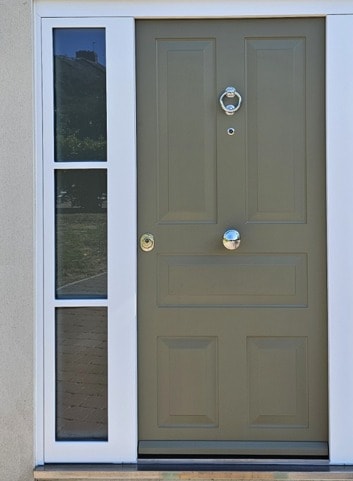
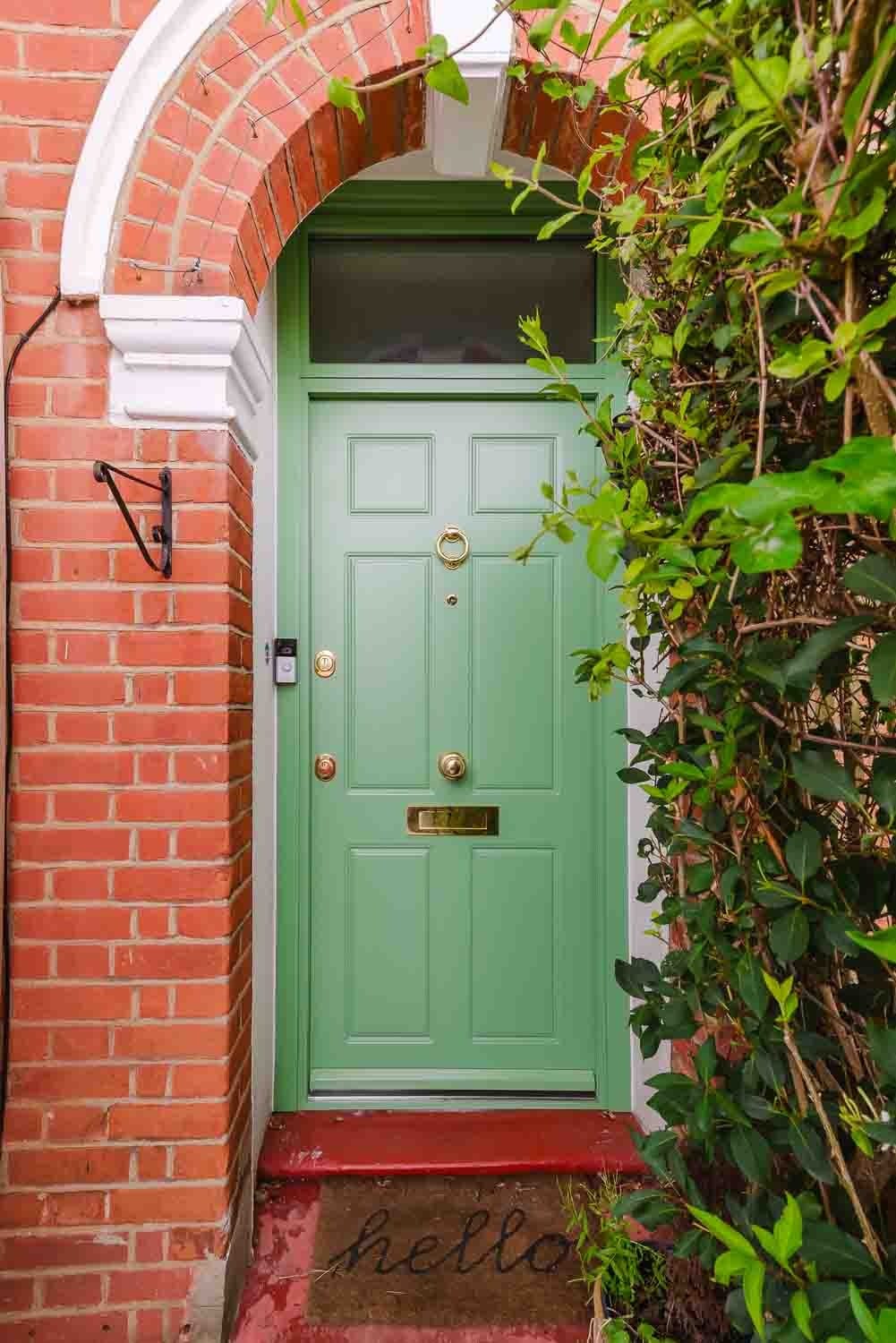
The classic four-panel or six-panel door in Anthracite Grey (RAL 7016), Black Green (RAL 6012) or English Green (RAL 6002) with traditional brass or blackened ironmongery. This specification accounts for the majority of our Kent installations and suits everything from Georgian townhouses to Victorian villas and converted farmhouses.
Contemporary Flush with Bar Handle
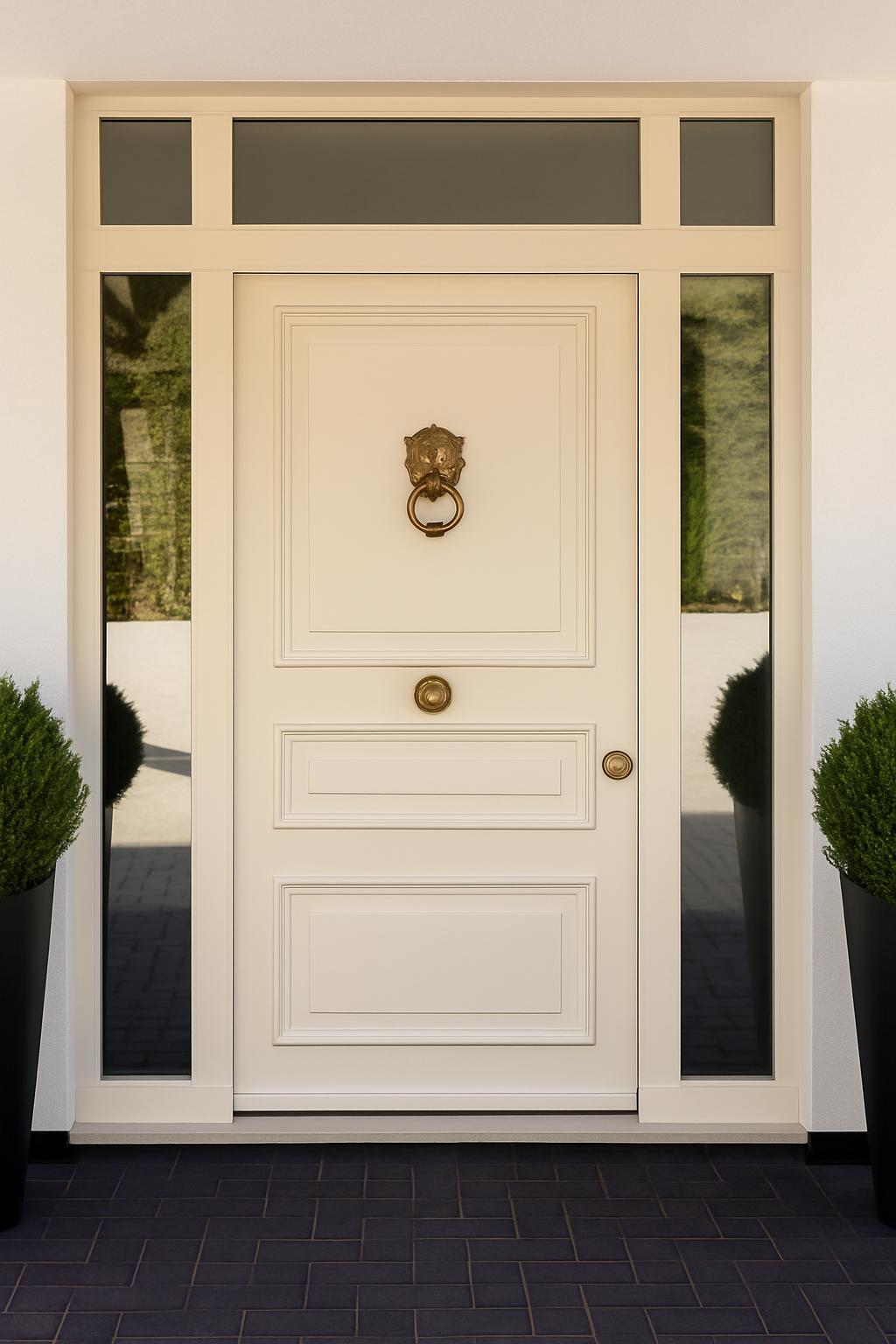
For modern homes and contemporary renovations, a flush-face door in a muted tone, Window Grey (RAL 7040), Agate Grey (RAL 7038) or Cream White (RAL 9001), with a long stainless steel pull bar and concealed hinges. Clean, minimal and precisely engineered.
Traditional with Arched Fanlight
Properties with arched entrance openings, common in Kent's Georgian and Victorian stock, benefit from a door and fanlight combination manufactured as an integrated unit. The arch follows the exact profile of the structural opening, with glazed fanlight above and panelled or partially glazed door below.
Cottage Style for Rural Properties
Simpler panelled designs with ring knockers, thumb latches and blackened strap hinges suit the smaller rural cottages and converted agricultural buildings found throughout the Weald and the Downs. Colours draw from the landscape: sage greens, warm browns, muted blues.
Browse the full range in our collection to find the design direction that suits your Kent property.
Conservation Areas in Kent
Kent has an extensive network of conservation areas, and homeowners within these designations must navigate additional requirements when replacing a front door.
Notable Conservation Areas
The county's conservation areas include:
- Canterbury, the historic city centre and surrounding medieval streets
- Royal Tunbridge Wells, the Pantiles, Calverley Park and surrounding areas
- Sevenoaks, the town centre and approaches to Knole Park
- Tonbridge, the castle precinct and high street
- Tenterden, one of the finest small towns in Kent
- Cranbrook, Wealden cloth town with outstanding timber-framed buildings
- Sandwich, medieval Cinque Port with extensive protected areas
- Deal, Georgian seafront and town centre
In conservation areas, replacement doors should preserve or enhance the character of the area. This does not mean replicating the existing door exactly, it means demonstrating that the replacement is sympathetic to the architectural context. A bespoke steel door designed with appropriate proportions, panel configurations and colours will typically satisfy conservation requirements.
We recommend early engagement with your local conservation officer to establish any specific requirements before finalising your specification.
Security for Kent Properties
Kent's security landscape reflects its mix of affluent commuter towns, rural villages and coastal communities.
Rural Security
Properties in the Kent countryside, particularly those in the Weald, the Downs and the rural areas around Tonbridge and Cranbrook, share the security challenges common to isolated rural homes. Set-back properties with limited natural surveillance are attractive targets for burglars who value time and privacy to work on a door.
SR3-rated steel doors provide five minutes of resistance against professional tools under BS EN 1627:2011 testing, a level of protection that is orders of magnitude beyond what standard composite or timber doors offer. For isolated properties, this resistance can be the difference between a failed attempt and a successful break-in.
Commuter Belt Properties
The affluent commuter towns of north-west Kent, Sevenoaks, Tunbridge Wells, Tonbridge, contain high-value properties that are known targets for organised burglary gangs. Kent Police crime prevention advice consistently emphasises the importance of physical security for external doors and windows.
An SR3-rated door with Secured by Design accreditation, anti-snap cylinders and multi-point locking satisfies both police recommendations and insurer requirements for these high-value properties.
Coastal Properties
While coastal properties face environmental challenges, they also benefit from relatively lower burglary rates compared to commuter belt areas. The security specification can be balanced with the specific requirements of coastal weathering, ensuring that the door is engineered to perform in an aggressive environment while still meeting an appropriate security standard.
Steel doors with LPS 1175 SR3 certification (LPCB police-preferred) and Secured by Design accreditation meet both police recommendations and insurer requirements. SR4 (Commercial-grade) and LPS 1673 (Ultra-high) are available as further upgrade tiers on every SteelR door where the threat profile justifies them.
Coastal Weathering Considerations
The Kent coast presents specific challenges that must be addressed in the door specification.
Salt Corrosion
Salt-laden air accelerates corrosion of unprotected metals. A polyester powder-coat finish applied to properly pre-treated steel provides a continuous barrier against salt exposure. The pre-treatment process, including degreasing, phosphating and priming, creates multiple layers of protection beneath the visible finish.
Wind Loading
Exposed coastal properties experience significantly higher wind loads than inland sites. The door, frame and fixings must be engineered to resist these forces without distortion or seal failure. Steel's inherent rigidity and the use of heavy-gauge frame sections ensure that the door maintains its alignment and weatherproofing under sustained wind pressure.
UV Exposure
Coastal properties often receive unobstructed sunlight for extended periods. High-quality powder-coat finishes are formulated to resist UV degradation, maintaining colour consistency and gloss retention over decades. This is a significant advantage over painted timber, which requires repainting every three to five years in coastal locations.
Ongoing Maintenance
For coastal Kent properties, we recommend periodic cleaning with fresh water to remove salt deposits, particularly after winter storms. Beyond this simple maintenance, a powder-coated steel door requires no cyclical painting, sealing or treatment.
The SteelR Kent Service Area
SteelR provides a complete design, manufacture and installation service across the whole of Kent. The most active areas include:
- Sevenoaks, period properties and executive homes throughout the town and surrounding villages
- Tunbridge Wells, Georgian townhouses, Victorian villas and contemporary developments
- Tonbridge, residential properties across the town and surrounding Wealden countryside
We also serve Canterbury, Maidstone, Ashford, Rochester, Chatham, Whitstable, Faversham, Cranbrook, Tenterden, Deal, Folkestone and all surrounding areas.
Every project follows our process, from initial consultation through site survey, design, manufacture and installation. To begin a conversation about your Kent property, request a consultation.
Frequently Asked Questions
What door styles suit traditional Kent properties?
Traditional Kent properties, including oast houses, Wealden halls, Georgian townhouses and Victorian villas, suit heritage panelled doors in period-appropriate colours with traditional ironmongery. The specific design should respond to the building's period and style. A six-panel door with a lion's head knocker suits a Georgian terrace; a simpler plank-style design with blackened furniture suits a Wealden cottage.
How do steel doors cope with coastal weather in Kent?
Steel doors with a polyester powder-coat finish over proper pre-treatment are exceptionally resistant to coastal conditions. The finish provides a continuous barrier against salt corrosion, UV degradation and moisture. Unlike timber, steel does not absorb moisture, warp or rot. Periodic rinsing with fresh water to remove salt deposits is the only maintenance required.
Do I need conservation area consent for a new front door in Kent?
If your property is within a conservation area, you may need consent for external alterations including door replacement. Many Kent towns, Canterbury, Tunbridge Wells, Sevenoaks, Tenterden, Cranbrook, Sandwich, Deal, have extensive conservation designations. Contact your local planning authority or conservation officer before finalising your specification.
What security rating should I choose for a Kent property?
We recommend the LPS 1175 SR3 Enhanced upgrade tier (above the BS EN 1627 RC4 Standard that ships on every door) for Kent properties, particularly those in the affluent commuter belt or in rural locations with limited natural surveillance. SR3 provides five minutes of resistance against professional tools and is the LPCB police-preferred residential rating. This level of protection is manufactured under ISO 9001 quality management and carries Secured by Design accreditation.
How long does it take to get a steel door installed in Kent?
From initial consultation to completed installation, the typical timeline is approximately eight weeks. This includes site survey, design development, bespoke manufacture and finishing. The installation itself is completed within a single day, with your property fully secured before the team leaves site.
Can steel doors replicate the look of traditional oak doors?
Yes. Steel doors can be finished with timber-effect coatings that closely replicate the appearance of natural oak, and the panel configurations can be designed to match traditional proportions exactly. From the street, the door reads as a high-quality timber door. The difference lies in performance: SR3 security, zero maintenance, complete weather resistance and dimensional stability that timber cannot provide. For the full bespoke specification picture, see our bespoke steel front doors UK overview.