Why Period Properties Need Special Consideration
Choosing a front door for a period property is not the same as choosing one for a new build. Whether you own a Victorian terraced house, a Georgian townhouse, an Edwardian semi or a rural cottage, the entrance door must respect the architectural character of the building while meeting modern expectations for security, thermal performance and durability.
Get it right, and your front door becomes the defining feature of your home's facade. Get it wrong, and an inappropriate door can undermine the entire character of a period property, and, in the case of listed buildings, may even breach planning regulations.
This guide covers the key considerations for choosing front doors for period properties in the UK, including the main architectural styles, material options and how to balance heritage aesthetics with modern performance.
Understanding Your Property's Architectural Style
Georgian Properties (1714-1837)
Georgian front doors are among the most recognisable in British architecture. Key features include:
- Six-panel door designs, the classic Georgian layout with symmetrical raised or fielded panels
- Rectangular fanlights, glazed panels above the door, often with elegant radial or spider-web glazing bars
- Restrained proportions, Georgian architecture is defined by symmetry, balance and classical order
- Colours, historically, dark greens, blacks, deep reds and blues. Many Georgian properties in conservation areas have specific colour requirements
- Hardware, brass door knockers (lion heads, urns), brass letter plates and simple lever handles
Georgian doors are typically set within a decorative door surround or portico with columns, pilasters and a cornice. The door itself is usually flush with the facade or slightly recessed.
Victorian Properties (1837-1901)
Victorian front doors evolved significantly across the era, from restrained early Victorian designs to the ornate styles of the late Victorian period:
- Four-panel doors, the most common Victorian layout, often with the top panels glazed
- Stained glass and decorative glazing, colourful leaded lights, etched glass and Art Nouveau motifs became popular from the 1870s onwards
- Arched fanlights, both semi-circular and segmental arched designs
- Deeper mouldings and more ornate detailing than Georgian predecessors
- Colours, dark greens, deep reds, browns, and by the late Victorian period, darker tones including black and navy
- Hardware, decorative knockers, ornate letter plates, finger plates and bell pulls
Edwardian Properties (1901-1910)
Edwardian front doors bridged the Victorian and modern eras:
- Simpler panel layouts, often with a large upper glazed panel and a solid lower section
- Art Nouveau and Arts and Crafts influences, organic motifs, heart shapes and tulip designs in glazing
- Wider door openings, Edwardian properties often have more generous entrance halls
- Lighter colour palettes, greens, creams, whites and natural wood tones
- Hardware, a mix of Art Nouveau and simpler, more functional fittings
The Problem with Traditional Materials
Historically, period front doors were made from solid timber, typically oak, mahogany or pine. While timber is authentic, it comes with well-documented drawbacks:
- Warping and swelling, timber moves with changes in temperature and humidity, causing doors to stick, bind or develop gaps
- Rot and decay, without regular maintenance, timber is vulnerable to wet rot and fungal attack, particularly at the base of the door and around glazing
- Maintenance burden, timber doors require sanding, priming and repainting every 3 to 5 years to maintain appearance and performance
- Poor security, a standard timber door offers minimal resistance to forced entry. Most can be breached in seconds with basic tools
- Thermal performance, solid timber has moderate insulating properties, but draughts around ageing frames and panels are a major source of heat loss
Many homeowners with period properties face a difficult choice: accept the limitations of timber for the sake of authenticity, or fit a modern door that looks out of place.
Steel Doors: The Best of Both Worlds
A bespoke SteelR entrance door resolves this tension. Modern steel door manufacturing allows any period design to be faithfully reproduced in steel, with none of the drawbacks of timber and all the benefits of contemporary engineering.
Authentic Period Aesthetics
A skilled manufacturer can replicate the panel layouts, moulding profiles, glazing patterns and proportions of any period style. Whether you need a six-panel Georgian door with a radial fanlight or a four-panel Victorian door with stained glass panels, a bespoke steel door can be designed to match the original detailing precisely.
Because steel doors are made to order, there are no standard sizes. This is particularly important for period properties, where door openings are often non-standard dimensions that do not match the sizes available from off-the-shelf suppliers.
Security That Timber Cannot Match
An SR3-rated steel door provides a level of security that no timber door can approach. While a solid timber door might delay an intruder for a few seconds, an SR3-rated steel door withstands sustained attack with crowbars, drills and angle grinders, tested and certified to BS EN 1627:2011. Every SteelR doorset is BS EN 1627 RC4 certified as Standard, with the LPS 1175 SR3 Enhanced upgrade tier available where insurer requirements or threat assessment justify it.
For owners of period properties, which are often perceived as softer targets due to their older construction, this level of security is particularly valuable.
Zero Maintenance
Unlike timber, a steel door finished with a multi-layer paint system will not warp, crack, swell, rot or require regular repainting. The colour and finish remain stable for decades, regardless of weather exposure. This eliminates the ongoing maintenance cycle that period property owners know all too well.
Thermal Performance
Period properties are often draughty, and the front door is a significant contributor to heat loss. A steel door with an insulated core and thermal break technology achieves U-values that far exceed those of a solid timber door, helping to improve comfort and reduce energy bills.
Listed Buildings and Conservation Areas
If your property is listed or located in a conservation area, you may need planning consent (Listed Building Consent or Conservation Area consent) before replacing the front door. Local planning authorities will assess whether the proposed door preserves or enhances the character and appearance of the building or area.
Key considerations include:
- Material appearance, a steel door finished to replicate the look of traditional painted timber is generally acceptable, provided the detailing is sympathetic
- Design accuracy, the panel layout, moulding profiles, glazing patterns and proportions should reflect the original or an appropriate period style
- Colour, some conservation areas specify permitted door colours. Check with your local planning authority before committing
- Hardware, period-appropriate ironmongery (knockers, letter plates, hinges) supports a successful application
It is always advisable to consult your local conservation officer early in the process. A good bespoke door manufacturer will have experience working within these constraints and can provide technical drawings and specifications to support a planning application.
Choosing the Right Colour for a Period Front Door
Colour choice is closely tied to architectural period:
- Georgian, black (RAL 9005), dark green (RAL 6007), deep red (RAL 3011), navy (RAL 5011)
- Victorian, dark green, burgundy, brown, navy, black
- Edwardian, sage green (RAL 6021), cream (RAL 9001), olive (RAL 6003), muted blues
With a bespoke steel door, you can specify any RAL colour and even opt for a dual-colour finish, a heritage colour on the exterior to complement the facade, with a different colour on the interior to suit your hallway decor.
Hardware That Completes the Look
The right ironmongery is essential for a convincing period door. Options include:
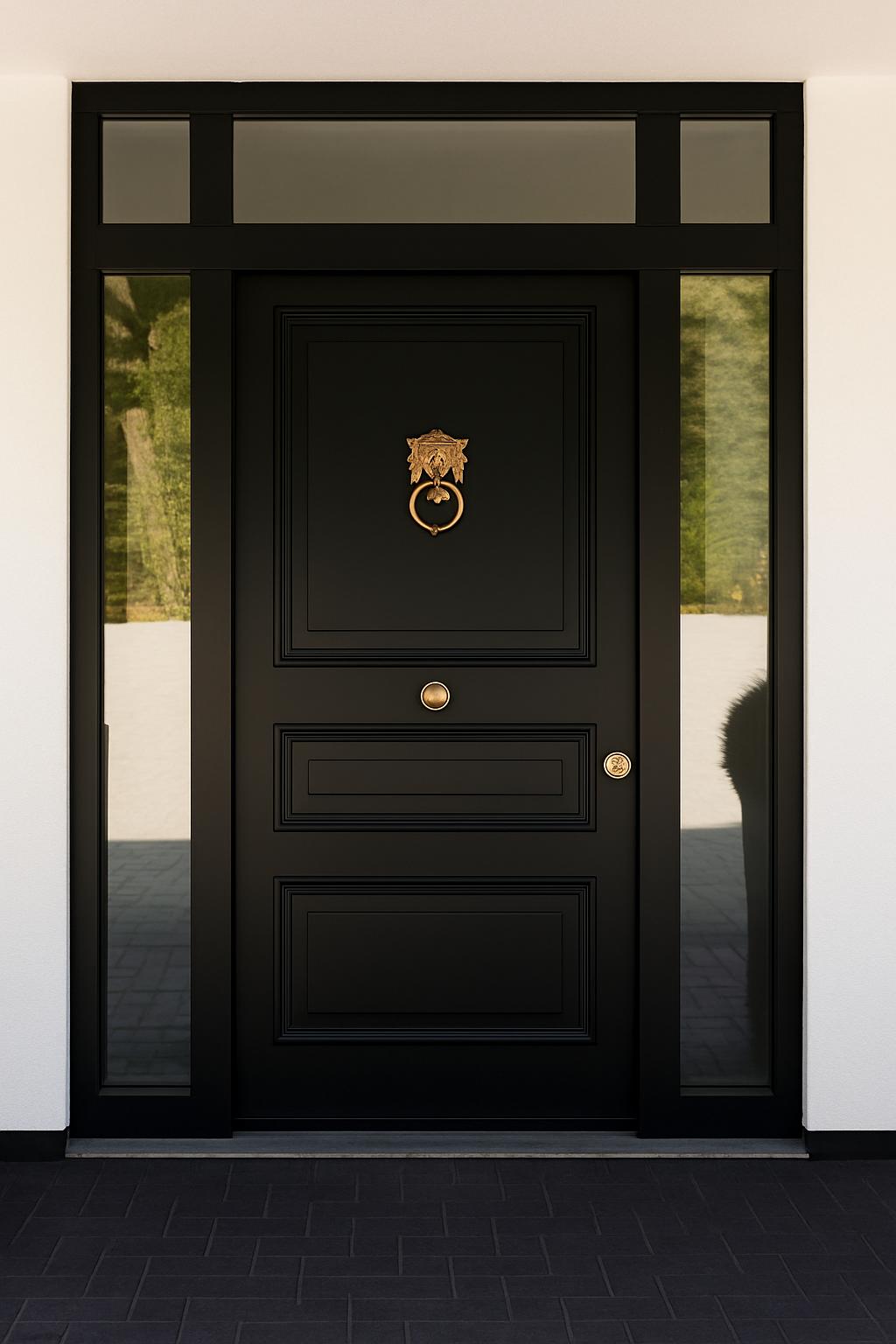
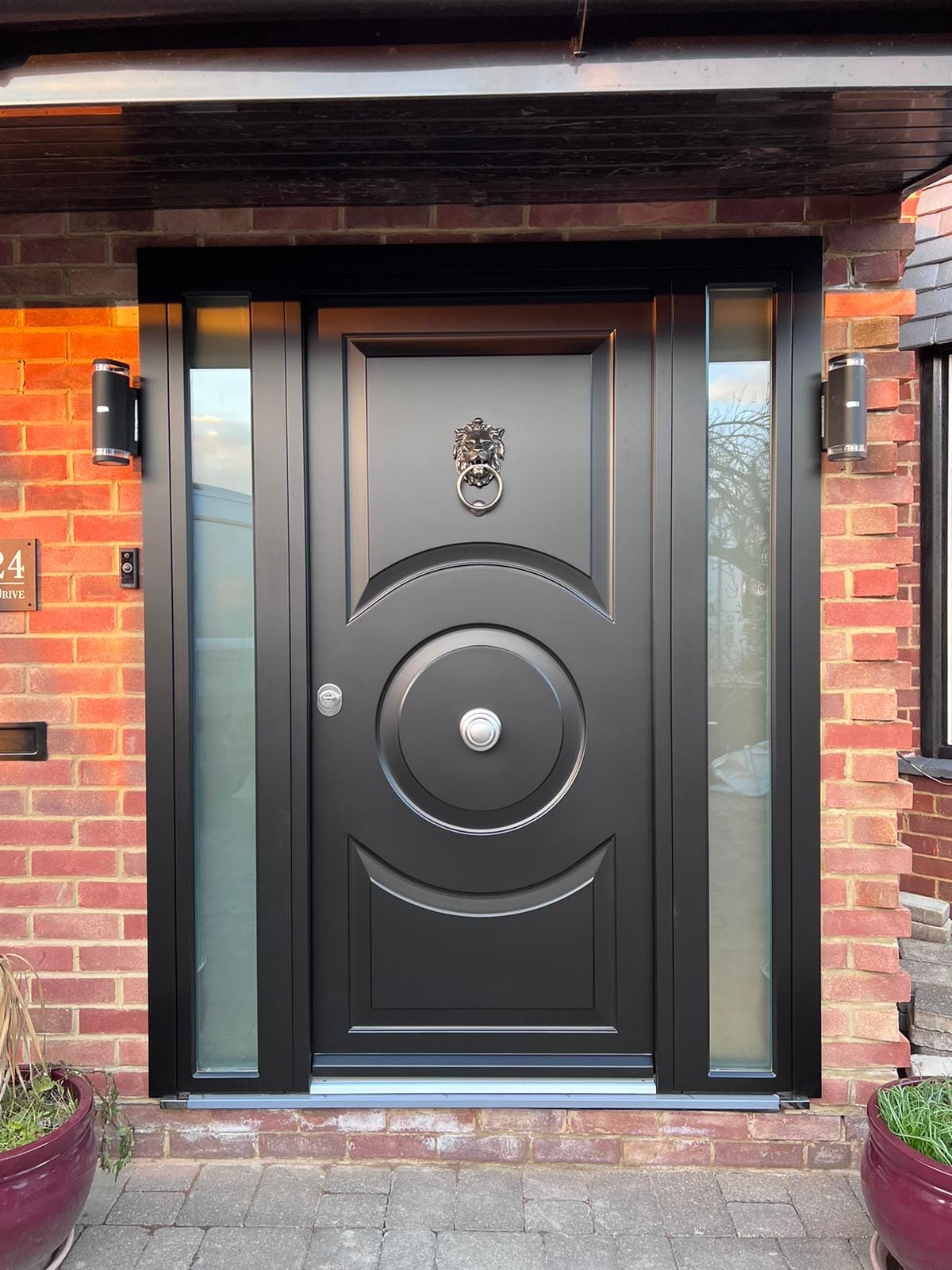
- Lion head knockers, a classic Georgian and Victorian choice, available in brass, chrome and black finishes
- Ring knockers, versatile traditional hardware that suits most period styles
- Decorative letter plates, period-appropriate designs in brass or chrome
- Lever handles, traditional profiles that complement the door's panel design
- Numerals and bell pushes, the finishing details that complete the entrance
Making the Right Choice
The best front doors for period properties combine authentic period design with modern performance. A bespoke steel entrance door achieves this by faithfully reproducing the aesthetic details of Georgian, Victorian or Edwardian design while delivering SR3 security, excellent thermal performance and zero ongoing maintenance.
At SteelR, we design and manufacture bespoke steel entrance doors for period properties across the UK, Georgian terraces in Kensington and Chelsea, Victorian villas across Hampstead and Islington, and Edwardian semis throughout the Home Counties. Every door is SR3 security rated, Secured by Design accredited and manufactured under ISO 9001 certified quality management. For the full picture of what bespoke specification covers, see our bespoke steel front doors UK overview. If you are looking for a front door that respects your property's heritage while providing the highest standards of security and performance, we would welcome the opportunity to discuss your project.