Why Sidelights Change a Front Door
A sidelight is a fixed glazed panel set alongside the door leaf. Architects and homeowners specify them for three connected reasons. Sidelights bring daylight into the hallway, which on a north-facing or recessed entrance is often the difference between a hallway that feels welcoming and one that feels closed in. They scale the entrance up to the proportions of the building, which on a Georgian or Edwardian frontage is essential to avoid a door that looks too small for the surround. And they create presence, which on a contemporary new-build or a refurbished mansion block lifts the entrance from a piece of joinery to a piece of architecture.
A steel front door with sidelights is a single specified assembly. Frame, leaf, sidelight units, glazing, hardware and locking system are designed together, certified together, manufactured together and installed in one visit. The certifications the door carries (PAS 24, BS EN 1627 RC4, optional LPS 1175 SR3 Enhanced upgrade, Secured by Design, FD30S) apply to the complete assembly, not the leaf in isolation. That matters because it is the joint between leaf and sidelight that becomes the weakest point on a poorly specified door system, and the certifications are written specifically to test that joint.
This guide covers the configurations available, how the glazing and security choices interact, what affects the cost, and the FAQs that come up most often during the design consultation.
If you have not yet read it, the bespoke steel front doors UK hub covers the complete SteelR specification. The collection of doors with sidelights shows representative configurations from recent installations.
Configurations Available
Single Sidelight
One fixed glazed panel to one side of the door leaf, usually 300 to 500 mm wide depending on the aperture. This is the most common configuration and works on apertures from roughly 1,400 mm wide upwards. A single sidelight is enough to bring daylight into a hallway and lift the visual proportion of the entrance, without committing the full aperture to glazing.
Dual Sidelights
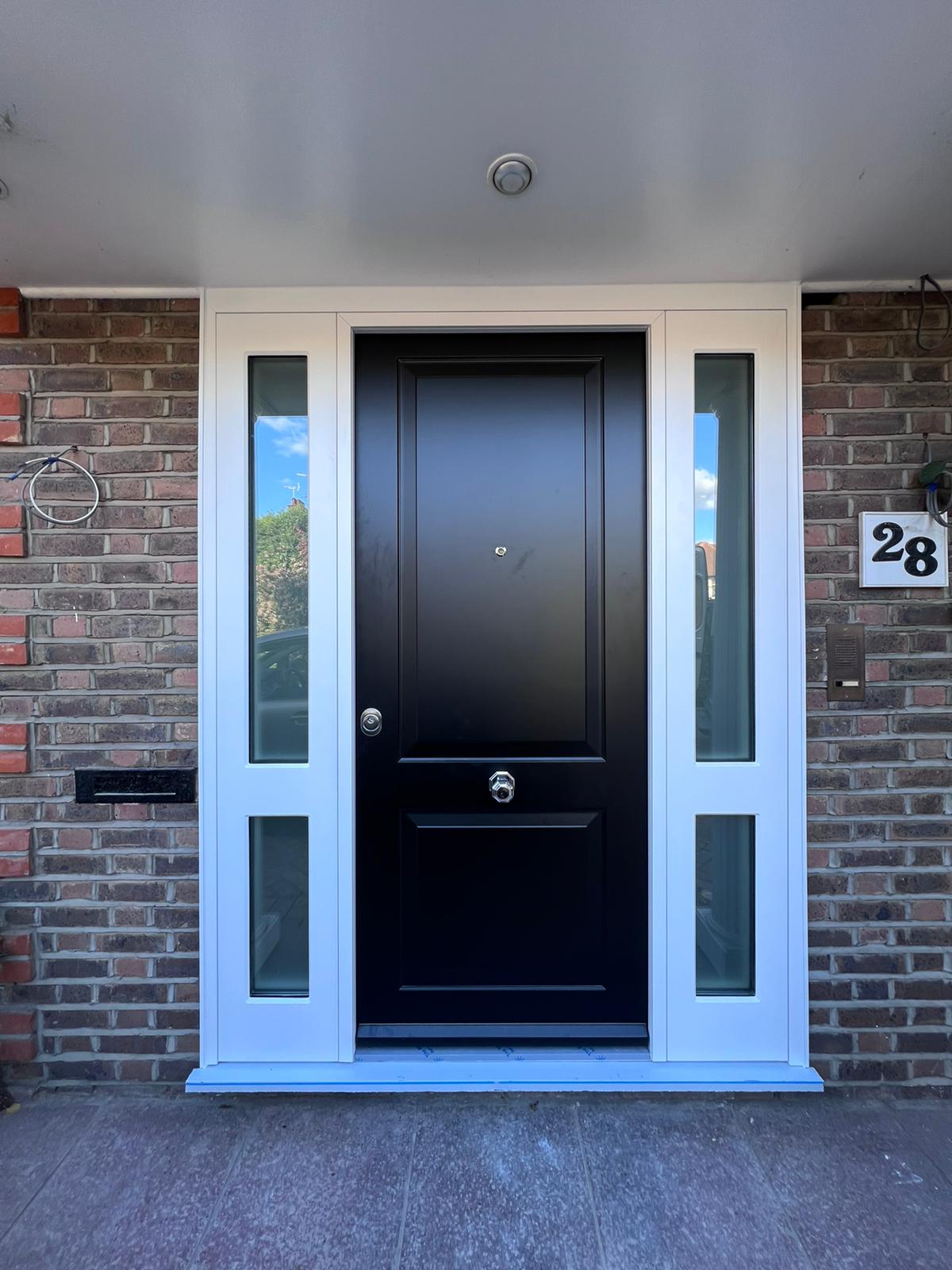
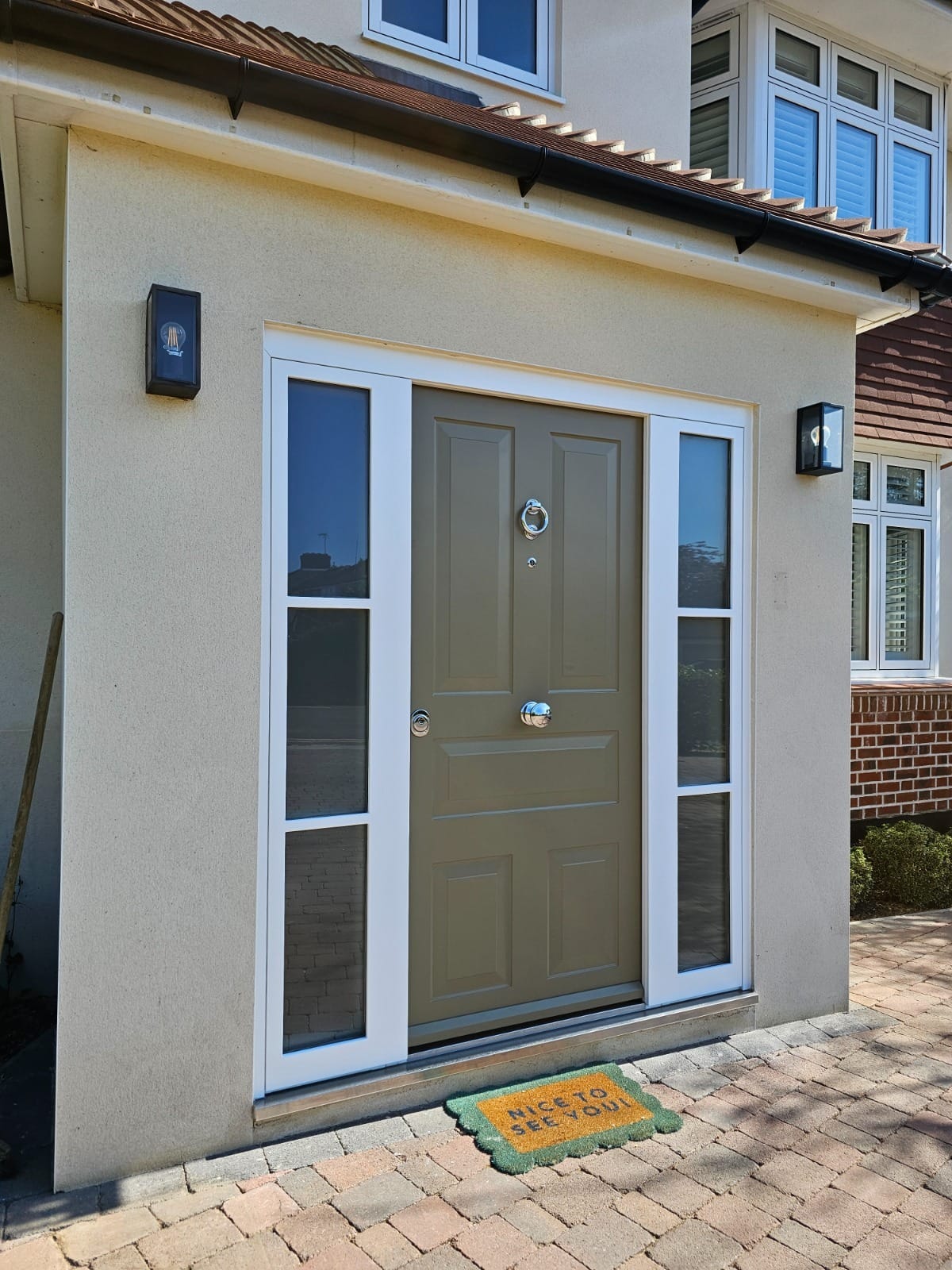
A fixed glazed panel either side of the door leaf, symmetrical. This is the configuration most associated with formal entrances on Georgian, Regency and high-end contemporary frontages. Dual sidelights need an aperture of around 1,800 mm or wider to maintain a usable door leaf width while allowing meaningful glazing on each side. The visual effect is significantly more substantial than a single sidelight and is often paired with a fanlight above for a full architectural surround.
Sidelight with Fanlight
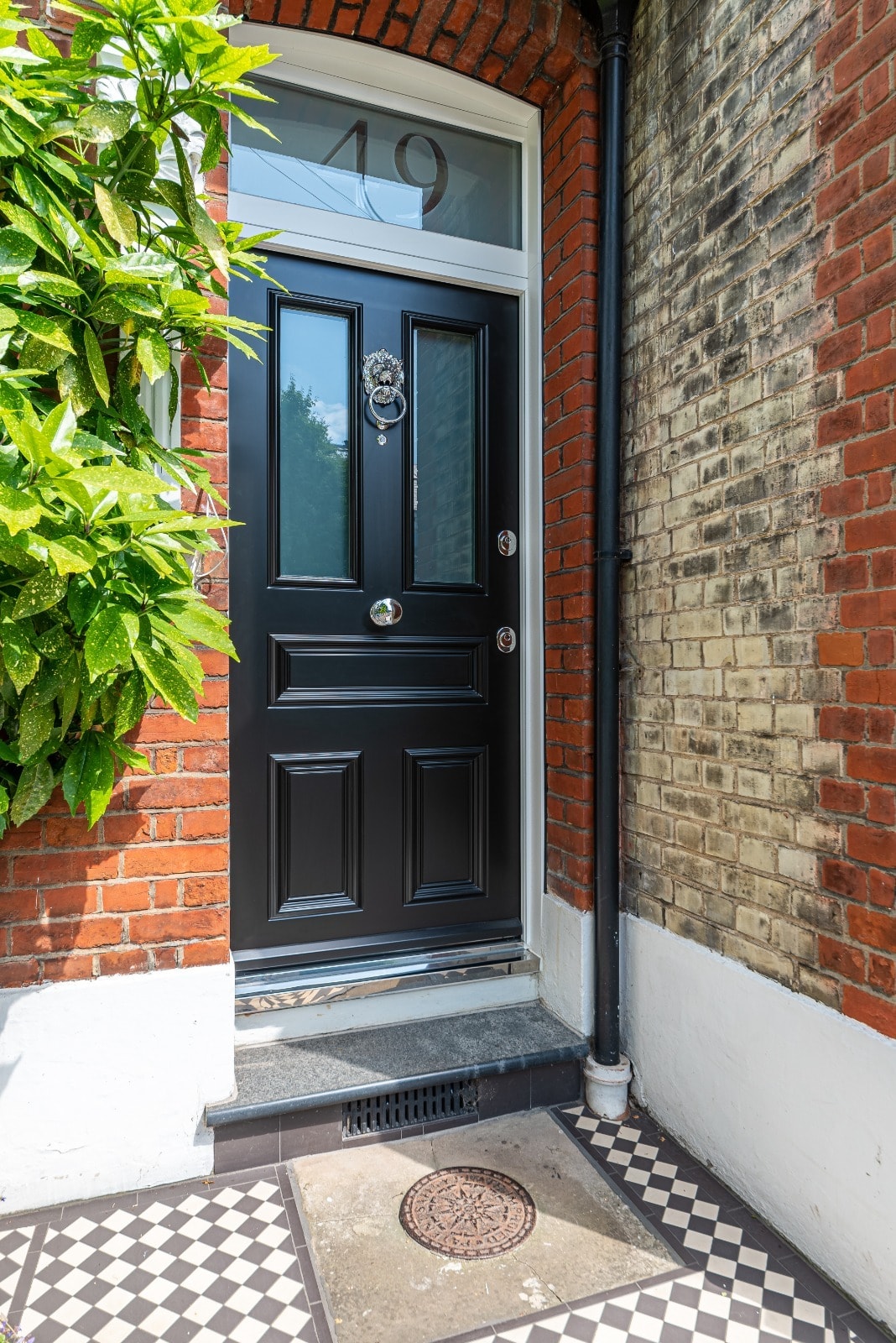
A sidelight (single or dual) combined with a fixed horizontal glazed panel above the door head. The fanlight pulls additional daylight in at high level and is particularly useful on tall apertures where the door leaf alone leaves a large unbroken section of frame above. Fanlights are common on Victorian and Edwardian terraces, where the original timber door would have had a leaded fanlight, and replicating the proportion in steel keeps the streetscape coherent.
Full Glazed Surround
The most ambitious configuration: dual sidelights, a fanlight above, and sometimes additional glazing details such as transom panels. This is reserved for substantial apertures, typically on detached properties, mansion blocks and listed buildings where the original door was part of an integrated facade design. It needs careful coordination with the surrounding masonry and is always handled as a design-led project rather than a standard configuration.
Glazing Options for Sidelights
Clear Glass
Maximum daylight, full visibility through to the hallway. Specified where the entrance is set back from the public footway, where there is a porch or recessed entrance, or where the homeowner has a specific design intention to display the hallway. Always toughened or laminated to the relevant safety standard.
Frosted (Obscured) Glass
The default specification for street-facing entrances. Frosted glass admits daylight while concealing the hallway interior. SteelR offers several frost grades from light texture to fully obscured, allowing the homeowner to control how much shadow and shape is visible from outside.
Tinted Glass
A subtle solar tint applied to the glazing reduces glare and gives the sidelight a more substantial appearance from outside. Tinted glass is often specified on south or west-facing entrances where direct sunlight makes the hallway interior visible at certain times of day.
Decorative and Stained Glass
Leaded glass, decorative bevels, stained glass and period-appropriate patterns are available for sidelights. This is most relevant for conservation areas, listed buildings and Victorian or Edwardian frontages where the conservation area door requirements demand period-correct detailing. SteelR commissions decorative glass through specialist UK glaziers as part of the assembly.
Fire-Rated Glass
For HMOs, flats, new builds and any door installation requiring fire integrity, the sidelight glazing must match the door's fire rating. SteelR specifies FD30 rated glass as standard on FD30S door assemblies. FD60 rated glass is available where the door is upgraded to FD60. Fire-rated glass is heavier and more expensive than standard glazing, which is one reason architects sometimes specify a solid-panel sidelight on fire-rated assemblies instead.
Security: The Whole Assembly is the Specification
The single most important point about steel doors with sidelights is that the certifications apply to the assembly, not the leaf alone. A door advertised as PAS 24 certified, SR3 rated and Secured by Design approved must have been tested as a complete unit including the sidelights, the joint between leaf and sidelight, the fixings, the frame, the glazing and the hardware.
This is why low-cost imports sometimes fail when sidelights are added: the sidelight is bolted on after the certified leaf, and the joint is not part of the tested specification. SteelR avoids this by treating any door with sidelights as a separate test specification from the start. The certification documents supplied at handover reference the specific configuration installed at your address.
For a detailed walkthrough of what each certification means, see the PAS 24 hub page, the SR3 residential standard and the Secured by Design approval.
SR4 (LPS 1175) is available as a commercial-grade upgrade on every SteelR door including configurations with sidelights. The sidelight glazing is upgraded to commercial-grade laminate on SR4 assemblies.
Period vs Contemporary Application
The proportions of the sidelight are the single biggest variable that distinguishes a period-appropriate installation from a contemporary one.
On a Victorian or Edwardian frontage, the sidelight is typically narrower (around 250 to 350 mm), runs the full height of the door leaf, and is often divided into two or three panes by horizontal glazing bars. Hardware is brass or polished chrome, the door panels are moulded, and the glazing is decorative or leaded. The period property front door guide covers the full detailing.
On a contemporary new-build or a refurbished property in a modernist style, the sidelight is broader (often 400 to 600 mm), is undivided (a single full-height pane), and may extend to floor level for a dramatic effect. Hardware is satin stainless or matt black, the door is panelled or ribbed without moulding, and the glazing is clear or lightly frosted.
SteelR designs each sidelight configuration from the property survey rather than from a fixed catalogue. The design consultation produces a 1:20 elevation showing the proposed door with sidelights against the surrounding masonry, which is signed off before manufacture begins.
What Affects Lead Time and Cost
Lead Time
A door with sidelights uses the same eight-week lead time as a single-leaf door. The additional manufacturing time for the sidelight panels is folded into the standard production schedule. Site installation takes two days for a sidelighted assembly, compared to one day for a single leaf, because of the additional alignment and sealing work at the leaf-sidelight joint.
Cost Factors
There are no published prices because every door is specified individually. The factors that move the cost on a door with sidelights, in order of typical impact: aperture size and configuration (single vs dual sidelights, with or without fanlight), glazing specification (clear vs decorative vs fire-rated), security tier (BS EN 1627 RC4 Standard, LPS 1175 SR3 Enhanced upgrade or SR4 Commercial-grade upgrade), hardware finish, and any conservation-led design work required for listed properties.
The full breakdown of steel front door cost factors covers what moves the number on every project.
Frequently Asked Questions
Can the sidelight be opened?
In standard SteelR configurations, no. Sidelights are fixed glazed panels because an opening sidelight would require a separate hinge, frame and locking system that compromises the security rating of the assembly. For projects requiring ventilation alongside the front door, a separate window in the porch or hallway is the recommended solution. Bespoke opening sidelights can be discussed at the design stage but are rare.
Are sidelights weaker than the door leaf?
Not when the assembly is correctly specified. The sidelight glazing on a SteelR door is laminated security glass, the frame around it is the same gauge steel as the main door frame, and the joint between leaf and sidelight is engineered as a structural element. The complete assembly is tested as one unit for PAS 24, SR3 and Secured by Design, which means the sidelight is not a weak point. On a budget imported door where the sidelight is added after certification, this is not the case.
Can I retrofit sidelights to an existing SteelR door?
No. Sidelights are part of the original specification and are designed and certified with the door from the start. Retrofitting glazing into the surrounding wall after installation would invalidate the original certifications and require a new structural opening. If you anticipate wanting sidelights at any point, specify them at the original design stage.
Do sidelights work on a flat or apartment entrance?
Yes, where the surrounding wall structure allows it. On a flat entrance door (the door from the communal corridor into the apartment), sidelights are less common because the wall is usually a fire-compartmentation wall and any opening in it must maintain the fire rating. SteelR can specify FD30 or FD60 rated glazing for sidelights on flat entrance doors, but the building's fire strategy must be reviewed before the design is finalised.
What aperture size do I need for a sidelight configuration?
Single sidelight assemblies work from roughly 1,400 mm wide overall aperture upwards. Dual sidelights need around 1,800 mm or wider to maintain a usable door leaf width. Sidelight with fanlight needs sufficient height above the door head, typically 200 mm minimum for a meaningful glazed band. Exact dimensions are confirmed during the on-site survey, where the surveyor measures the structural opening rather than the existing door.
Is the lead time longer for a door with sidelights?
No. Approximately eight weeks from enquiry to installation applies regardless of whether the door has sidelights. Site installation takes one extra day compared to a single-leaf door, but factory manufacture runs to the same production schedule.
The Bottom Line
A steel front door with sidelights is the right choice when the entrance is part of an architectural composition rather than a single piece of joinery. The configuration brings daylight into the hallway, scales the entrance to the building, and on period properties keeps the streetscape coherent. The security and fire ratings apply to the complete assembly, not the leaf in isolation, which is the single most important difference between a properly specified UK manufactured door and a budget import with sidelights bolted on.
The starting point on any project is the free on-site survey. The surveyor confirms the aperture, identifies any structural constraints, and from that the design consultation produces a 1:20 elevation drawing showing the proposed door with sidelights in context. Once signed off, manufacture and installation run to the standard eight-week lead time, with sidelighted assemblies installed across two days.
Browse the collection of doors with sidelights for representative configurations, or read the luxury front doors buyer's guide for context on how sidelights fit into the broader specification of a high-end UK entrance.