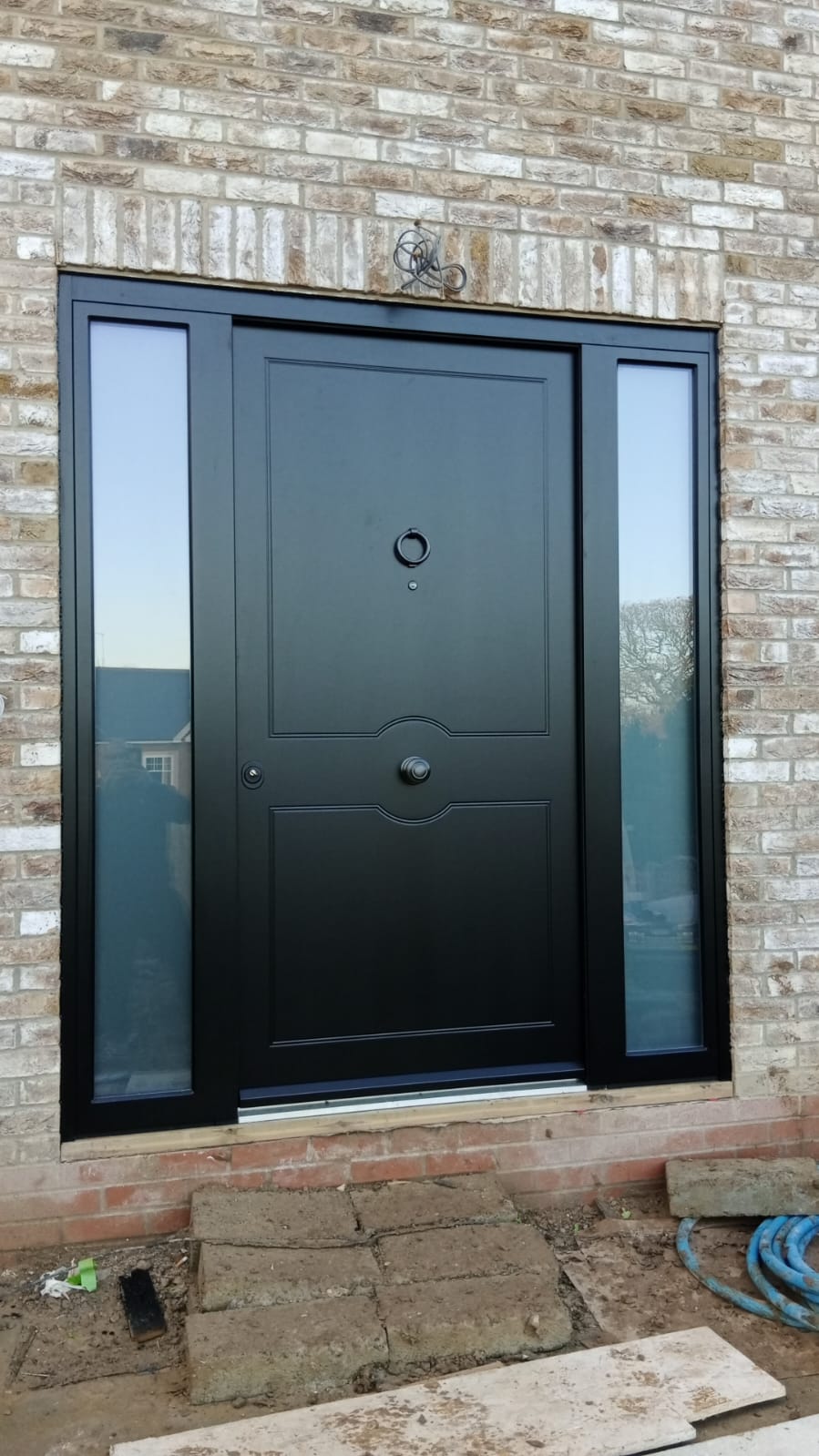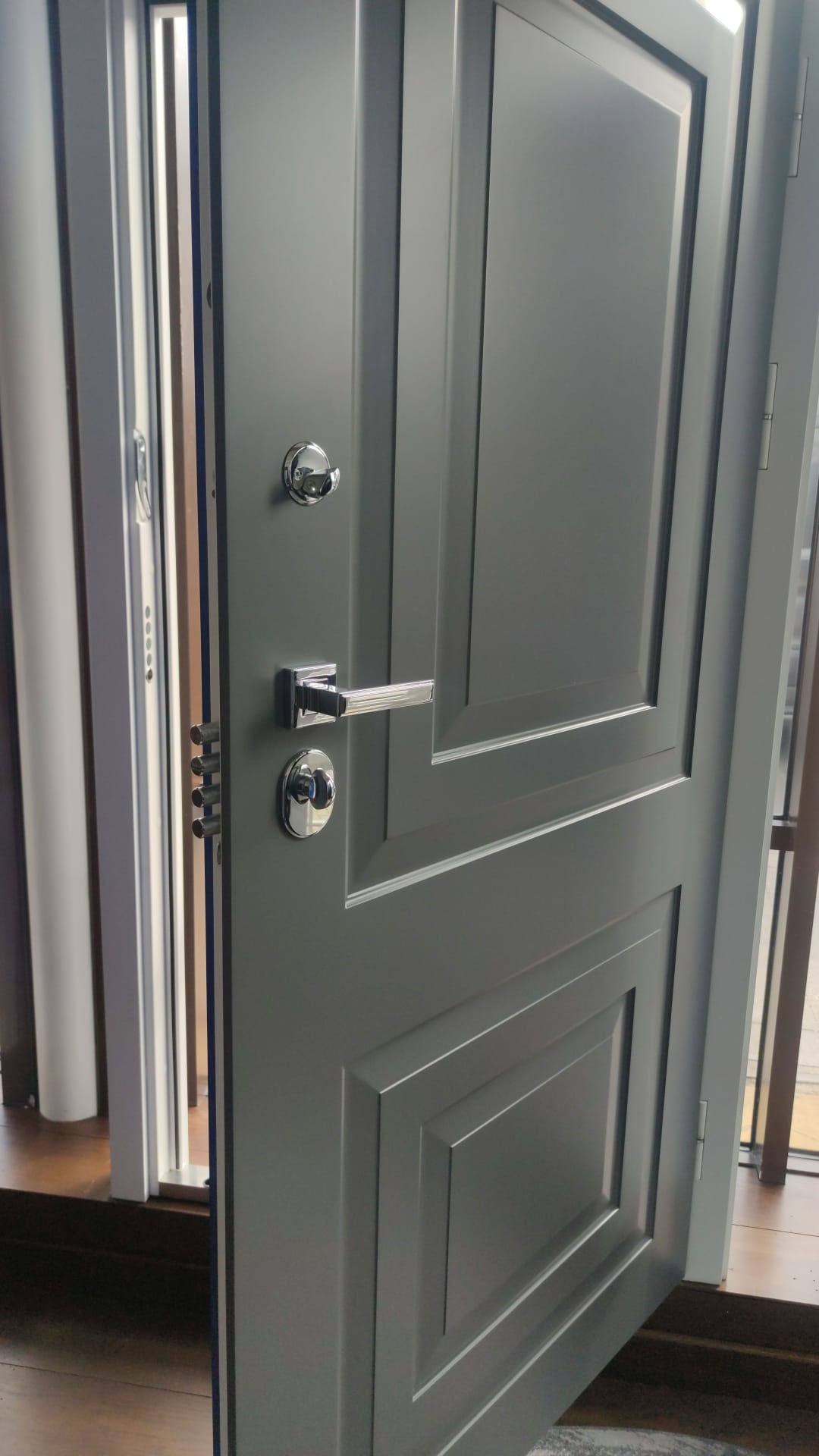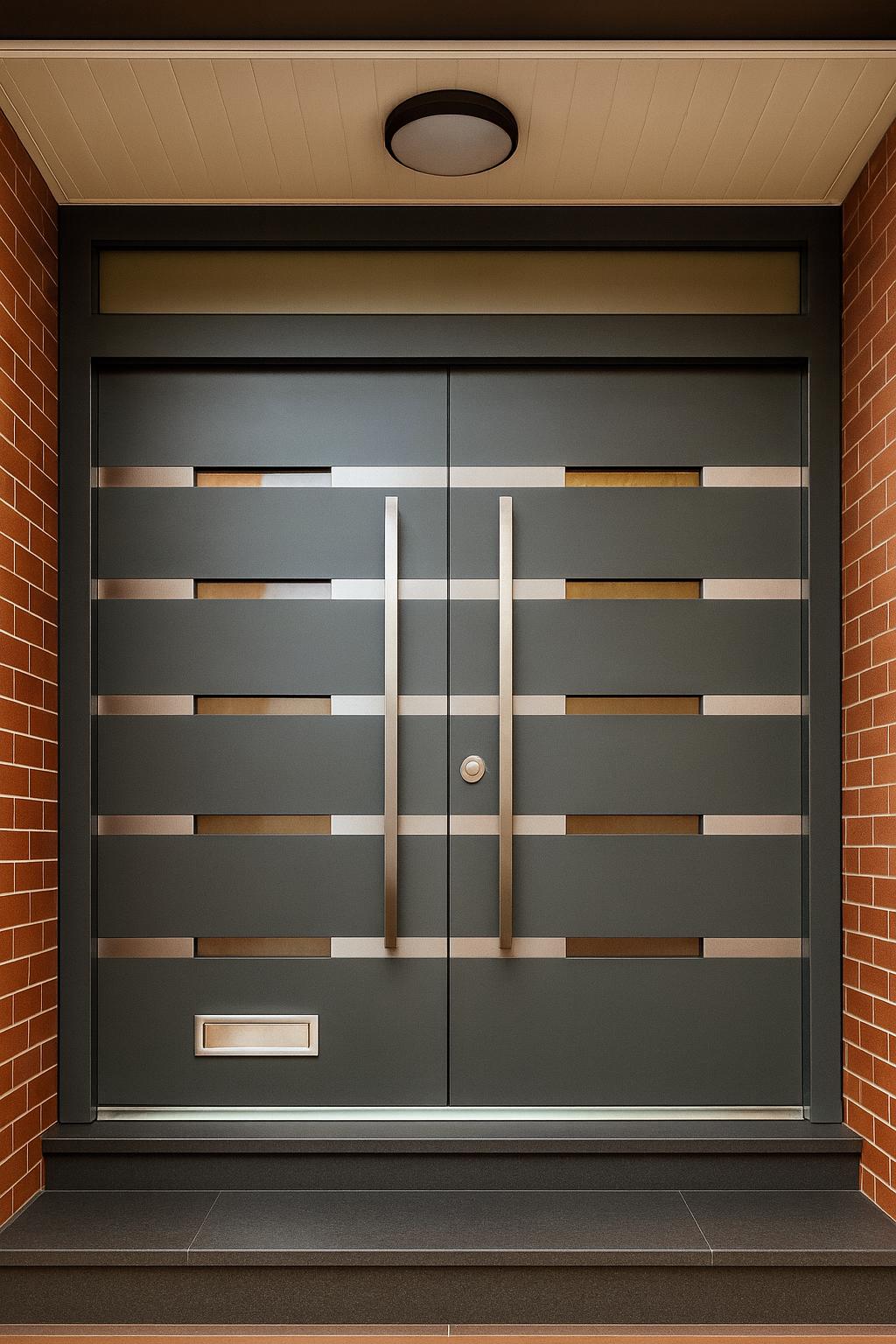
Why Architects Are Specifying Steel Entrance Doors
The entrance door is one of the most functionally demanding elements in any building envelope. It must simultaneously deliver security, thermal performance, weather resistance, fire safety, acoustic attenuation, accessibility and visual impact. For an increasing number of architects and specifiers in the UK, steel entrance doors are the answer.
Steel offers a combination of structural strength, design precision and long-term performance that other door materials struggle to match. This guide covers the key technical considerations for specifying steel entrance doors on residential and commercial projects.
Security Performance: SR3 and Beyond
The Standard: BS EN 1627:2011
The European standard BS EN 1627:2011 defines six resistance classes for doors, windows and shutters. For architectural specification, the three most relevant classes are:
- SR1 (RC1) — resists opportunistic physical force. No tools. Rarely specified for primary entrance doors.
- SR2 (RC2) — resists attack with simple tools (screwdrivers, pliers, wedges) for 3 minutes. Suitable for standard residential and commercial applications.
- SR3 (RC3) — resists experienced attack with heavy-duty tools (crowbars, drills, angle grinders) for 5 minutes. The highest commercially available residential rating. Recommended for high-value residential, corporate and diplomatic applications.
Secured by Design
Secured by Design accreditation confirms that the complete doorset — not just the leaf — has been assessed and approved by UK police crime prevention officers. For projects requiring compliance with Approved Document Q (security in dwellings), specifying Secured by Design products provides a clear compliance pathway.
Specifier Note on Security
When writing specifications, it is important to state the required resistance class for the complete doorset assembly rather than individual components. A door leaf tested to SR3 in a non-tested frame does not achieve SR3 as an installed product.
Thermal Performance
U-Values
Modern steel entrance doors achieve excellent thermal performance through thermally broken profiles and polyurethane-injected cores. Typical U-values for a well-engineered steel doorset:
- Solid panel door: 0.9 to 1.2 W/m2K
- Door with glazed panels: 1.2 to 1.6 W/m2K (depending on glazing specification)
These values comfortably meet the requirements of Approved Document L (conservation of fuel and power) for new dwellings and most refurbishment scenarios.
Thermal Break Technology
The critical detail in steel door thermal performance is the thermal break — a non-conductive barrier between the inner and outer steel skins that prevents cold bridging. Architects should verify that the proposed doorset uses a continuous thermal break, not simply an air gap or minimal separator.
Condensation Risk
When specifying steel doors in high-humidity environments (swimming pool buildings, commercial kitchens, etc.), pay particular attention to condensation risk. A properly thermally broken steel door performs well, but the frame-to-wall junction detail is critical and should be reviewed during design development.
Fire Performance
Steel entrance doors can achieve fire ratings from FD30 (30 minutes integrity) to FD60 (60 minutes integrity) and beyond when specified with appropriate intumescent seals, fire-rated glazing and certified hardware.
For residential entrance doors in flats and apartments, Approved Document B (fire safety) requires a minimum FD30S rating (30 minutes with smoke seals) for doors opening onto communal areas. Steel doors are one of the few materials that can achieve this alongside SR3 security performance in a single doorset.
Combined Fire and Security Specification
This is an area where steel doors excel. Achieving both fire rating and high security in a single doorset is extremely difficult with timber or composite construction. Steel's inherent fire resistance makes dual-rated doorsets feasible without compromising on either performance criterion.
Acoustic Performance
Steel entrance doors with solid cores typically achieve Rw 35 to 42 dB sound reduction, depending on the seal system and glazing specification. For projects adjacent to busy roads, railways or flight paths, this can be a meaningful contributor to the overall acoustic strategy.
Design Flexibility
Dimensions
Bespoke steel doors are not constrained by standard sizes. Door heights of 2400mm and above are achievable, along with oversized widths for grand entrances. This flexibility is particularly valuable for:
- New builds where the architect controls the opening dimensions
- Period property refurbishments where existing openings are non-standard
- Listed buildings where the door must match historical proportions
- Barn conversions where entrance openings are often unusually tall or wide
Finishes
- RAL Classic range — over 200 colours, with dual-colour specification (different colours inside and outside) as standard
- Metallic and textured finishes available on request
- Custom colour matching for heritage or brand-specific requirements
Glazing Options
- Clear, frosted, obscured and tinted glass
- Decorative leaded lights and stained glass
- Security-rated laminated glazing (to match the door's resistance class)
- Georgian bar and Crittall-style glazing patterns
Hardware
- Lever handles, pull bars, T-bars and bespoke designs
- Traditional ironmongery (lion knockers, ring knockers, letter plates)
- Smart lock and access control integration
- Finishes: brass, chrome, satin nickel, matt black, bronze
The Specification Process
What Architects Can Expect from a Manufacturer
A professional steel door manufacturer should support the specification process with:
1. Technical datasheets — U-values, security ratings, fire ratings, acoustic performance, air permeability, water tightness and wind resistance 2. CAD details — plan, section and elevation drawings for integration into project documentation 3. NBS specifications — clauses formatted for direct inclusion in project specifications 4. Sample materials — RAL colour samples, hardware samples and material swatches 5. Site survey — professional measurement and assessment of the installation conditions 6. Test certificates — independent laboratory reports for all claimed performance criteria
CPD and Technical Support
Many steel door manufacturers offer RIBA-approved CPD seminars covering door security standards, specification best practice and product performance. These sessions are valuable for architects and specifiers who want to deepen their understanding of the sector.
Quality Management: ISO 9001
When specifying any safety-critical building component, the manufacturer's quality management system matters. ISO 9001 certification provides independent assurance that the manufacturer operates documented processes for design, production, testing and continuous improvement.
For steel entrance doors, ISO 9001 certification means that the SR3 security rating and fire performance achieved in laboratory testing are consistently replicated in production. Without a certified quality system, there is no guarantee that the door delivered to site matches the door that was tested.
Specifying SteelR for Your Project
SteelR manufactures bespoke steel entrance doors to SR3 security rating, with Secured by Design accreditation and ISO 9001 certified quality management as standard on every doorset. We support architects and specifiers throughout the design and specification process with technical data, CAD details, NBS clauses and dedicated project management.
Whether you are working on a single high-end residential project or a multi-unit development, we welcome early-stage design conversations. Contact SteelR to discuss your specification requirements or to arrange a CPD presentation for your practice.